Lawn Care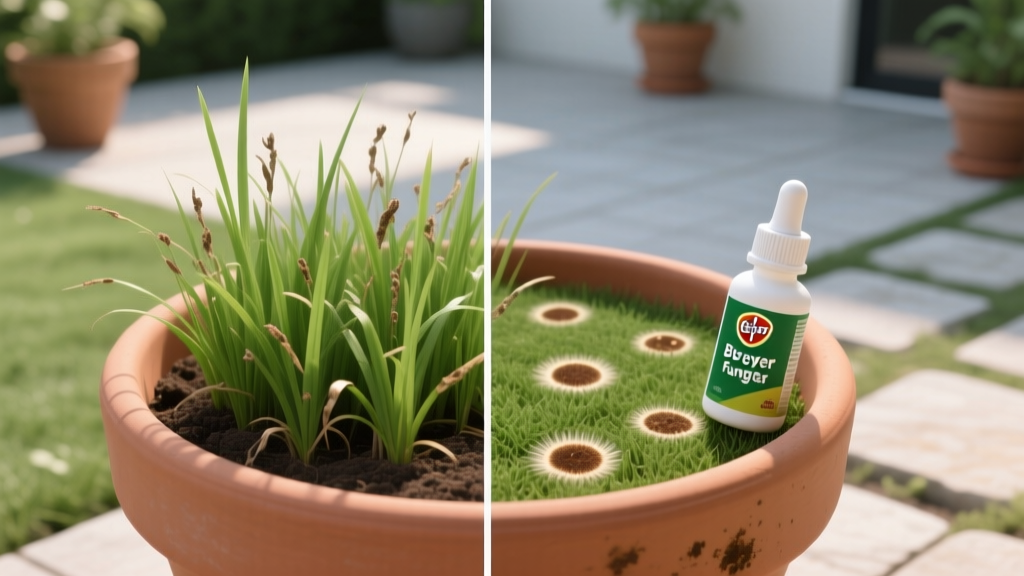
Dollar Spot in Pots: Bayer Advanced Treatment Guide 2026
Sarah ChenPublished
The Rise of Container Turf and the Dollar Spot Threat
Container and pot gardening has evolved far beyond traditional flowers, herbs, and patio vegetables. In 2026, urban landscapers, balcony gardeners, and home enthusiasts are increasingly cultivating 'micro-lawns,' miniature patio putting greens, and ornamental turfgrass pots to bring the lush, grounding feel of a yard to concrete environments. Whether you are growing dwarf Zoysia in a shallow planter, maintaining a containerized Bentgrass putting surface, or nurturing ornamental Fescue in large decorative urns, the confined space of a pot creates a highly specific microclimate. Unfortunately, this microclimate is often a breeding ground for severe fungal pathogens. The most notorious and frustrating among these is dollar spot disease.
Dollar spot, scientifically known as Clarireedia jacksonii (formerly Sclerotinia homoeocarpa), is a foliar disease that can devastate turfgrass in a matter of days if left untreated. While it is a common headache for traditional lawn care professionals, its impact on container-grown grasses is magnified. In a pot, the root zone is restricted, soil moisture fluctuates wildly, and the plant has nowhere to run from environmental stress. This comprehensive guide will walk you through identifying dollar spot in your container turf and outline a precise, safe treatment strategy using Bayer Advanced (now widely recognized under its modern consumer branding, BioAdvanced) fungicides tailored specifically for potted environments.
Identifying Dollar Spot in Potted Turf
Before reaching for a fungicide, accurate identification is critical. Misdiagnosing a fungal issue can lead to ineffective treatments and wasted money. According to NC State University Turf Pathology, dollar spot presents distinct visual cues that separate it from other common turf diseases like brown patch or Pythium blight.
Key Visual Symptoms
- Silver-Dollar Sized Patches: The disease gets its name from the small, circular, sunken patches of straw-colored or bleached grass that appear on the turf canopy. In container grasses, these patches are roughly the size of a silver dollar (about 2 to 3 inches in diameter), though they can merge into larger blighted areas if the pot is heavily infected.
- Hourglass Lesions: If you pull a single grass blade from the affected area and examine it closely, you will see distinct, pale, hourglass-shaped bands or lesions with reddish-brown margins. This is the hallmark of dollar spot.
- Cobweb-Like Mycelium: In the early morning, when the dew is still heavy on your patio pots or balcony planters, you may notice a white, cobweb-like fungal mycelium resting on the surface of the grass. As the sun rises and dries the foliage, this mycelium will vanish, leaving behind the bleached lesions.
Because container grasses are often mowed or trimmed at varying heights, the disease may manifest slightly differently than on a traditional golf course. In taller ornamental container grasses, the bleached tips may simply look like severe drought stress or fertilizer burn, making the morning mycelium check essential for confirmation.
Why Container Grasses are Highly Vulnerable
Understanding why your potted turf is susceptible to dollar spot is the first step toward long-term prevention. Penn State Extension notes that dollar spot thrives in environments with high humidity, prolonged leaf wetness, and low soil nitrogen. Container environments inadvertently check all these boxes.
- Nitrogen Leaching: Container grasses require frequent watering, especially during the heat of summer. This constant flushing of water through the potting mix leaches away water-soluble nutrients, particularly nitrogen. Dollar spot aggressively targets nitrogen-deficient turf.
- Overhead Watering and Poor Airflow: Most patio and balcony gardens rely on overhead watering from a hose or watering can. This wets the grass blades directly. Combined with the restricted airflow found in densely packed container gardens or against building walls, the foliage stays wet for hours, creating the perfect incubator for fungal spores.
- Thatch Accumulation in Pots: Even in small containers, turfgrass can develop a thatch layer. In a pot, this thatch traps moisture against the soil surface and harbors fungal pathogens over the winter, leading to explosive outbreaks in the spring.
Bayer Advanced (BioAdvanced) Treatment Strategy for Pots
When treating turf in containers, precision is paramount. The brand formerly known as Bayer Advanced transitioned its consumer lawn and garden line to the BioAdvanced brand a few years ago, but the core chemical formulations remain the gold standard for home gardeners. For dollar spot, the most effective active ingredient in their lineup is Propiconazole, a systemic DMI (demethylation inhibitor) fungicide. Products like the BioAdvanced (Bayer Advanced) Fungus Control for Lawns containing Propiconazole are absorbed by the plant tissue, stopping the fungus from the inside out and providing weeks of residual protection.
The Dosage Dilemma: Calculating for Containers
The greatest challenge with using commercial lawn fungicides in container gardening is the application rate. The label on a typical liquid Propiconazole concentrate dictates mixing 2 fluid ounces per 1,000 square feet of turf. But what do you do when your patio putting green is only 24 inches in diameter?
Let us do the math for a standard 24-inch round container:
- Radius = 12 inches (1 foot).
- Surface Area = π × r² = 3.14 × 1² = 3.14 square feet.
- If 2 oz treats 1,000 sq ft, then 1 sq ft requires 0.002 oz.
- For a 3.14 sq ft pot, you need approximately 0.006 fluid ounces of concentrate.
Measuring 0.006 fluid ounces at home is practically impossible and attempting to do so will likely result in a massive overdose. Overdosing Propiconazole in a confined pot can cause severe phytotoxicity, resulting in stunted growth, root inhibition, and yellowing of the turf. Therefore, for container gardeners in 2026, we strongly recommend abandoning liquid concentrates in favor of Ready-To-Use (RTU) Pump Sprays or carefully calibrated granular applications.
Step-by-Step Application Guide for Container Turf
To safely and effectively treat dollar spot in your pots using Bayer Advanced / BioAdvanced products, follow these steps:
Step 1: Choose the Right Formulation
For pots under 50 square feet, purchase the BioAdvanced Fungus Control Ready-To-Use spray bottle. This eliminates the need for dangerous and inaccurate dilution math. If you have a large rooftop garden with dozens of turf planters exceeding 100 square feet total, you may use the liquid concentrate, mixing a 1-gallon batch and applying it across all pots until the batch is gone.
Step 2: Prepare the Container
Mow or trim your container grass to its lowest recommended height. Remove any visible thatch using a small hand rake. This ensures the fungicide reaches the lower stem and soil surface where the disease originates.
Step 3: Apply the Fungicide
Apply the RTU spray evenly over the foliage of the potted turf until the grass is thoroughly wet, but not to the point of heavy runoff. Because Propiconazole is systemic, it must be absorbed through the leaves and roots. Ensure you spray the edges of the pot and the soil surface where the grass meets the container rim.
Step 4: Watering and Drying
Unlike some contact fungicides that require immediate watering in, systemic Propiconazole is best applied to dry foliage and allowed to dry naturally for at least 12 to 24 hours. This gives the grass blades ample time to absorb the active ingredient. After 24 hours, resume your normal morning watering schedule.
Step 5: Follow-Up Treatment
Dollar spot is persistent. A single application will halt the current outbreak, but the residual protection typically lasts 14 to 21 days. Plan a follow-up application three weeks later if environmental conditions (high humidity, cool nights, warm days) remain favorable for the disease.
Comparison Chart: Fungicide Options for Container Turf
While Bayer Advanced (BioAdvanced) Propiconazole is highly effective, it is wise to rotate chemical classes to prevent fungal resistance. Below is a comparison of top treatments suitable for container environments in 2026.
| Fungicide Brand / Type | Active Ingredient | Chemical Class | Container Suitability | Application Frequency |
|---|---|---|---|---|
| Bayer Advanced / BioAdvanced | Propiconazole | DMI (Group 3) | Excellent (Use RTU for small pots) | Every 14-21 days |
| Scotts DiseaseEx | Azoxystrobin | QoI (Group 11) | Good (Granular is easy to dose) | Every 28 days |
| ProGrowth Organic Options | Bacillus amyloliquefaciens | Biological | Excellent (Safe for enclosed patios) | Every 7-14 days |
Note: When using granular Azoxystrobin in pots, calculate the weight of the granules based on the pot's surface area to avoid root burn. A standard kitchen scale is highly recommended for measuring granular fungicides for containers.
Cultural Controls: Preventing Dollar Spot in Pots
Fungicides are a powerful tool, but they should be the last line of defense. Integrating cultural controls into your container gardening routine will drastically reduce the need for chemical interventions.
- Strategic Nitrogen Feeding: Because dollar spot exploits nitrogen-starved grass, apply a balanced, slow-release granular fertilizer to your pots every 6 to 8 weeks during the growing season. Slow-release formulas prevent the nutrient leaching associated with liquid fertilizers in containers.
- Morning Watering Only: Never water your turf pots in the evening. Watering between 4:00 AM and 8:00 AM allows the grass blades to dry quickly once the sun rises, depriving the dollar spot fungus of the prolonged leaf wetness it requires to infect the plant.
- Improve Air Circulation: Space your turf containers at least 12 to 18 inches apart. If your balcony or patio is enclosed by glass or privacy screens, consider installing a small, solar-powered outdoor fan to keep the air moving over the grass canopy during humid summer nights.
- Sanitation: If you are trimming multiple ornamental grass pots, dip your shears in a 10% bleach solution or rubbing alcohol between plants. Dollar spot spores easily transfer from an infected pot to a healthy one via contaminated tools.
Conclusion
Container turf gardening is a rewarding way to enjoy the beauty of a lawn in spaces where traditional landscaping is impossible. However, the unique microclimate of a pot demands vigilant disease management. By learning to identify the telltale hourglass lesions and cobweb mycelium of dollar spot, and by utilizing precise, mathematically sound applications of Bayer Advanced (BioAdvanced) Propiconazole, you can keep your micro-lawns and patio putting greens pristine. Remember to prioritize slow-release nitrogen, morning watering, and proper spacing to ensure your container grasses remain thick, green, and disease-free throughout the 2026 growing season and beyond.