Lawn Care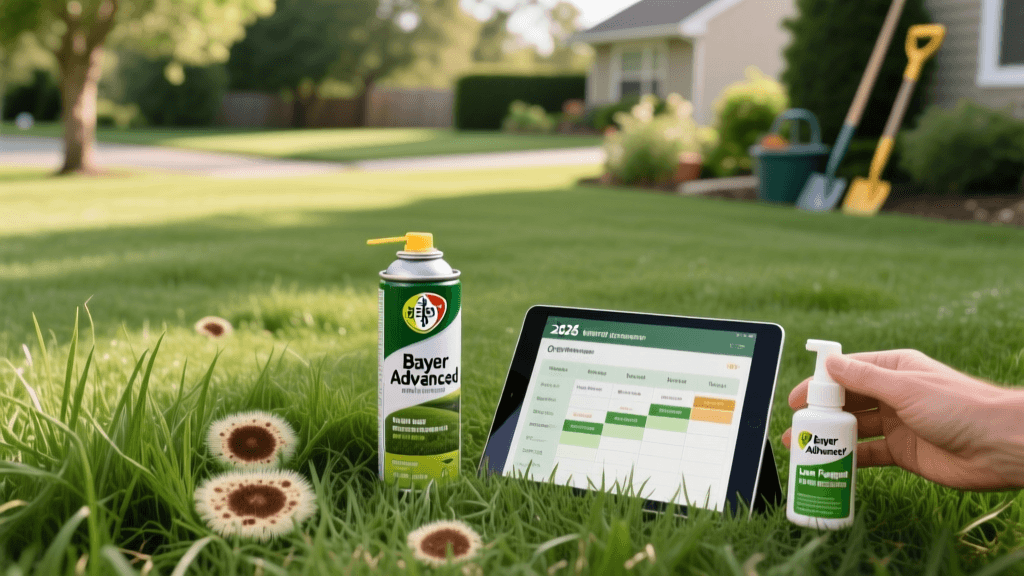
Dollar Spot & Bayer Advanced Treatment: 2026 Fertilizer Guide
Understanding Dollar Spot in 2026
In 2026, turfgrass managers and homeowners are battling increasingly erratic spring and early summer weather patterns, creating the perfect storm for one of the most frustrating lawn diseases: Dollar Spot. Scientifically known as Clarireedia jacksonii, this fungal pathogen thrives in environments with high humidity, warm days, cool nights, and, most importantly, nitrogen-deficient soil. While fungicides are a necessary component of severe outbreak management, understanding the critical intersection between fertilizer types, seasonal schedules, and targeted treatments is the ultimate key to a resilient lawn.
Historically recognized by consumers under the Bayer Advanced brand, the fungicide formulations used to combat this disease have evolved. As of 2026, the consumer lawn care line operates under the BioAdvanced brand (and professional formulations are managed by Envu), but the core systemic active ingredients originally developed for the Bayer Advanced Fungus Control line remain the gold standard for residential dollar spot eradication. This guide will walk you through precise disease identification, the exact fertilizer schedules required to starve the fungus, and how to properly apply Bayer Advanced-style treatments for complete recovery.
Identifying Dollar Spot Disease
Before applying any fertilizers or fungicides, accurate identification is paramount. Dollar spot is frequently misdiagnosed as brown patch or drought stress, leading to improper treatment schedules that can worsen the outbreak.
Key Visual Indicators
- The 'Silver Dollar' Lesions: The disease initially appears as small, sunken, circular patches roughly the size of a silver dollar (1 to 3 inches in diameter). On closely mowed golf greens, these spots are distinct; on taller residential lawns, they may coalesce into larger, irregular blighted areas.
- Hourglass-Shaped Leaf Lesions: Inspect individual grass blades closely. Dollar spot creates pale, bleached, or straw-colored lesions that span across the leaf blade, often bordered by dark brown or purplish margins. These lesions typically cause the leaf tip to die back, creating an 'hourglass' pinch point.
- Morning Mycelium: The most definitive identification method occurs in the early morning when dew is heavy. You will see a white, cobweb-like fungal growth (mycelium) covering the infected patches. As the sun dries the dew, this mycelium disappears, making morning inspections critical.
According to the Penn State Extension, dollar spot primarily affects creeping bentgrass, annual bluegrass, and fine fescues, but it is increasingly prevalent in Kentucky bluegrass and perennial ryegrass when soil nitrogen levels are severely depleted.
The Fertilizer Connection: Why Nitrogen Matters
Dollar spot is widely considered a 'low-fertility disease.' The pathogen aggressively attacks turfgrass that is under nutritional stress, specifically when nitrogen (N) levels are insufficient to support rapid leaf growth and recovery. In 2026, turfgrass pathology reports emphasize that relying solely on fungicides without correcting the underlying nitrogen deficit is a temporary fix that leads to chemical resistance and recurring seasonal outbreaks.
When grass lacks nitrogen, its cellular walls become thinner and more susceptible to fungal penetration. By implementing a strategic fertilizer schedule, you force the grass to grow out of the infection while simultaneously creating an environment that is less hospitable to Clarireedia jacksonii.
Choosing the Right Fertilizer Types
Not all nitrogen sources behave the same way in the soil. To combat dollar spot, you must balance immediate turf recovery with long-term soil health.
- Quick-Release Nitrogen (Urea, Ammonium Sulfate): Essential for acute dollar spot outbreaks. Quick-release sources provide an immediate flush of nitrogen, stimulating rapid leaf growth so the lawn can 'outrun' the disease. Cost: Approximately $0.15 to $0.25 per 1,000 sq. ft.
- Slow-Release Nitrogen (Methylene Urea, Sulfur-Coated Urea, BIO-N): Crucial for the preventative maintenance schedule. Slow-release fertilizers provide a steady, drip-feed of nitrogen over 6 to 10 weeks, preventing the lush, weak growth associated with disease susceptibility. Cost: Approximately $0.40 to $0.65 per 1,000 sq. ft.
2026 Seasonal Fertilizer Schedule for Dollar Spot Prevention
Maintaining a consistent nitrogen baseline is your first line of defense. Below is the recommended 2026 fertilizer schedule for cool-season lawns prone to dollar spot. Note that rates are expressed in pounds of actual nitrogen (N) per 1,000 square feet.
| Season | Timing | Fertilizer Type | Nitrogen Rate (per 1k sq ft) | Dollar Spot Risk Level |
|---|---|---|---|---|
| Early Spring | April - Early May | Slow-Release (e.g., 24-0-10) | 0.75 - 1.0 lbs N | Moderate (Wet conditions) |
| Late Spring | Late May - June | Quick-Release (Urea) + Slow-Release | 0.5 lbs N | HIGH (Peak Outbreak Window) |
| Early Summer | July | Slow-Release / Organic (Low Dose) | 0.25 - 0.5 lbs N | HIGH (Heat & Humidity) |
| Early Fall | September | Slow-Release (e.g., 28-0-3) | 1.0 lbs N | Low (Recovery Phase) |
| Late Fall | November | Quick-Release (Winterizer) | 1.0 lbs N | None (Dormancy) |
Pro Tip for 2026: During the peak dollar spot window (June through July), avoid applying heavy doses of quick-release nitrogen, as this can promote brown patch. Instead, rely on light, frequent spoon-feeding of ammonium sulfate (0.25 lbs N every 14 days) to maintain growth without causing excessive canopy humidity.
Bayer Advanced Treatment Protocols for 2026
When cultural practices and fertilization are not enough to halt an active outbreak, chemical intervention is required. The proprietary systemic fungicide blends originally developed under the Bayer Advanced name (now widely available as BioAdvanced Fungus Control for Lawns) utilize active ingredients like Propiconazole and Tebuconazole. These Systemic Fungicides (FRAC Group 3) are absorbed by the plant tissue, stopping the fungus from the inside out.
Application Rates and Timing
For active dollar spot infections, the 2026 label guidelines for liquid Propiconazole-based treatments generally recommend the following:
- Curative Rate (Active Outbreak): 2.0 fluid ounces per 1,000 square feet. Mix with 2 to 3 gallons of water to ensure thorough canopy penetration and soil drenching.
- Preventative Rate: 1.0 fluid ounce per 1,000 square feet, applied every 14 to 21 days during high-risk weather windows.
- Watering In: Unlike contact fungicides that must remain on the leaf blade, Propiconazole is slightly systemic and locally translaminar. Lightly water the lawn (about 1/8 inch of irrigation) 24 hours after application to move the active ingredient into the thatch layer where the fungus overwinters.
Chemical Rotation to Prevent Resistance
The NC State TurfFiles database strongly warns against using the same FRAC group fungicide consecutively. If you use a Bayer Advanced/BioAdvanced Propiconazole product for your first application in June, you must rotate to a different active ingredient (such as Azoxystrobin or Fluazinam) for your July application to prevent the Clarireedia jacksonii pathogen from developing genetic resistance.
Step-by-Step Recovery Plan: Integrating Fertilizer and Fungicide
To successfully eradicate dollar spot and restore your lawn, follow this integrated 2026 recovery protocol:
Step 1: Confirm and Measure
Inspect the lawn at 6:00 AM for mycelium. Confirm the hourglass lesions. Measure the total square footage of the affected zones to calculate exact fertilizer and fungicide volumes, preventing chemical burn from over-application.
Step 2: Apply Quick-Release Nitrogen
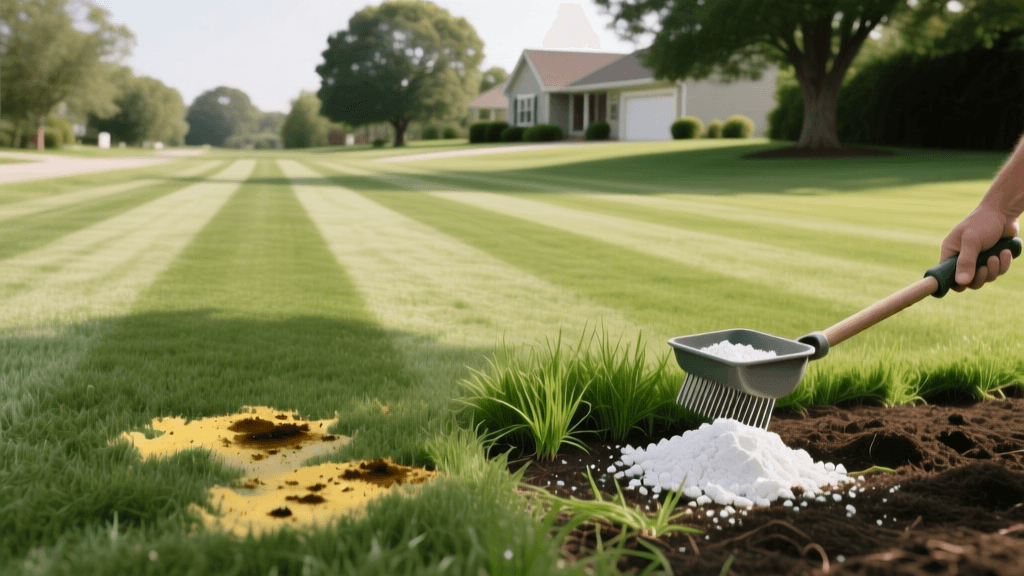
Apply a fast-acting nitrogen source like Urea (46-0-0) at a rate of 0.5 lbs of actual nitrogen per 1,000 sq. ft. Water it in immediately. This triggers the grass to begin producing new, healthy tissue.
Step 3: Apply the Fungicide (48 Hours Later)
Wait 48 hours after fertilizing to apply your Bayer Advanced/BioAdvanced Propiconazole treatment. Applying them simultaneously can sometimes cause phytotoxicity (leaf burn) under high summer heat. Spray the fungicide evenly across the entire lawn, not just the visible spots, as the pathogen is likely present in asymptomatic areas.
Step 4: Adjust Irrigation Practices
Dollar spot requires prolonged leaf wetness to infect. Shift your irrigation schedule to water deeply but infrequently, and only water between 4:00 AM and 6:00 AM. This ensures the grass blades dry quickly once the sun rises, drastically reducing the humidity window the fungus needs to reproduce.
Step 5: Manage Thatch and Mowing Height
Maintain your mowing height at the highest recommended setting for your grass type (typically 3.0 to 3.5 inches for Kentucky Bluegrass and Fescues in 2026). Taller grass shades the soil, reducing moisture evaporation into the canopy. Additionally, if your thatch layer exceeds 0.5 inches, schedule core aeration for the fall to improve soil drainage and reduce the fungal habitat.
Conclusion
Managing dollar spot in 2026 requires a holistic approach that bridges the gap between soil nutrition and targeted chemical control. By recognizing the early visual signs of Clarireedia jacksonii, implementing a strategic slow-release and quick-release fertilizer schedule, and utilizing proven Bayer Advanced-style systemic fungicides like Propiconazole, you can effectively neutralize outbreaks. Remember that a well-fed lawn is naturally equipped to defend itself; treat the soil first, use fungicides as your tactical backup, and your lawn will remain thick, green, and disease-free throughout the growing season.