Lawn Care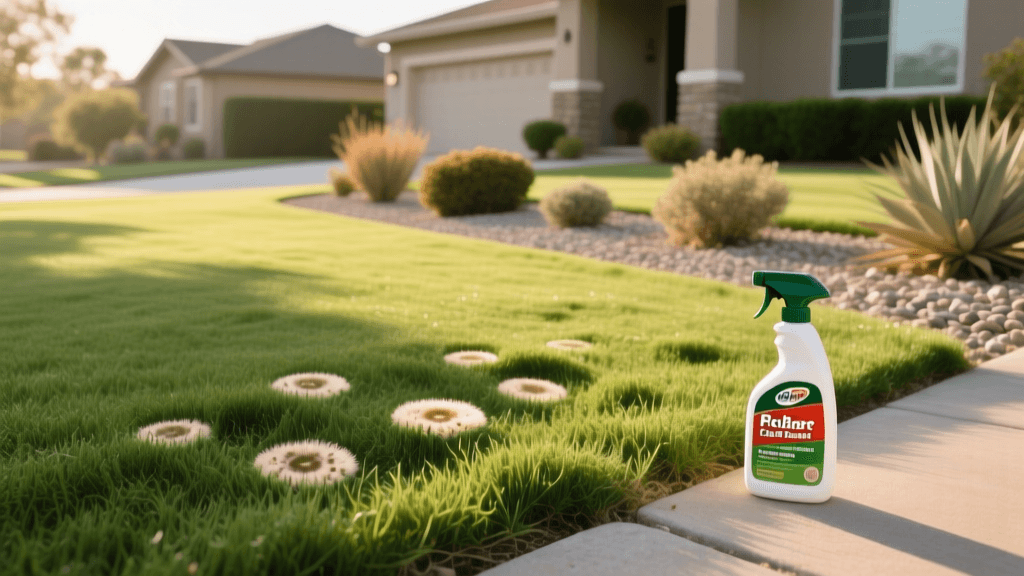
Identify & Treat Dollar Spot: 2026 Bayer Advanced Fire-Safe Guide
The Intersection of Turf Health and Fire-Resistant Landscaping
When homeowners think of fire-resistant landscaping, they often picture hardscaping, gravel, and succulent plants. However, in the immediate perimeter of your home, a well-irrigated, lush, and healthy turfgrass lawn remains one of the most effective firebreaks available. As we navigate the 2026 wildfire season, maintaining a green, high-moisture landscape in "Zone 0" and "Zone 1" (the first 30 feet surrounding your structure) is critical for catching wind-blown embers and halting creeping ground fires. According to UC Agriculture and Natural Resources, a properly maintained lawn provides a non-flammable buffer that can protect your home during a wildfire event.
The problem arises when turfgrass diseases compromise this protective barrier. Dollar spot, a pervasive fungal disease, rapidly turns lush green grass into dry, straw-colored, highly flammable fine fuels. If left untreated, the dead turf acts as a wick, carrying fire directly to your home's foundation. Identifying dollar spot early and treating it with trusted solutions like Bayer Advanced (now officially branded under the BioAdvanced and Envu portfolios in 2026) is essential for preserving both your lawn's aesthetics and your property's fire safety.
Identifying Dollar Spot in Your Defensible Space
Dollar spot is caused by the fungal pathogen Clarireedia jacksonii. It thrives in warm, humid days followed by cool nights, making late spring and early autumn prime seasons for outbreaks. To protect your fire-resistant landscape, you must be able to identify the disease before it causes widespread turf death.
Key Visual Symptoms
- Size and Shape: The disease initially appears as small, circular, sunken patches roughly the size of a silver dollar (1 to 3 inches in diameter). In severe cases, these spots coalesce into large, irregular blighted areas.
- Leaf Lesions: Upon close inspection of individual grass blades, you will notice distinct, hourglass-shaped lesions with bleached centers and reddish-brown margins.
- Mycelium: In the early morning, while the dew is still heavy, you may see a white, cobweb-like fungal growth (mycelium) covering the infected patches. This disappears as the sun dries the turf.
The NC State TurfFiles database emphasizes that dollar spot is particularly aggressive on nitrogen-deficient turf and lawns experiencing drought stress or excessive thatch buildup. Because fire-resistant landscaping requires precise water management to avoid both drought-stress (which creates dry fuel) and overwatering (which invites fungus), balancing your irrigation is a delicate and vital task.
Why Dollar Spot Compromises Fire Safety
A healthy, actively growing turfgrass blade contains up to 80% water, making it virtually ignition-resistant. When dollar spot girdles the leaf blade and kills the tissue, that moisture rapidly evaporates. The resulting dead, straw-colored leaves and accumulated thatch become "fine fuels." In fire behavior science, fine fuels ignite almost instantaneously when exposed to the radiant heat or embers of a wildfire. A lawn heavily scarred by dollar spot essentially transforms your defensible space into a bed of kindling, negating the fire-retardant benefits of the turfgrass.
2026 Bayer Advanced Treatment Protocols for Dollar Spot
For decades, homeowners have relied on Bayer Advanced fungicides to combat turf diseases. Following corporate restructuring and the creation of Envu, the consumer retail line formerly known as Bayer Advanced is now widely marketed under the BioAdvanced brand name. However, the core systemic chemistry that homeowners trust remains the same. For dollar spot, the gold standard active ingredient is Propiconazole, found in products like BioAdvanced Fungus Control for Lawns (the direct successor to the Bayer Advanced legacy formula).
Propiconazole is a systemic fungicide belonging to the DMI (demethylation inhibitor) class. It is absorbed by the grass roots and foliage, translocating through the plant's xylem to protect new growth and halt the spread of Clarireedia jacksonii.
Step-by-Step Application Guide
To restore your lawn's fire-resistant properties, follow these application steps for granular Propiconazole-based treatments in 2026:
- Calculate Your Area: Measure the square footage of your defensible space zones. Accurate measurement prevents under-application (which fails to stop the disease) and over-application (which is environmentally wasteful).
- Set Your Spreader: Check the product label for the specific spreader setting. For most standard rotary spreaders applying granular Propiconazole to treat an active dollar spot outbreak, the rate is typically around 2.5 to 3.5 pounds per 1,000 square feet.
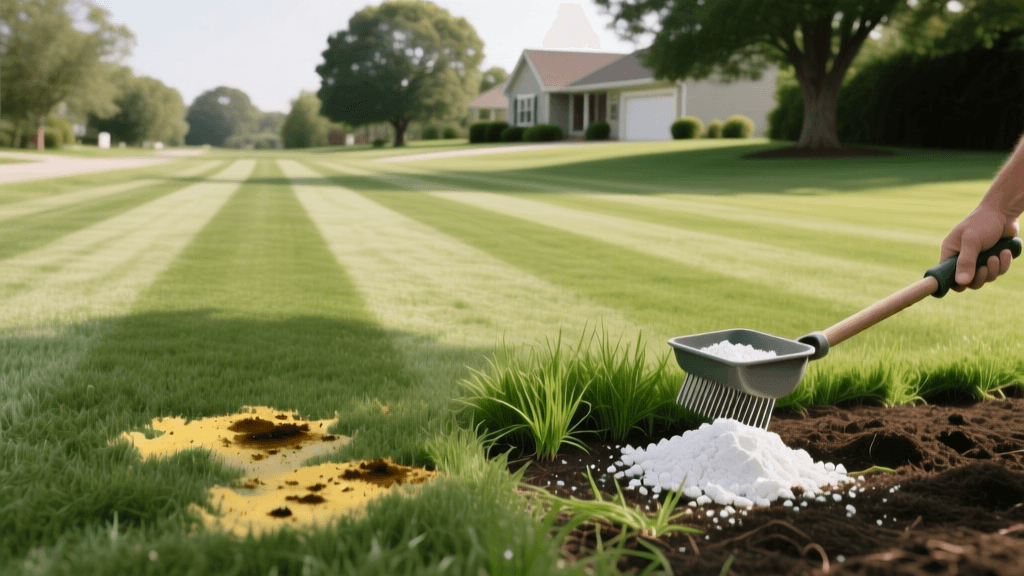
- Apply to Dry Foliage: Apply the granules when the grass blades are dry to ensure the product reaches the soil surface and the thatch layer without clumping on wet leaves.
- Water It In: Immediately after application, irrigate the lawn with about 1/4 to 1/2 inch of water. This activates the fungicide, washing it into the root zone where it is absorbed systemically.
- Reapplication Interval: For active infections, reapply every 14 to 21 days until the disease is controlled and the turf has recovered its green, moisture-rich state. For preventative maintenance during high-humidity seasons, apply every 30 days.
Cultural Practices to Support Fungicide Efficacy
Chemical treatment alone will not secure your landscape against fire or disease. You must pair your BioAdvanced/Bayer Advanced fungicide applications with cultural practices that promote deep roots and high moisture retention.
- Nitrogen Management: Dollar spot exploits nitrogen-starved turf. Apply a balanced, slow-release nitrogen fertilizer in the spring and early fall to encourage rapid leaf growth and recovery from fungal damage.
- Morning Irrigation: Water your lawn deeply between 4:00 AM and 8:00 AM. This ensures the grass has the moisture it needs to act as a firebreak during the heat of the day, but allows the leaf blades to dry before nightfall, depriving the dollar spot fungus of the prolonged leaf wetness it requires to germinate.
- Mowing Height: Never scalp your lawn. Maintain cool-season grasses at 3 to 4 inches and warm-season grasses at 2 to 2.5 inches. Taller grass shades the soil, retains moisture, and reduces plant stress.
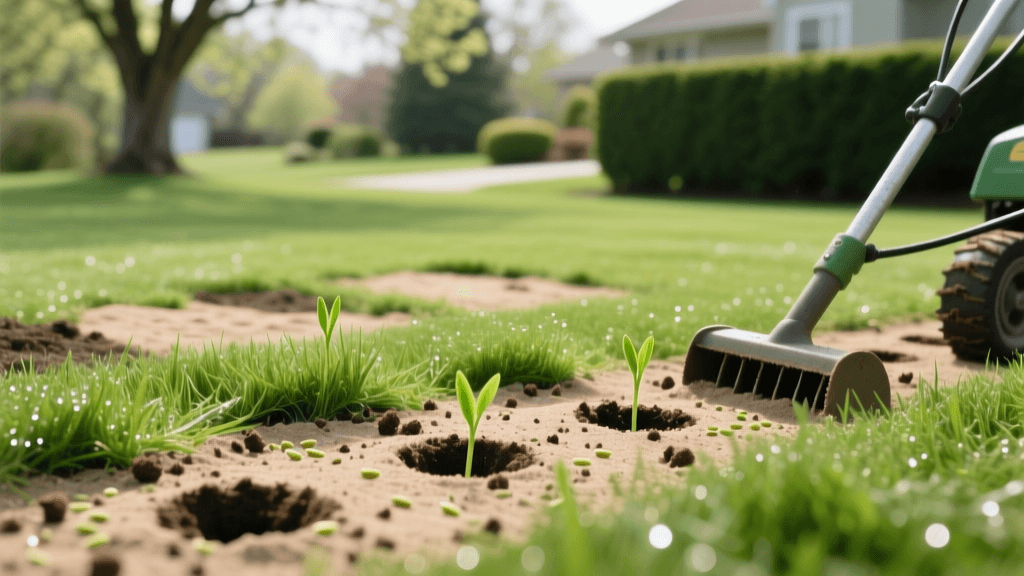
- Thatch Removal: Core aerate your lawn annually. A thatch layer thicker than 1/2 inch harbors fungal spores and prevents water and systemic fungicides from reaching the root zone.
Comparison Chart: Dollar Spot vs. Other Common Turf Diseases
Misidentifying a turf disease can lead to improper treatment, leaving your defensible space vulnerable. Use the table below to differentiate dollar spot from other common lawn diseases that threaten fire-safe landscaping.
| Disease | Pathogen | Optimal Temp Range | Visual Identification | Fire Fuel Risk if Untreated |
|---|---|---|---|---|
| Dollar Spot | Clarireedia jacksonii | 60°F - 85°F | Silver-dollar sized spots; hourglass lesions; morning mycelium. | High: Creates dense patches of dry, fine fuel near the foundation. |
| Brown Patch | Rhizoctonia solani | 75°F - 90°F | Large, irregular circular patches (up to several feet); dark smoke rings. | Moderate: Kills large areas, but often leaves some green tissue interspersed. |
| Pythium Blight | Pythium spp. | 80°F - 95°F | Greasy, water-soaked appearance; rapid wilting; cottony mycelium. | Severe: Destroys turf overnight, leaving massive contiguous dead zones. |
| Fairy Ring | Basidiomycetes | 60°F - 80°F | Dark green rings or arcs; sometimes accompanied by mushrooms. | Low-Moderate: Inner ring may die and dry out, but outer ring remains lush. |
Conclusion
Fire-resistant landscaping is not just about choosing the right plants; it is about rigorous, proactive maintenance of the vegetation you already have. A lawn suffering from dollar spot is a liability during wildfire season, transforming a protective green buffer into a dangerous bed of dry kindling. By accurately identifying the early signs of Clarireedia jacksonii and deploying trusted Propiconazole-based treatments like the 2026 BioAdvanced (formerly Bayer Advanced) Fungus Control line, you can halt the disease in its tracks. Combine these chemical controls with smart irrigation, proper mowing, and thatch management to ensure your turf remains a lush, high-moisture shield, keeping your home and family safe year after year.