Lawn Care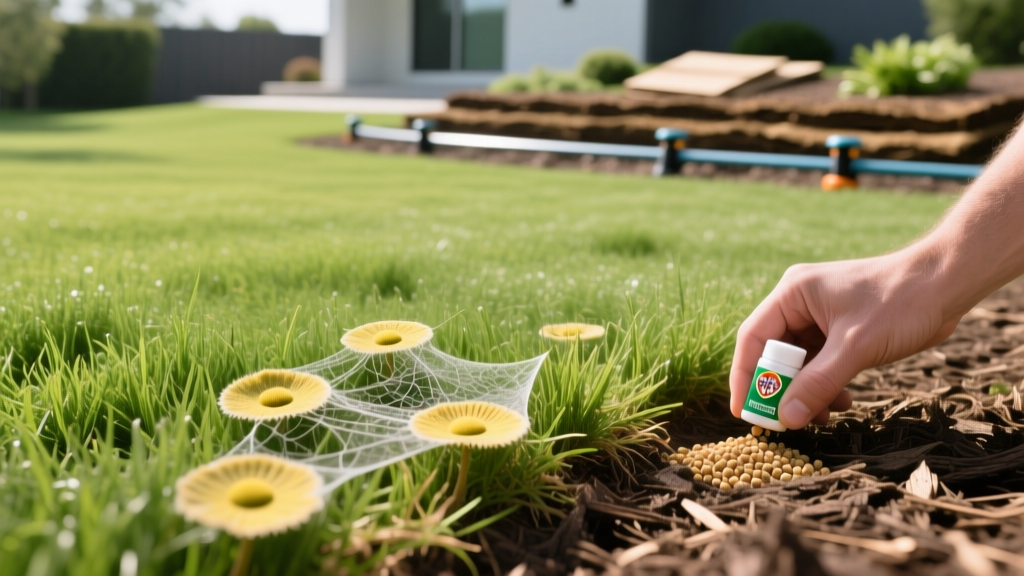
Dollar Spot ID & Bayer Advanced Treatment: 2026 Mulching Guide
Robert HayesPublished
The Intersection of Mulching Methods and Dollar Spot in 2026
As we navigate the 2026 lawn care season, turfgrass managers and homeowners alike are facing increased pressure from fungal pathogens due to shifting spring humidity patterns. One of the most pervasive and frustrating turf diseases is dollar spot. Caused by the fungal pathogen Clarireedia jacksonii (formerly known as Sclerotinia homoeocarpa), this disease can rapidly degrade the aesthetic and functional quality of both cool-season and warm-season lawns. While chemical interventions remain a cornerstone of management, your mulching methods—both regarding grass clippings and adjacent landscape bed materials—play an astonishingly critical role in either suppressing or exacerbating the disease. This comprehensive guide explores how to accurately identify dollar spot, how to deploy Bayer Advanced (now officially branded under the BioAdvanced label) treatments effectively, and how to adjust your mulching practices to starve the fungus of its preferred environment.
Identifying Dollar Spot: Signs and Symptoms
Before applying any fungicide or altering your mulching routine, accurate identification is paramount. Dollar spot typically manifests during late spring to early autumn when days are warm (75°F to 85°F) and nights are cool, resulting in heavy morning dew. According to NC State Extension TurfFiles, the disease initially appears as small, circular, straw-colored patches roughly the size of a silver dollar—hence the name. In closely mowed turf like bentgrass or bermudagrass, these spots can coalesce into large, irregular blighted areas.
The most definitive diagnostic feature is visible in the early morning when dew is still present on the grass blades. You will notice a white, cobweb-like mycelium spanning across the infected leaves. As the sun dries the dew, the mycelium disappears, leaving behind hourglass-shaped lesions on the leaf blades with bleached centers and reddish-brown margins. If you observe these signs, immediate action regarding both chemical treatment and clippings management is required.
The Mulching Dilemma: Grasscycling vs. Bagging
Under normal circumstances, 'grasscycling' (using a mulching mower to return clippings to the lawn) is a highly recommended practice. It returns vital nitrogen and organic matter to the soil, reducing fertilizer needs by up to 25%. However, when dollar spot is actively fruiting, mulching clippings becomes a double-edged sword. The fungus survives unfavorable conditions by forming hard, resting structures called stromata within the thatch layer and on infected leaf tissue. When you run a mulching mower over an active outbreak, you chop these infected blades into thousands of tiny pieces and redistribute them evenly across the lawn, effectively planting new fungal inoculum into the turf canopy.
When to Bag vs. When to Mulch
If your lawn is currently experiencing an active dollar spot outbreak, you must temporarily suspend grasscycling. Switch to a bagging attachment and dispose of the clippings off-site or in a municipal green waste bin that utilizes high-heat commercial composting. Once the disease is eradicated and the turf has recovered, you can safely resume mulching your clippings to rebuild soil health.
Mulching Methods and Disease Risk Matrix
To help you make informed decisions throughout the 2026 growing season, refer to the following risk assessment matrix detailing how various mulching methods and materials interact with dollar spot pressure.
| Mulching Method / Material | Dollar Spot Risk | 2026 Best Practice |
|---|---|---|
| Grasscycling (Healthy Lawn) | Low | Leave clippings to return nitrogen; promotes deep rooting and disease resistance. |
| Grasscycling (Active Outbreak) | High | Bag and remove clippings immediately to eliminate stromata and fungal spores. |
| Pine Straw Beds (Adjacent to Turf) | Medium | Maintain a 4-to-6-inch buffer between pine straw and the lawn edge to improve airflow. |
| Hardwood Mulch (Volcano Mulching) | High | Avoid piling mulch against turf edges; traps moisture and creates a high-humidity microclimate. |
| Compost Top-Dressing | Low | Use only fully cured, high-heat compost to introduce beneficial microbes that outcompete C. jacksonii. |
Bayer Advanced (BioAdvanced) Treatment Protocol
When cultural controls and mulching adjustments are insufficient to halt an aggressive outbreak, chemical intervention is necessary. The consumer product line formerly known as Bayer Advanced is now marketed as BioAdvanced. For 2026, the gold standard for dollar spot control in this lineup is the BioAdvanced Fungus Control for Lawns, which typically utilizes the active ingredient Propiconazole (a DMI fungicide).
Application Guidelines and Timing
Propiconazole works systemically, meaning it is absorbed by the plant and translocated through the xylem, protecting new growth and halting active infections. For an active dollar spot outbreak, the curative application rate is generally 2 fluid ounces per 1,000 square feet. For preventive maintenance during peak humidity months (late May through August), reduce the rate to 1 fluid ounce per 1,000 square feet.
- Preparation: Mow the lawn (using a bagger if the disease is active) and remove excess thatch before application.
- Application: Apply the liquid concentrate using a hose-end sprayer for even coverage. Ensure you are treating the entire lawn, not just the visible spots, as the fungus is likely present asymptomatically in adjacent areas.
- Watering: Unlike contact fungicides that must remain on the leaf surface, systemic fungicides like Propiconazole should be watered in lightly (about 1/4 inch of irrigation) immediately after application to push the chemical into the root zone and lower stem.
- Mulching Resumption: Wait at least 48 hours after application and the subsequent watering before resuming normal mowing and grasscycling routines.
According to Penn State Extension, rotating fungicide modes of action (FRAC codes) is critical to prevent the pathogen from developing resistance. If you rely on Propiconazole (FRAC Group 3) for your first application, consider rotating to a strobilurin-based fungicide (FRAC Group 11) for your next treatment cycle later in the summer.
Landscape Bed Mulching and Turf Edge Microclimates
The 'Mulching Methods & Materials' perspective extends beyond the lawn itself to the garden beds that border it. Dollar spot thrives in environments with high relative humidity and restricted airflow. Improper mulching in adjacent landscape beds can inadvertently create the perfect microclimate for the fungus to invade the turf edges.
'Volcano mulching'—the practice of piling hardwood or cedar mulch high against the base of shrubs and trees right up to the lawn's edge—acts as a moisture sponge. This thick layer of decaying organic matter retains massive amounts of water, releasing it slowly into the surrounding air as humidity. Turfgrass borders trapped between a hot driveway and a heavily mulched, humid garden bed are prime targets for dollar spot. To mitigate this in 2026, implement a strict 'mulch-free buffer zone'. Keep all landscape mulch at least 4 to 6 inches away from the edge of the turf. Use edging tools to create a clean trench that promotes airflow and prevents the mulch from creeping into the grass canopy.
Composting Infected Clippings Safely
If you are dedicated to a zero-waste landscape and refuse to send bagged clippings to a landfill, you must be extremely cautious when composting material infected with dollar spot. The stromata produced by Clarireedia jacksonii are highly resilient and can survive standard decomposition processes. To safely compost infected mulch and clippings, your compost pile must be managed using a hot composting method. The internal temperature of the pile must reach and sustain a minimum of 140°F (60°C) for at least three consecutive days to denature the fungal proteins and destroy the stromata. If your compost pile operates at lower, ambient temperatures, the fungus will survive and be reintroduced to your lawn the moment you use the finished compost as a top-dressing.
Long-Term Cultural Controls and Soil Health
While Bayer Advanced treatments and strategic bagging provide immediate relief, long-term dollar spot management relies on correcting the underlying environmental deficiencies that invite the fungus. Dollar spot is notoriously opportunistic, striking lawns that are starved of nitrogen. Maintaining a consistent, moderate nitrogen fertility program ensures the turf is growing vigorously enough to outpace the disease. Furthermore, deep, infrequent watering (watering only in the early morning hours) prevents the prolonged leaf wetness that triggers spore germination. By combining precise BioAdvanced chemical treatments with intelligent, disease-aware mulching and mowing practices, you can maintain a pristine, resilient lawn throughout the 2026 season and beyond.