Lawn Care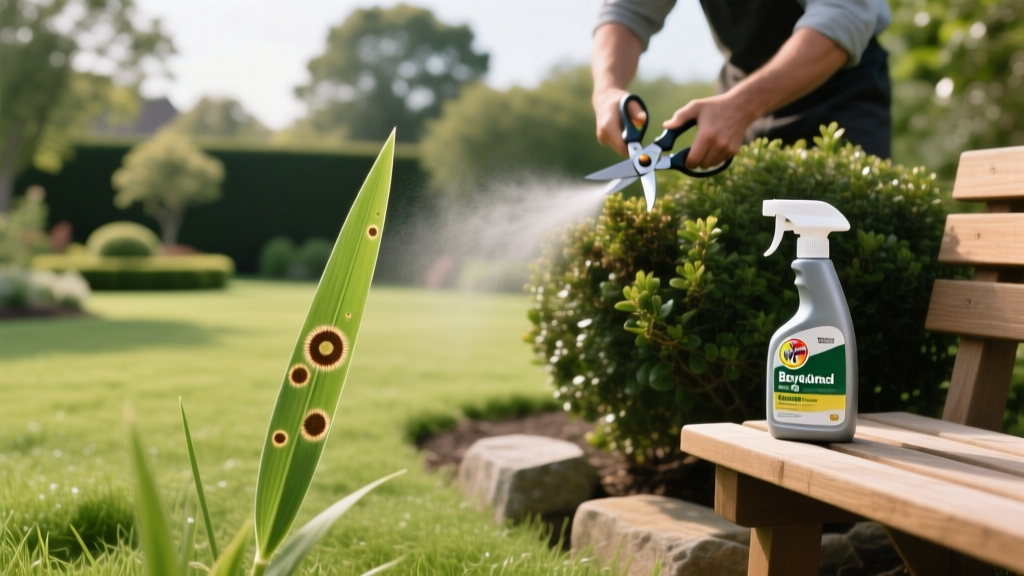
Dollar Spot & Bayer Advanced: 2026 Pruning & Treatment
James MillerPublished
Identifying Dollar Spot in the 2026 Season
Dollar spot, caused by the fungal pathogen Clarireedia jacksonii, remains one of the most frustrating and pervasive turfgrass diseases for homeowners and lawn care professionals alike. As we navigate the 2026 lawn care season, shifting climate patterns have led to wetter springs and highly humid summers in many regions, creating the perfect storm for fungal outbreaks. Identifying this disease early is critical to saving your turf from severe thinning and scarring.
The hallmark symptom of dollar spot is the appearance of small, circular, straw-colored patches roughly the size of a silver dollar. When these patches coalesce, they can form large, irregular areas of dead turf. According to the Penn State Extension, early morning inspections are the best way to confirm an active infection. If you walk across your lawn at dawn while the dew is still heavy, you may notice a white, cobweb-like mycelium stretching across the grass blades. As the sun dries the dew, this mycelium vanishes, leaving behind distinct hourglass-shaped lesions with bleached centers and dark reddish-brown margins on individual grass blades.
Dollar spot thrives in environments characterized by warm days, cool nights, and prolonged leaf wetness. Crucially, it heavily targets turfgrass that is deficient in nitrogen or suffering from drought stress. However, the most overlooked factor in dollar spot proliferation is poor air circulation and excessive shade—issues that cannot be solved by fungicides alone.
The Pruning Perspective: Modifying the Microclimate
While it may seem counterintuitive to discuss tree and shrub pruning when addressing a turfgrass disease, strategic landscape pruning is one of the most effective cultural controls for dollar spot. The fungus requires extended periods of leaf wetness (often 10 to 12 hours) to infect grass blades. Dense tree canopies and overgrown shrubs trap humidity, block morning sunlight, and prevent the wind from sweeping across the lawn to dry the dew.
By applying specific pruning methods and timing your cuts correctly, you can fundamentally alter the microclimate of your lawn. Increasing sunlight penetration and cross-breeze airflow reduces the duration of leaf wetness, effectively starving the dollar spot fungus of the environment it needs to germinate and spread. In 2026, integrating above-ground pruning with below-ground turf management is the gold standard for holistic lawn care.
Specific Pruning Methods for Turf Health
To optimize your lawn's microclimate, focus on two primary pruning techniques: Crown Thinning and Crown Raising (Skirting).
Crown Thinning: This method involves the selective removal of inner, smaller branches throughout the canopy of a tree. The goal is not to alter the overall shape or size of the tree, but to open up the interior structure. By removing crossing branches, deadwood, and roughly 15% to 20% of the live inner foliage, you allow wind to pass through the canopy rather than hitting it like a solid wall. This wind penetration is vital for evaporating morning dew on the grass below.
Crown Raising: Also known as skirting, this involves removing the lower branches of trees and shrubs to elevate the bottom of the canopy. For turf health, you generally want to raise the canopy so that the lowest branches are at least 8 to 10 feet off the ground. This creates an open corridor at the surface level, allowing unobstructed horizontal airflow to sweep across the lawn and dry the turf rapidly after sunrise or irrigation.
When executing these cuts, always use the three-cut method for branches larger than two inches in diameter to prevent bark tearing, which can invite secondary pests and diseases to the tree itself. Make an undercut a few inches from the trunk, a top cut slightly further out to remove the weight of the branch, and a final clean cut just outside the branch collar.
Timing Your Pruning for Maximum Airflow
Timing is just as critical as the technique. Pruning at the wrong time of year can stress your trees, making them susceptible to borers and decay, which ultimately defeats the purpose of maintaining a healthy landscape.
| Tree/Shrub Type | Pruning Method | Best Timing (2026 Schedule) | Airflow Benefit |
|---|---|---|---|
| Deciduous Trees (Oak, Maple) | Crown Thinning & Raising | Late Winter (Dormant Season) | Opens canopy before spring foliage emerges, maximizing early-season sunlight and wind penetration. |
| Evergreens (Pine, Spruce) | Lower Limb Removal (Skirting) | Early Spring or Late Summer | Creates surface-level wind corridors without stressing the tree during peak summer heat. |
| Flowering Shrubs (Lilac, Forsythia) | Interior Thinning | Immediately after spring blooming | Reduces dense, humid pockets of air near the lawn's edge where dollar spot often initiates. |
Avoid heavy pruning during the peak heat of mid-summer, as this can cause sunscald on newly exposed tree bark and stress the root systems. Light, selective thinning can be done in early summer if airflow issues are suddenly identified during a dollar spot outbreak.
Bayer Advanced Treatment Protocol for Dollar Spot
Once you have optimized the microclimate through pruning, chemical intervention is often necessary to halt an active outbreak or protect highly susceptible turf varieties like Kentucky Bluegrass and creeping bentgrass. For 2026, the Bayer Advanced lineage of fungicides (widely available under the Bayer Advanced Fungus Control for Lawns and BioAdvanced branding) remains a top-tier choice for homeowners due to its systemic active ingredient, typically Propiconazole.
Propiconazole is a DMI (Demethylation Inhibitor) fungicide. Unlike contact fungicides that only protect the surface of the leaf, systemic fungicides are absorbed by the grass blade and translocated throughout the plant tissue. This means that even new growth that emerges after the application is protected from the inside out, and the fungus is stopped from producing ergosterol, a vital component of its cell membranes.
Application Rates and 2026 Best Practices
According to the NC State TurfFiles, dollar spot can develop resistance to DMI fungicides if they are overused. Therefore, your 2026 Bayer Advanced treatment protocol must be precise and integrated with other practices.
- Preventative Application: Apply Bayer Advanced Fungus Control when nighttime temperatures consistently reach 60°F to 70°F and high humidity is forecasted. The standard liquid rate is typically 2 to 3 fluid ounces per 1,000 square feet. Mix with water in a pump sprayer and apply evenly across the turf canopy.
- Curative Application: If you have already identified the silver-dollar patches and mycelium, increase the application rate to the maximum curative rate listed on the 2026 product label (often up to 4 fluid ounces per 1,000 square feet, depending on the specific concentration).
- Watering In: While Propiconazole is absorbed through the foliage, watering the lawn lightly (about 1/8 inch of irrigation) roughly 12 hours after application helps move any residual product from the leaf surface into the thatch and root zone, providing comprehensive protection.
- Rotation Strategy: To prevent fungal resistance, do not use Bayer Advanced (Propiconazole) for more than two consecutive applications. Rotate with a contact fungicide containing Chlorothalonil or a different class of systemic fungicide like Azoxystrobin for your third application.
Integrating Pruning, Mowing, and Fungicides
The UMass Amherst Turf Program emphasizes that no fungicide can outperform poor cultural practices. To ensure your pruning and Bayer Advanced treatments are fully effective in 2026, you must align your mowing and irrigation routines.
Nitrogen Management: Dollar spot is notoriously aggressive on nitrogen-starved turf. Apply a balanced, slow-release nitrogen fertilizer in late spring and early fall. A steady supply of nitrogen encourages the grass to grow out of the minor leaf scarring caused by the disease and maintains a dense canopy that resists fungal invasion.
Mowing Height: Never scalp your lawn. Scalping stresses the grass and removes the leaf surface area needed to absorb the systemic Bayer Advanced fungicide. Maintain a mowing height of 3 to 4 inches for cool-season grasses. Furthermore, if you have an active dollar spot outbreak, bag your clippings to physically remove the fungal mycelium and spores from the property, preventing them from being redistributed by your mower deck.
Irrigation Timing: The timing of your watering dictates how long the leaf stays wet. Always irrigate between 4:00 AM and 6:00 AM. This coincides with the natural dew period, allowing the grass to complete its wet cycle and dry out rapidly once the sun rises and the wind moves through your newly pruned tree canopies. Watering in the evening extends the leaf wetness period well into the night, practically guaranteeing a dollar spot infection regardless of your fungicide applications.
Conclusion
Combating dollar spot in 2026 requires looking beyond the grass itself. By identifying the disease early through morning inspections, utilizing strategic crown thinning and raising to engineer a dry, breezy microclimate, and applying Bayer Advanced systemic fungicides with precise timing and rotation, you can reclaim your lawn. Pruning your surrounding landscape is not just an aesthetic choice; it is a vital, proactive defense mechanism that empowers your turf to resist disease naturally while maximizing the efficacy of your chemical treatments.