Lawn Care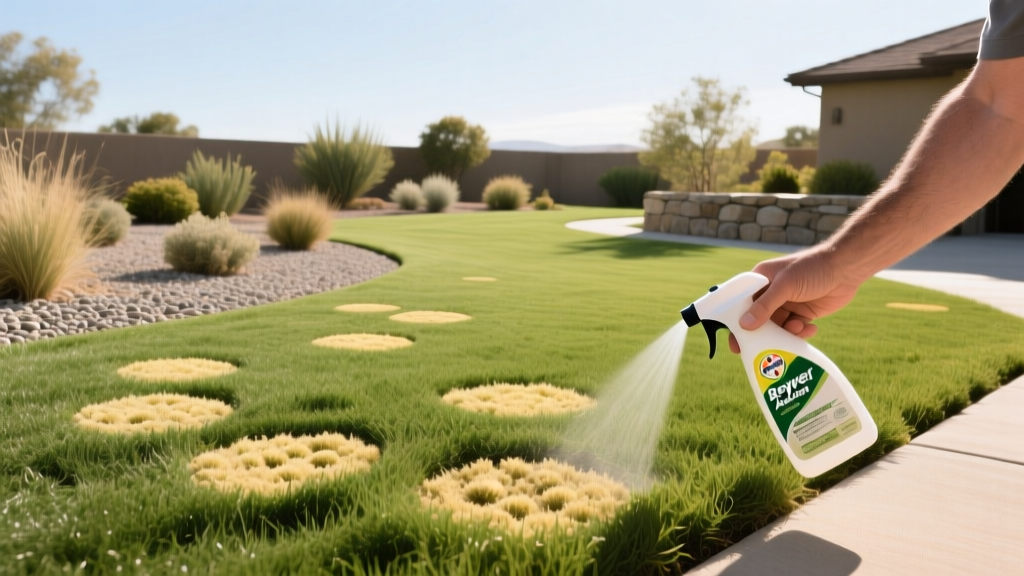
Dollar Spot & Bayer Advanced Treatment: 2026 Xeriscape Guide
Mike RodriguezPublished
The Rise of Xeriscaping and the Dollar Spot Threat in 2026
As we navigate the landscaping trends of 2026, water conservation is no longer just a niche environmental preference; it is a fundamental necessity for homeowners across the country. Xeriscaping and low-water landscaping have evolved far beyond the stereotypical barren rock gardens. Today, modern xeriscapes frequently incorporate highly drought-tolerant turfgrasses such as Bermudagrass, Zoysia, and Buffalograss. These grasses provide the lush, walkable surface families desire while requiring a fraction of the irrigation needed by traditional Kentucky Bluegrass or Tall Fescue lawns. However, transitioning to a low-water landscape does not make your turf immune to pathology. In fact, one of the most pervasive turfgrass diseases—dollar spot—frequently exploits the unique microclimates and maintenance routines of xeriscape lawns.
Dollar spot, scientifically known as Clarireedia jacksonii (formerly classified as Sclerotinia homoeocarpa), is a fungal disease that affects both cool-season and warm-season grasses. According to the American Phytopathological Society, this pathogen is notorious for causing severe aesthetic damage to turfgrasses, particularly when the grass is under environmental stress. For homeowners committed to low-water landscaping, identifying dollar spot early and treating it with targeted, reliable solutions like Bayer Advanced (now widely branded under the BioAdvanced label for consumer lawn care) is critical to maintaining a healthy, sustainable lawn without wasting precious water resources.
Identifying Dollar Spot in Drought-Tolerant Turfgrasses
Before you can treat the disease, you must accurately identify it. Dollar spot gets its name from the characteristic circular, straw-colored patches it creates on the lawn, which are typically the size of a silver dollar (about 2 to 3 inches in diameter). In low-water, drought-tolerant grasses like Zoysia and Bermudagrass, these spots can quickly coalesce into large, irregular brown areas if left untreated, mimicking the appearance of severe drought stress or chinch bug damage.
To confirm a dollar spot infection, inspect your lawn in the early morning while the dew is still heavy. Look for the following key indicators:
- Mycelium Presence: You will notice a white, cobweb-like fungal growth (mycelium) spanning across the grass blades in the affected areas. This is the most definitive sign of active dollar spot.
- Leaf Lesions: Examine individual grass blades closely. Dollar spot causes distinct, pale yellow or bleached lesions with reddish-brown margins. These lesions often wrap around the entire width of the blade and are typically hourglass-shaped.
- Turf Thinning: Unlike some diseases that kill the roots, dollar spot primarily attacks the foliage. The turf will appear thin and sunken, but the root system and crown usually remain alive, meaning the grass can recover if treated properly.
The Xeriscape Paradox: Why Low-Water Lawns Get Moisture-Loving Diseases
It seems counterintuitive: why would a fungal disease that thrives on moisture attack a xeriscape lawn designed to minimize water usage? The answer lies in the distinction between soil moisture and foliar moisture. Dollar spot does not require soggy soil to infect turf; it requires high humidity and prolonged leaf wetness. In many xeriscape environments, the soil is intentionally kept dry, but nighttime temperatures and high ambient humidity can still produce heavy morning dew on the grass blades.
Furthermore, xeriscape lawns are often maintained with a low-input philosophy. Homeowners intentionally limit nitrogen fertilization to prevent excessive, water-thirsty top growth. Unfortunately, nitrogen-deficient turf is highly susceptible to dollar spot. When a drought-stressed, low-nitrogen lawn is covered in morning dew for more than 10 to 12 hours, the Clarireedia jacksonii spores germinate and penetrate the leaf tissue. Understanding this paradox is the first step toward implementing an effective Integrated Pest Management (IPM) strategy that aligns with the water-saving principles outlined by institutions like Colorado State University Extension.
Bayer Advanced (BioAdvanced) Treatment Protocol for 2026
When cultural controls are insufficient to halt an active outbreak, chemical intervention becomes necessary. For xeriscape homeowners, the goal is to use highly effective, systemic fungicides that do not require excessive watering-in, thereby preserving your low-water landscape metrics. Bayer Advanced, operating primarily under the BioAdvanced brand name in 2026, offers robust solutions for this exact scenario.
The premier product for this task is the Bayer Advanced (BioAdvanced) Fungus Control for Lawns, which typically utilizes Propiconazole as its active ingredient. Propiconazole is a Demethylation Inhibitor (DMI) fungicide. It works systemically by inhibiting the synthesis of ergosterol, a crucial component of the fungal cell membrane, effectively stopping the pathogen's growth from the inside out.
Application Guidelines for Xeriscape Lawns
- Timing is Everything: Begin applications in late spring or early summer when nighttime temperatures consistently range between 60°F and 70°F, and high humidity is present. Do not wait until the lawn is severely damaged.
- Application Rate: For preventative control, apply at the lower label rate (typically around 1.5 to 2.0 ounces of liquid concentrate per 1,000 square feet, or the equivalent granular spreader setting). For curative treatment of an active outbreak, use the higher curative rate specified on the 2026 product label.
- Watering-In Requirements: Unlike contact fungicides that must remain on the leaf surface, Propiconazole is systemic and needs to be absorbed by the plant. However, to maintain xeriscape principles, you only need to water the lawn lightly (about 0.1 to 0.2 inches) just enough to wash the active ingredient off the grass blades and into the thatch/soil interface where the crown can absorb it. Avoid the heavy, deep irrigation cycles that would violate your low-water landscaping goals.
- Rotation Strategy: To prevent fungicide resistance, do not rely solely on Propiconazole for the entire 2026 season. Rotate Bayer Advanced treatments with a fungicide containing a different active ingredient, such as Azoxystrobin or Fluoxastrobin, for subsequent applications.
Integrated Pest Management: Cultural Controls for Low-Water Lawns
Chemical treatments with Bayer Advanced are highly effective, but they must be paired with smart cultural practices to ensure long-term success in a xeriscape environment. Managing the microclimate of your lawn is essential to deprive the dollar spot fungus of the foliar moisture it needs to survive.
Dew Removal and Irrigation Tactics
In a low-water landscape, you cannot rely on frequent, heavy watering to wash dew off the leaves. Instead, implement mechanical dew removal. In the early morning, use a bamboo pole to gently 'whip' the dew off the grass, drag a flexible garden hose across the lawn, or use a leaf blower to dry the canopy. This simple, zero-water technique drastically reduces the leaf wetness period.
When you do irrigate your xeriscape lawn, adhere strictly to the 'deep and infrequent' rule. Water only in the early morning hours (between 4:00 AM and 6:00 AM). This ensures that the grass blades dry rapidly once the sun rises, preventing the extended humidity window that triggers dollar spot spore germination.
Strategic Nitrogen Management
Because dollar spot exploits nitrogen-deficient turf, you must provide adequate nutrition without promoting excessive, water-demanding growth. In 2026, the best approach for xeriscape lawns is the use of slow-release, organic, or polymer-coated nitrogen fertilizers. These provide a steady, low-dose trickle of nutrients that keeps the turf dense and capable of outcompeting the fungus, without causing the rapid flush of weak, succulent growth that requires heavy irrigation.
2026 Xeriscape Dollar Spot Management Schedule
To help you visualize how to balance disease control with water conservation, refer to the structured maintenance schedule below. This table is designed specifically for warm-season, drought-tolerant grasses commonly used in xeriscaping.
| Season / Timing | Xeriscape Cultural Action | Dollar Spot Treatment Strategy |
|---|---|---|
| Early Spring (Soil temps 55°F-60°F) |
Perform soil test. Apply slow-release nitrogen if deficient. Mow at lowest setting to remove winter dormancy tissue. | No fungicide needed. Monitor for early signs of mycelium during unseasonably warm, wet spells. |
| Late Spring (Night temps 60°F+) |
Begin mechanical dew removal in mornings. Irrigate deeply only once every 7-10 days at dawn. | Apply preventative Bayer Advanced (Propiconazole) if dollar spot is a historical issue on your property. |
| Peak Summer (High heat, low rain) |
Raise mowing height by 0.5 inches to shade soil and reduce drought stress. Leave clippings if no disease is present. | Curative Bayer Advanced application if spots appear. Rotate with Azoxystrobin for the next 28-day cycle. |
| Early Fall (Night temps dropping) |
Reduce irrigation frequency. Core aerate to relieve soil compaction without increasing water evaporation. | Final preventative fungicide application if autumn humidity remains high and dew is heavy. |
Conclusion
Embracing xeriscaping and low-water landscaping in 2026 is a brilliant move for both your utility bill and the environment. However, it requires a nuanced understanding of turfgrass pathology. Dollar spot remains a formidable opponent for drought-tolerant lawns, primarily due to the intersection of morning dew and low-nitrogen environments. By accurately identifying the disease early, utilizing targeted systemic treatments like Bayer Advanced (BioAdvanced) Fungus Control, and implementing strict cultural controls like mechanical dew removal and strategic slow-release fertilization, you can maintain a pristine, resilient lawn. You do not have to sacrifice the beauty of your turf to conserve water; you simply need to manage it with precision, science, and the right tools.