Gardening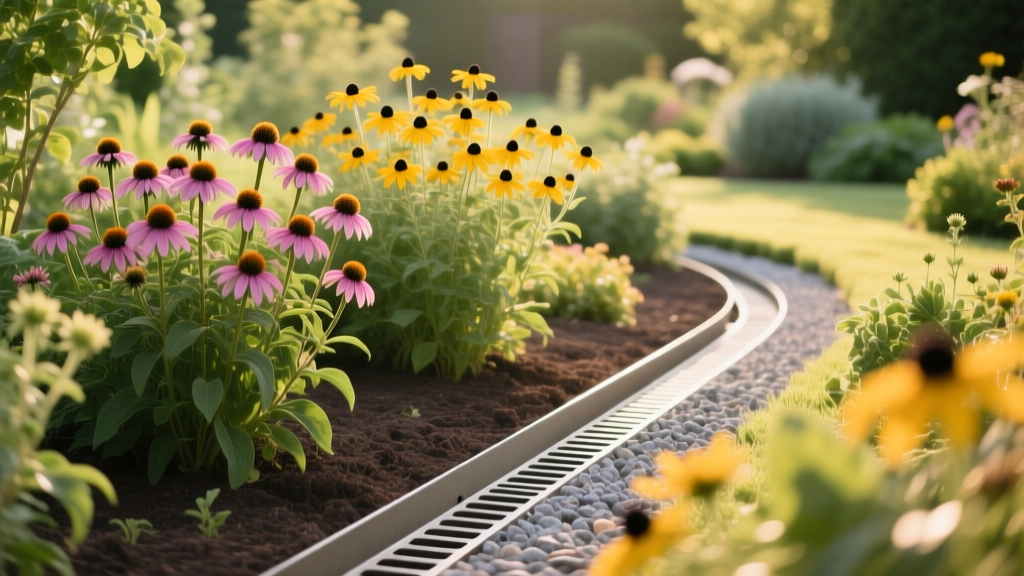
2026 French Drain Garden Design: Coneflowers & Black-Eyed Susans
Mike RodriguezPublished
The Perfect Pairing: French Drains and Deep-Rooted Perennials
Yard drainage issues do not mean you have to sacrifice a beautiful, thriving landscape. In 2026, integrating hardscape drainage solutions with softscape perennial gardens is a leading trend in sustainable landscape architecture. Homeowners frequently struggle with low-lying areas that pool water, threatening foundation integrity and drowning shallow-rooted plants. The traditional solution is a French drain, but the challenge lies in what to plant over and around the trench. Enter the ultimate drainage-friendly duo: Coneflowers (Echinacea purpurea) and Black-Eyed Susans (Rudbeckia fulgida).
Both of these North American native perennials are celebrated for their vibrant, long-lasting blooms and incredible resilience. More importantly, they possess deep, drought-tolerant root systems that thrive in the exceptionally well-aerated, fast-draining soil environment created by a French drain. By combining modern drainage engineering with a classic prairie-style planting scheme, you can transform a soggy yard problem into a stunning ecological asset.
Step 1: 2026 French Drain Installation Standards for Garden Beds
Before selecting your plant varieties, the underlying drainage infrastructure must be installed correctly to handle heavy spring runoff while providing a stable base for a garden bed. According to current landscaping guidelines, a garden-integrated French drain requires specific dimensions and materials to prevent soil subsidence and root intrusion.
Trenching and Grading
Dig a trench that is 12 inches wide and 18 inches deep. The trench must maintain a minimum slope of 1% (a 1-inch drop for every 8 feet of pipe) to ensure gravity moves the water away from your problem area toward a designated discharge point, such as a dry well or storm drain.
Pipe Selection and Geotextile Wrapping
Use a rigid, perforated PVC pipe (4-inch diameter) rather than flexible corrugated tubing. Rigid PVC is highly recommended in 2026 for garden beds because it resists crushing under the weight of soil and foot traffic, and its smooth interior walls prevent sediment buildup. Line the trench with a high-quality, commercial-grade non-woven geotextile fabric. This fabric is critical; it allows water to permeate while blocking soil particles and aggressive plant roots from clogging the gravel and pipe.
Gravel Backfill and Root Barriers
Fill the trench with 3/4-inch washed river rock or crushed stone up to 4 inches below the final grade level. Washed stone is essential because it lacks the fine dust that can turn into mud and clog the system. Once the gravel is in place, fold the excess geotextile fabric over the top to create a complete envelope. Finally, add a 4-to-6-inch layer of coarse sand or a specialized structural soil mix on top of the fabric. This layer acts as a buffer, ensuring that the deep taproots of your perennials have a transition zone before reaching the gravel bed.
Step 2: Soil Preparation Over the Drainage Trench
Coneflowers and Black-Eyed Susans despise "wet feet" and will quickly succumb to root rot in heavy, waterlogged clay. The French drain naturally solves the subterranean moisture issue, but the topsoil layer must also be optimized. According to the University of Minnesota Extension, Echinacea thrives in well-drained, slightly acidic to neutral soil (pH 6.0 to 7.0).
Amend the top 6 inches of your garden bed with a mixture of 60% native topsoil, 30% coarse horticultural sand, and 10% organic compost. This specific 2026 soil recipe mimics the natural prairie environment, providing enough organic matter to support initial growth while guaranteeing rapid surface drainage directly into the French drain system below.
Step 3: Designing the Coneflower and Black-Eyed Susan Layout
Designing a perennial garden over a drainage bed requires an understanding of mature plant sizes and root behaviors. Both Echinacea and Rudbeckia form deep taproots that anchor them securely and allow them to access deep moisture reserves during late-summer droughts. The NC State Extension Plant Toolbox notes that Rudbeckia fulgida is exceptionally adaptable to varying soil moisture levels, making it a perfect companion to the more drought-demanding Echinacea.
Color Theory and Drift Planting
For maximum visual impact, utilize "drift planting"—grouping plants in sweeping, naturalistic curves rather than rigid rows. The complementary colors of purple (Coneflower) and golden-yellow (Black-Eyed Susan) create a high-contrast, visually striking display that attracts pollinators from miles away.
- Foreground (Drainage Edge): Plant lower-growing Rudbeckia varieties like 'Little Goldstar' to define the edges of the bed.
- Midground: Interplant standard Echinacea purpurea 'PowWow Wild Berry' and Rudbeckia 'Goldsturm' in alternating drifts of 5 to 7 plants.
- Background: Use taller cultivars like Echinacea 'Magnus' or Rudbeckia maxima (Giant Coneflower) near the back of the bed to provide vertical structure and hide any visible drainage discharge outlets.
Perennial Drainage Garden Specifications
| Plant Species | Recommended 2026 Cultivar | Mature Height | Spacing | Root Profile |
|---|---|---|---|---|
| Echinacea purpurea | 'PowWow Wild Berry' | 20-24 inches | 18-24 inches | Deep Taproot |
| Rudbeckia fulgida | 'American Gold Rush' | 24-30 inches | 18-24 inches | Fibrous/Taproot |
| Echinacea purpurea | 'Magnus' | 30-36 inches | 24-30 inches | Deep Taproot |
| Rudbeckia maxima | Giant Coneflower | 60-84 inches | 36 inches | Massive Taproot |
Step 4: Companion Plants for the Drainage Bed
While Coneflowers and Black-Eyed Susans are the stars of this design, incorporating a few complementary species will extend the bloom season and enhance soil health. Ornamental grasses are the ultimate companions for French drain gardens. Their fibrous root systems help bind the topsoil, preventing erosion over the trench, while their feathery plumes contrast beautifully with the daisy-like perennial flowers.
Consider adding Schizachyrium scoparium (Little Bluestem) or Panicum virgatum (Switchgrass). Both are native prairie grasses that thrive in well-drained soils and provide crucial winter structure. Avoid planting shallow-rooted, moisture-loving annuals or aggressive groundcovers like English Ivy directly over the drain, as they can trap surface moisture and defeat the purpose of the aeration layer.
Long-Term Maintenance and Drainage Health
Maintaining a garden situated over a French drain requires a slightly different approach than a standard flower bed. The primary goal is to ensure the drainage system remains uncompromised while keeping the perennials vigorous.
Watering and Fertilization
During the first year of establishment, water the bed deeply once a week to encourage those vital taproots to grow downward toward the cool, aerated gravel layer. By year two, the deep root systems will make the plants highly drought-tolerant. Avoid heavy nitrogen fertilizers; rich soil causes Coneflowers to produce weak, floppy stems and excessive foliage at the expense of blooms. A light application of organic compost in early spring is all that is required.
Mulching Best Practices
Use a thin layer (no more than 1.5 inches) of inorganic mulch, such as pea gravel or crushed stone, around the base of the plants. Organic wood mulch can retain too much surface moisture and decompose into fine particles that may eventually wash down into the French drain gravel, reducing its permeability. Inorganic gravel mulch mimics the plants' natural habitat and keeps the soil surface dry, preventing crown rot.
Winterizing and Seed Heads
As autumn approaches, resist the urge to cut back the spent flowers. The striking, spiky seed heads of the Coneflowers and the dark cones of the Black-Eyed Susans provide essential winter food for goldfinches and chickadees. Furthermore, the standing stems help catch snow, which acts as an insulating blanket for the root zone. In late winter or early spring, simply chop the dead foliage down to the ground just before new green shoots emerge.
Conclusion
Integrating a French drain into a perennial flower garden is a brilliant way to solve landscape drainage issues without resorting to unsightly concrete channels or barren rock gardens. By following proper 2026 installation protocols and selecting deep-rooted, drought-tolerant natives like Echinacea and Rudbeckia, you create a dynamic, low-maintenance ecosystem. The result is a vibrant, pollinator-friendly prairie garden that quietly and efficiently manages your yard's water runoff for decades to come. For more detailed information on managing soggy landscapes, the Royal Horticultural Society offers excellent foundational guidelines on combining hardscape drainage with sustainable planting.
