Lawn Care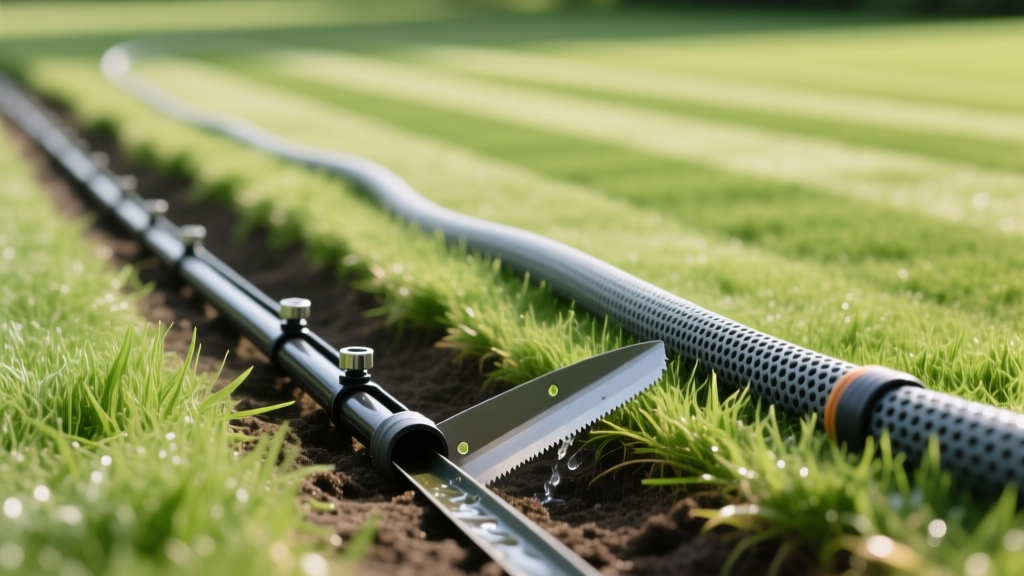
Drip Tape vs Soaker Hose for Lawn Borders: 2026 Mowing Guide
Emily WatsonPublished
The Intersection of Irrigation and Mowing Patterns
Achieving pristine, golf-course-quality mowing patterns in 2026 requires more than just a well-tuned mower and a heavy striping kit. The true secret to breathtaking checkerboards, diamonds, and straight stripes lies in the crisp definition of your lawn borders. However, maintaining lush, healthy borders throughout the peak summer months demands consistent hydration, leading many homeowners to a critical landscaping crossroads: should you use drip irrigation tape or a traditional soaker hose? While both deliver water efficiently, their physical profiles drastically impact your mowing techniques, edging routines, and the longevity of your landscaping equipment.
According to the EPA WaterSense program, targeted micro-irrigation systems can save up to 80% more water compared to traditional sprinklers by delivering moisture directly to the root zone. But when you are meticulously planning your mowing routes, water efficiency is only half the battle. You must also consider how the physical presence of your irrigation lines interacts with your mower wheels, string trimmers, and manual edgers. Let us break down the battle of drip tape versus soaker hoses specifically through the lens of mowing techniques and pattern execution.
Drip Irrigation Tape: The Striping Enthusiast's Choice
Drip irrigation tape is a flat, thin-walled polyethylene tube with pre-installed emitters. When unpressurized, it lies completely flat. For lawn care enthusiasts dedicated to complex mowing patterns, drip tape is the undisputed champion of border irrigation. Why? Because it can be easily buried one to two inches beneath the soil surface or tucked seamlessly under a layer of mulch without creating bulky ridges.
When executing a perimeter pass—the crucial first step in any striping pattern where you outline the lawn before filling in the interior—you need your mower wheels to glide smoothly along the edge. Buried drip tape ensures the soil line remains firm and even. Furthermore, if you use a motorized lawn edger to maintain a crisp trench between your turf and your mulch beds, buried drip tape is safely out of the blade's path, provided you installed it at the proper depth. Research from the University of Minnesota Extension emphasizes that proper installation depth not only protects irrigation lines from UV degradation but also prevents surface disruption that can ruin the visual continuity of lawn stripes.
Soaker Hoses: Flexibility vs. Mower Interference
Soaker hoses, typically made from recycled rubber or porous vinyl, are round, bulky, and weep water along their entire length. They are incredibly forgiving to install around curved garden beds and require no special tools or hole-punching kits. However, from a mowing perspective, soaker hoses present significant challenges.
Because of their thick, round profile (usually 5/8-inch in diameter), soaker hoses rarely sit perfectly flush against the ground. They tend to twist, kink, and creep out of mulch beds and into the turf. When you are mowing your perimeter pass, a rogue soaker hose can easily get caught under a mower deck, resulting in a shredded hose and a stalled blade. Additionally, if you rely on a string trimmer to define the edges of your lawn before laying down stripes, an exposed soaker hose is a prime target for accidental slicing. The thick rubber also creates a physical barrier that can deflect your mower wheels, causing micro-stutters in your straight lines and ruining the optical illusion of a perfect checkerboard pattern.
2026 Comparison Chart: Drip Tape vs. Soaker Hose
| Feature | Drip Irrigation Tape | Soaker Hose |
|---|---|---|
| Profile Thickness | Flat (approx. 0.015 inches) | Round (5/8-inch diameter) |
| Burial Capability | Excellent (can bury 1-2 inches deep) | Poor (prone to clogging if buried) |
| Mower/Trimmer Safety | High (when buried or pinned under mulch) | Low (easily sliced or caught in decks) |
| Water Distribution | Precise (emitters every 6-12 inches) | Diffuse (weeps along entire length) |
| 2026 Avg. Cost | $0.15 - $0.25 per foot | $0.40 - $0.65 per foot |
| Robotic Mower Compatibility | Perfect (invisible to sensors) | Poor (triggers obstacle avoidance) |
Navigating Irrigated Borders: Mowing Techniques
Regardless of which system you choose, adapting your mowing technique is vital to protect your investment and maintain flawless patterns. Here are the best practices for navigating irrigated borders in 2026.
The Perimeter Pass and Wheel Placement
The perimeter pass dictates the boundary of your entire mowing pattern. When irrigated borders are present, you must practice the "inside-wheel" technique. Keep the inside edge of your mower wheel exactly one inch inside the turf line. If you are using a soaker hose laid in the adjacent mulch, this technique prevents your tire from crushing the hose, which can cause pressure blowouts at the fittings. If you have buried drip tape, this technique ensures you aren't compacting the soil directly over the emitters, maintaining optimal water seepage.
Managing Turning Radii at the Borders
Complex patterns like diamonds require sharp, 90-degree turns at the lawn borders. Turning a heavy zero-turn or riding mower on the spot can tear up the turf and dig into the border edge. Always execute a three-point turn or use a wide looping turn that keeps the mower wheels entirely on the grass. According to turf management experts at NC State Turfgrass, minimizing localized turning stress on lawn edges prevents soil compaction and turf tearing, which is especially critical near irrigated borders where the soil moisture content can make the edge more susceptible to collapsing.
String Trimmer and Edger Safety
Never use a string trimmer to cut grass that has overgrown onto a soaker hose. The monofilament line will instantly destroy the rubber. Instead, use a pair of manual grass shears or carefully lift the hose before trimming. For drip tape buried under mulch, use a stick edger to redefine the trench, but always angle the blade slightly away from the bed to avoid slicing into the shallow irrigation lines.
The Rise of Robotic Mowers in 2026
The 2026 landscaping season has seen a massive surge in the adoption of boundary-wire-free robotic mowers that rely on RTK GPS and ultrasonic sensors. If you are integrating a robotic mower into your lawn care routine, soaker hoses are a major liability. The thick, dark rubber of a soaker hose can confuse optical sensors and trigger false obstacle-avoidance routines, leaving uncut strips of grass along your borders. Drip irrigation tape, being completely flat and buried, is entirely invisible to robotic mowers, allowing them to edge perfectly right up to the boundary line without interruption.
Final Verdict for 2026
If your primary goal is to maintain immaculate, professional-grade mowing patterns, drip irrigation tape is the superior choice for lawn borders. Its ability to be buried or hidden flush beneath mulch ensures that your mower wheels, striping kits, and edgers encounter zero physical interference. While it requires a bit more upfront planning and the use of barbed fittings, the payoff in visual continuity and equipment safety is immense.
Conversely, soaker hoses should be reserved for heavily wooded areas, deep garden beds, or temporary setups where mowing equipment will never venture. By aligning your irrigation choices with your mowing techniques, you ensure that your lawn remains both perfectly hydrated and visually stunning all season long.