Lawn Care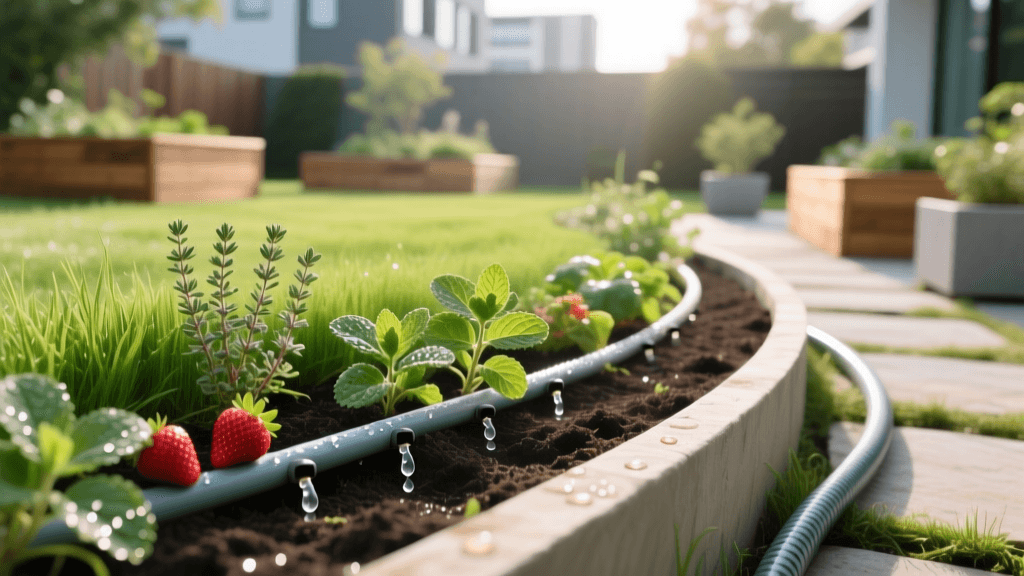
Drip Tape vs Soaker Hose: Edible Lawn Borders 2026
The Rise of Edible Lawn Borders in 2026
The concept of the traditional American lawn has undergone a massive transformation over the last few years, and as we navigate the 2026 growing season, foodscaping has firmly moved from a niche trend to a mainstream landscaping staple. Homeowners are no longer satisfied with purely ornamental turf. Instead, they are converting the perimeter borders of their lawns into highly productive edible zones. Whether you are planting dwarf blueberry bushes, establishing perennial asparagus crowns, or tucking vibrant Swiss chard and kale along your property lines, integrating food into your lawn borders requires a delicate balance of aesthetics, soil health, and precise water management.
When it comes to irrigating these transitional zones, the two most popular low-volume options are drip irrigation tape and soaker hoses. Both systems deliver water directly to the root zone, minimizing evaporation and keeping the foliage of your edible plants dry to prevent fungal diseases. However, their design, durability, and ideal use cases differ significantly. Choosing the wrong system for your specific edible border layout can lead to uneven watering, clogged emitters, or damaged turf margins. In this comprehensive guide, we break down the pros, cons, and 2026 best practices for using drip tape versus soaker hoses in edible lawn borders.
Understanding the Contenders: Drip Tape vs. Soaker Hose
Before we dig into the soil, it is crucial to understand the fundamental engineering differences between these two irrigation methods. While they may look similar when rolled up in the garden shed, they operate on entirely different hydraulic principles.
What is Drip Irrigation Tape?
Drip tape is a thin-walled, flat polyethylene tube that inflates when water pressure is applied. It features pre-punched, precisely spaced emitters (usually every 6 to 12 inches) that release water drop by drop. Modern 2026 models, such as the Netafim Streamline X or Toro Aqua-Traxx, utilize advanced turbulent-flow emitter technology that resists clogging from mineral buildup and organic debris. Drip tape is designed for low-pressure systems (typically 8 to 15 PSI) and is highly efficient for straight-line planting.
What is a Soaker Hose?
A soaker hose is a round, porous hose typically made from recycled rubber or a vinyl composite. Instead of distinct emitters, the entire length of the hose 'weeps' or sweats water through its microscopic pores. Premium 2026 options like the Gilmour Flexogen Soaker or Dramm ColorStorm provide more uniform weeping than older models, but they still require very low pressure (10 to 15 PSI) to prevent bursting or uneven water distribution. Soaker hoses are highly flexible and excel in winding, curved garden beds.
Head-to-Head Comparison Chart
To help you decide which system suits your edible lawn border, review the comparison table below detailing the critical performance metrics for the 2026 gardening season.
| Feature | Drip Irrigation Tape | Soaker Hose |
|---|---|---|
| Material | Thin-walled Polyethylene (Flat) | Recycled Rubber / Vinyl (Round) |
| Water Delivery | Precise, spaced emitters | Continuous weeping pores |
| Operating Pressure | 8 - 15 PSI (Requires Regulator) | 10 - 15 PSI (Requires Regulator) |
| Durability (UV & Wear) | 1 to 3 seasons (unless buried/mulched) | 3 to 5 seasons |
| Clogging Risk | Moderate (Requires 120-mesh filter) | Low (Pores are less prone to internal clogging) |
| Best Border Layout | Straight lines, row crops, raised edges | Curved borders, perennial clusters, winding paths |
| Estimated Cost (per 50ft) | $12 - $18 | $25 - $40 |
Deep Dive: Drip Tape for Linear Edible Borders
If your lawn border features straight edges, geometric foodscaping designs, or row-planted vegetables like bush beans, peas, or linear herb gardens, drip tape is the undisputed champion. Because the emitters are spaced exactly 8 or 12 inches apart, you can align your transplants perfectly with the water delivery points. This ensures that every drop of water goes directly to the root ball of your edible plants, completely bypassing the adjacent turfgrass and preventing weed germination in the dry spaces between plants.
According to data from EPA WaterSense, properly installed drip irrigation systems can save up to 30,000 gallons of water per year compared to traditional spray sprinklers, making drip tape an eco-friendly choice for drought-conscious regions in 2026. Furthermore, because drip tape lays completely flat when not pressurized, it is incredibly easy to cover with a 2-inch layer of organic mulch, which hides the tubing, retains soil moisture, and protects the thin polyethylene from UV degradation.
The Drawback: Drip tape is fragile. If you use heavy steel edging tools near your lawn border, or if burrowing rodents are active in your turf margins, the thin walls can easily be punctured. It also requires a dedicated 120-mesh filter at the hose bib to prevent hard water scale or organic particles from clogging the tiny emitters.
Deep Dive: Soaker Hoses for Curved & Perennial Foodscapes
Not all lawn borders are straight. Many modern landscape designs utilize sweeping curves, meandering pathways, and organic shapes to separate the turf from the garden beds. If your edible border consists of winding raspberry brambles, established dwarf fruit trees, or clusters of perennial artichokes, a soaker hose is your best option. The round, rubbery construction allows you to snake the hose around the base of plants and navigate tight corners without kinking.
Soaker hoses are also more forgiving when it comes to water pressure fluctuations. While a pressure regulator is still highly recommended to extend the life of the hose, the porous nature of the rubber means you do not have to worry about individual emitters failing. For foodscaping enthusiasts who practice 'chop and drop' mulching or who frequently rearrange their border plants, the durability and flexibility of a soaker hose make it a rugged, reliable workhorse season after season.
The Drawback: Soaker hoses can suffer from uneven water distribution on sloped terrain. Because water naturally seeks the lowest point, the end of a 50-foot soaker hose on a slight incline may receive significantly more water than the beginning. Additionally, the heavy rubber material can be cumbersome to bury under delicate edible crops without damaging shallow root systems.
2026 Installation Best Practices & Smart Tech Integration
Regardless of whether you choose drip tape or a soaker hose, the success of your edible lawn border relies on proper installation and modern automation. In 2026, integrating your low-volume border irrigation with a smart Wi-Fi controller is no longer a luxury; it is a standard best practice for water conservation and plant health.
Step 1: Establish a Turf Buffer Zone
One of the biggest mistakes foodscapers make is placing edible plants and irrigation lines directly against the lawn edge. Turfgrass roots are aggressive and will quickly invade your nutrient-rich border soil, stealing water and fertilizer from your vegetables. Always install a physical root barrier or maintain a 4-to-6-inch hardscape or mulch buffer between the turf and your edible border. Run your drip tape or soaker hose on the garden side of this buffer.
Step 2: Install a Pressure Regulator and Filter
Standard household water pressure ranges from 40 to 80 PSI, which will instantly blow out the fittings on drip tape and cause soaker hoses to spray like a misting system. You must install a 15 PSI pressure regulator at the spigot. If using drip tape, attach a 120-mesh screen filter between the regulator and the tubing to guarantee clean water delivery.
Step 3: Connect to a Smart Controller
Pair your border irrigation zone with a 2026 smart controller like the Rachio 4 or Orbit B-hyve XR. These devices use hyper-local weather data and soil moisture algorithms to adjust watering schedules automatically. By assigning your edible border to its own dedicated valve, you can water your thirsty kale and tomatoes deeply without overwatering the adjacent drought-tolerant turfgrass. As noted by experts at Penn State Extension, separating irrigation zones by plant water requirement (hydrozoning) is the most effective way to reduce landscape water waste and prevent root rot in edible crops.
Soil Health, Mulching, and Disease Prevention
Edible landscaping requires a higher standard of soil health than ornamental lawns. Both drip tape and soaker hoses excel at keeping water off the leaves of your plants. This is critical for crops like tomatoes, squash, and cucumbers, which are highly susceptible to powdery mildew and blight when their foliage remains wet. By delivering water directly to the soil surface, you create a healthier microclimate.
To maximize efficiency, always cover your irrigation lines with 2 to 3 inches of organic mulch, such as straw, shredded leaves, or untreated wood chips. Mulch acts as an insulator, keeping the soil temperature stable and reducing surface evaporation by up to 70%. However, be careful not to pile mulch directly against the stems of your edible plants or the trunks of dwarf fruit trees, as this can invite rot and pest infestations. Leave a small 2-inch 'mulch-free' halo around the base of each plant.
Final Verdict: Which Should You Choose?
The choice between drip tape and soaker hoses for your edible lawn border ultimately depends on your landscape design and the types of crops you are growing. If your foodscaping design features straight lines, annual row crops, and you want the absolute highest level of water precision, invest in high-quality drip irrigation tape. It is cost-effective, highly efficient, and perfect for the modern, structured edible border.
On the other hand, if your lawn borders are curved, heavily planted with deep-rooted perennials like berries and fruit trees, and you need a durable system that can withstand seasonal shifting and heavy mulching, a premium rubber soaker hose is the superior choice. Whichever system you select, pairing it with a smart controller, proper pressure regulation, and a dedicated turf buffer zone will ensure your edible lawn border thrives beautifully throughout the 2026 season and beyond. For more inspiration on integrating food into your landscape, the National Gardening Association offers excellent regional guides on edible plant selection and soil preparation.