Lawn Care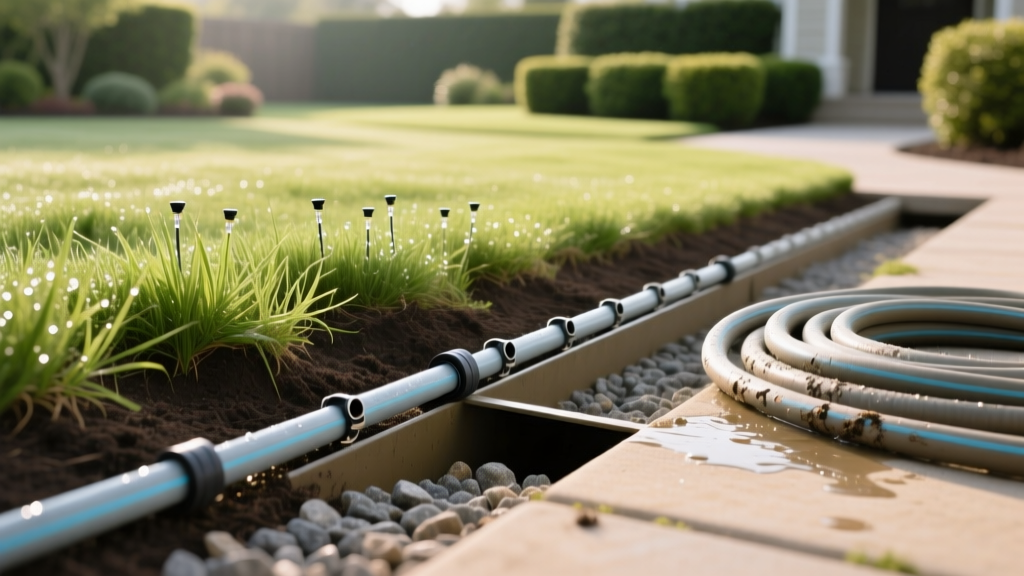
Drip Tape vs Soaker Hoses Near French Drains: 2026 Guide
Mike RodriguezPublished
The Intersection of Irrigation and Subsurface Drainage
As we navigate the advanced landscaping standards of 2026, homeowners and professional contractors alike are recognizing that water management is a holistic, zero-sum game. When you install a French drain to protect your foundation or eliminate yard pooling, you are making a significant investment in subsurface infrastructure. However, the plants that beautify your yard—specifically lawn borders, shrub beds, and ornamental grasses—require consistent hydration. This creates a unique conflict: how do you water lawn borders without overwhelming the very drainage system designed to move water away from your property?
The debate between using drip irrigation tape and traditional soaker hoses for lawn borders is not just about plant health; it is fundamentally about preserving the structural and functional integrity of your French drain. According to the University of Minnesota Extension, proper yard drainage relies on controlled water percolation and unobstructed gravel trenches. Introducing the wrong irrigation method near these trenches can lead to silt infiltration, pipe clogging, and eventual system failure. In this comprehensive 2026 guide, we break down exactly why drip tape is the superior choice for drain-adjacent lawn borders, and why soaker hoses pose a hidden threat to your drainage infrastructure.
Why Lawn Borders Complicate French Drain Performance
A standard French drain consists of a perforated pipe surrounded by washed gravel and wrapped in geotextile fabric. Its primary function is to intercept subsurface water and channel it away from critical areas. Lawn borders are frequently installed directly adjacent to these drain paths to soften the hardscaping or to utilize the slightly elevated soil grade created by the trench backfill.
When you irrigate these borders, the water must percolate through the root zone. If the irrigation method applies water too quickly or too broadly, the excess moisture migrates laterally into the French drain's gravel bed. While the drain is designed to handle water, constant, artificial saturation from irrigation can cause two major issues:
- Silt Migration: Continuous heavy watering can wash fine topsoil particles through the geotextile fabric, eventually clogging the perforated pipe.
- Hydrostatic Overload: If the drain is already managing a high water table or recent rainfall, adding irrigation runoff can overwhelm the pipe's flow capacity, causing water to back up into the root zones of your border plants, leading to root rot.
Drip Irrigation Tape: Precision for Drain-Adjacent Borders
Drip irrigation tape (often referred to as inline drip tubing) features precisely spaced, engineered emitters that deliver water drop-by-drop directly to the plant's root zone. In 2026, industry-leading models like the Netafim Streamline X and Rain Bird XFD series feature integrated check valves and pressure-compensating emitters that ensure uniform water distribution, even on sloped lawn borders.
From a French Drain Installation perspective, drip tape is the ultimate safeguard. Because the water is applied slowly and directly at the base of the plant, lateral migration toward the drain trench is minimized. The soil acts as a natural sponge, absorbing the moisture before it can reach the gravel bed. Furthermore, the EPA WaterSense program highlights that targeted drip irrigation reduces outdoor water waste by up to 50% compared to conventional methods, ensuring that every drop is utilized by the border plants rather than lost to the drainage aggregate.
Soaker Hoses: The Hidden Threat to French Drains
Soaker hoses are typically constructed from recycled rubber or porous vinyl and are designed to "weep" or sweat water along their entire length. While they are inexpensive and easy to deploy, they are notoriously imprecise. The water pressure dictates the weep rate, meaning the hose often leaks more water near the spigot and less at the far end.
When placed in a lawn border next to a French drain, a soaker hose becomes a liability. Because the water weeps indiscriminately, a significant portion of the moisture bleeds directly into the drain's gravel backfill. Over the course of a summer, this constant bleeding can wash mulch and topsoil into the geotextile fabric. Additionally, soaker hoses are highly susceptible to UV degradation and root intrusion, making them a high-maintenance headache in complex landscaped beds where subsurface drainage is present.
2026 Comparison: Drip Tape vs. Soaker Hoses
| Feature | Drip Irrigation Tape (Inline Emitters) | Traditional Soaker Hose |
|---|---|---|
| Water Precision | High (Targeted emitters, 0.5 to 1.0 GPH) | Low (Indiscriminate weeping along entire length) |
| French Drain Safety | Excellent (Minimizes lateral water migration) | Poor (High risk of saturating gravel trenches) |
| Pressure Requirements | Requires regulator (15-25 PSI) | Operates on standard hose pressure (can burst) |
| Lifespan (2026 Avg) | 5 to 10+ years (UV and root resistant) | 1 to 3 years (Prone to cracking and clogging) |
| Silt Infiltration Risk | Very Low | High (Washes soil into drain fabric) |
Strategic Installation: The 18-Inch Buffer Rule
To protect your French drain while maintaining lush lawn borders, landscape architects in 2026 strictly adhere to the "18-Inch Buffer Rule." When laying out your irrigation lines, the outermost drip tape should be positioned at least 18 inches away from the edge of the French drain's gravel trench. This buffer zone allows the soil to fully absorb the irrigation water before it has any chance of lateral movement into the drain aggregate.
For narrow lawn borders where an 18-inch buffer is impossible, you must adjust your emitter spacing and flow rate. Utilize drip tape with 12-inch emitter spacing and a low flow rate of 0.5 Gallons Per Hour (GPH). Run the system for longer, slower intervals to match the soil's percolation rate, preventing the formation of a saturated soil wedge that could push water into the drain.
Soil Percolation and Emitter Spacing
The success of your drip tape installation near a French drain depends heavily on your native soil type:
- Clay Soils: Water moves slowly and laterally. Use emitters spaced 12 inches apart. If placed too close to a French drain, the lateral spread will inevitably hit the gravel. Maintain a strict 24-inch buffer if possible.
- Sandy Loam: Water moves straight down. You can safely use emitters spaced 18 to 24 inches apart, and the buffer zone can be reduced to 12 inches, as the water will bypass the lateral drain trench and drop deep into the water table.
Essential Components for a Drain-Safe Irrigation Zone
To ensure your lawn border irrigation does not compromise your French drain, your 2026 setup must include the following components at the manifold:
- Backflow Preventer: Protects your home's potable water supply from soil contaminants near the drain trench.
- Y-Filter (120 Mesh): Prevents microscopic debris from clogging the precision emitters, ensuring you don't have to dig up the border (and risk damaging the drain fabric) to replace lines.
- Pressure Regulator (25 PSI):strong> Drip tape is engineered for low pressure. High pressure will cause emitter blowouts, creating localized geysers that can instantly flood a French drain trench and wash away the protective topsoil.
Winterization and Maintenance for 2026
French drains are designed to handle the freeze-thaw cycles of winter, but trapped water in irrigation lines can cause heaving that disrupts the drain's gravel bed. Unlike soaker hoses, which are often left to freeze and crack, modern drip tape systems must be properly winterized. Use a low-pressure air compressor (never exceeding 20 PSI) to blow out the drip lines in late autumn. This ensures that no residual water remains near the French drain trench to expand and shift the geotextile fabric during freezing temperatures.
Conclusion
When designing lawn borders near a French drain, the choice of irrigation is just as critical as the drain's installation depth and gravel quality. While soaker hoses may seem like a cheap, quick fix, their indiscriminate weeping poses a severe risk of silt infiltration and hydrostatic overload to your subsurface drainage system. By investing in high-quality, pressure-compensating drip irrigation tape and adhering to strategic buffer zones, you can maintain vibrant, healthy landscape borders in 2026 without sacrificing the structural integrity of your French drain.