Lawn Care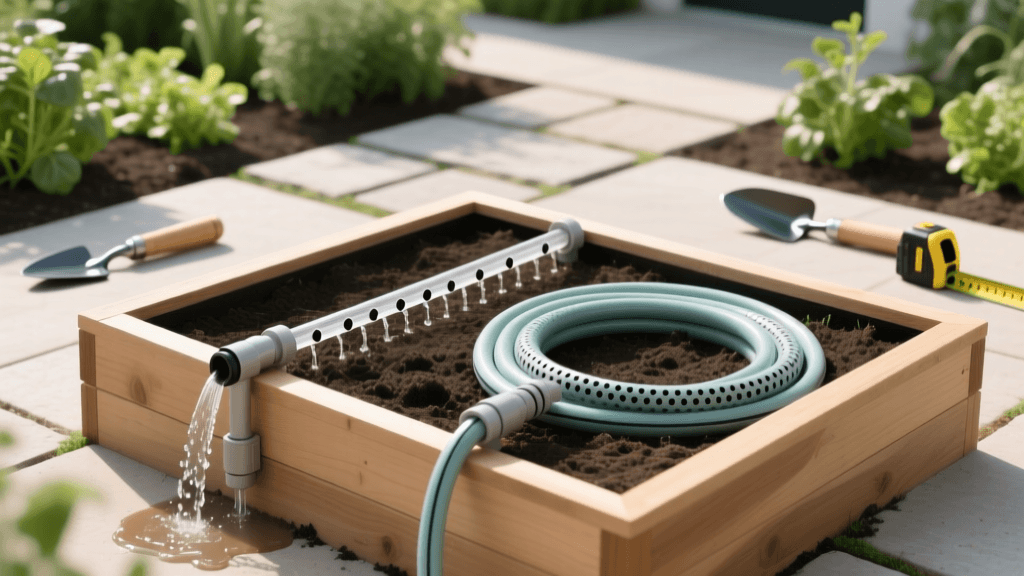
Drip Tape vs Soaker Hose for Raised Bed Lawn Borders 2026
The Unique Challenge of Raised Bed Lawn Borders in 2026
Raised bed vegetable gardening continues to dominate home landscaping trends in 2026, offering superior soil control, drainage, and ergonomic benefits. However, where your rich, amended garden soil meets the adjacent turfgrass—the lawn border—a unique microclimate and horticultural challenge emerges. This transition zone is notorious for rapid moisture loss, known as the "edge effect," and is a prime battleground for water competition between your high-value vegetables and aggressive lawn grasses like Bermudagrass or Kentucky Bluegrass.
Choosing the right irrigation method for this specific perimeter is critical. Overwatering the border can lead to lawn fungus, encourage turf rhizomes to invade your vegetable bed, and waste precious water. Underwatering leads to stunted root crops and blossom end rot in tomatoes planted near the edges. In 2026, the debate between using flat drip irrigation tape and traditional porous soaker hoses for these lawn borders is more relevant than ever, driven by stricter municipal water restrictions and advancements in smart irrigation technology. This comprehensive guide will break down the pros, cons, and best installation practices for both systems to help you optimize your raised bed perimeters.
Drip Irrigation Tape: Precision for the Perimeter
Drip tape is a thin-walled, flat polyethylene tubing that expands when pressurized, featuring pre-punched or laser-drilled emitters spaced at precise intervals (typically 6, 8, or 12 inches). For straight raised bed borders that run parallel to a lawn edge, drip tape is the undisputed champion of efficiency.
Advantages for Lawn Borders
- Pinpoint Accuracy: Because emitters are spaced exactly, you can lay the tape 4 to 6 inches inside the bed border, delivering water exclusively to your vegetable root zones without wetting the adjacent lawn soil. This prevents lawn weeds and grass from creeping into the bed.
- Water Conservation: Modern 2026 drip tapes offer flow rates as low as 0.25 to 0.50 gallons per hour (GPH) per emitter. According to the EPA WaterSense program, targeting water directly to the root zone in this manner can reduce outdoor water use by up to 50% compared to broadcast spraying.
- Pressure Compensation: If your raised bed borders are situated on a slope, 2026 models of pressure-compensating (PC) drip tape ensure that the emitters at the bottom of the hill do not leak or blow out, providing uniform hydration along the entire lawn edge.
Drawbacks
Drip tape is highly susceptible to physical damage. Rodents chewing through the thin walls, accidental strikes from a garden trowel, or UV degradation if left exposed to the sun for multiple seasons can render it useless. Furthermore, it is strictly designed for straight lines; bending it around the curved corners of a lawn border will kink the tape and block water flow.
Soaker Hoses: Flexibility for Curved Transitions
Soaker hoses are thicker, round hoses made from recycled rubber or virgin polyurethane that "weep" or sweat water along their entire length. They operate on the principle of porous extrusion, allowing water to seep out continuously when pressurized.
Advantages for Lawn Borders
- Supreme Flexibility: If your raised bed features curved edges to match a winding lawn border or a naturalistic landscape design, soaker hoses can easily navigate the bends without kinking.
- Durability Against Pests: The thick walls of a premium polyurethane soaker hose are highly resistant to rodent bites and accidental tool strikes, making them a robust choice for busy garden borders.
- Forgiving Layouts: Because they weep continuously, you do not need to worry about aligning specific emitters with individual plants along the border.
Drawbacks
The primary issue with soaker hoses near lawn borders is their lack of precision. Water seeps out in all directions, meaning the soil immediately adjacent to the bed edge—and potentially the lawn grass itself—will receive moisture. This can encourage shallow lawn roots to grow toward the bed. Additionally, the Penn State Extension notes that soaker hoses are highly prone to uneven water distribution on slopes, with the lower end of the hose receiving significantly more water pressure and output than the higher end.
Head-to-Head Comparison: Drip Tape vs. Soaker Hoses
To help you decide which system is best for your specific raised bed lawn border, refer to the 2026 comparison chart below:
| Feature | Drip Irrigation Tape | Soaker Hose |
|---|---|---|
| Best Border Shape | Straight lines and 90-degree corners (with fittings) | Curved, winding, or irregular lawn edges |
| Water Precision | High (Targeted emitters) | Low (Continuous weeping) |
| Lawn Encroachment Risk | Low (If placed 4+ inches inside bed) | Moderate to High (Wets the immediate edge) |
| Slope Performance | Excellent (with PC emitters) | Poor (Uneven distribution) |
| Expected Lifespan | 1 to 3 seasons | 3 to 5+ seasons (Polyurethane) |
| 2026 Avg. Cost | $0.12 - $0.18 per foot | $0.45 - $0.75 per foot |
Installation Best Practices for 2026
Regardless of whether you choose drip tape or a soaker hose for your lawn borders, proper installation is non-negotiable. The Texas A&M AgriLife Extension emphasizes that micro-irrigation systems require specific prep work to function correctly and avoid clogging.
1. Filtration and Pressure Regulation
Never connect drip tape or soaker hoses directly to a standard outdoor spigot without preparation. Drip tape operates optimally at 10 to 15 PSI, while soaker hoses prefer 20 to 25 PSI. Standard municipal water pressure often exceeds 60 PSI, which will blow out drip tape fittings and cause soaker hoses to burst. Install a 120-mesh screen filter to catch sediment and hard water minerals, followed by an adjustable pressure regulator.
2. Strategic Placement Along the Border
To protect your vegetables while starving the adjacent lawn of excess moisture, lay your irrigation line 6 inches inward from the physical wooden or stone border of the raised bed. This creates a "dry buffer zone" at the very edge of the bed. Lawn grass roots are opportunistic; if they detect constant moisture at the border seam, they will send rhizomes under the bed walls. By keeping the immediate edge dry, you naturally deter lawn encroachment.
3. Integration with Smart Controllers
In 2026, integrating your border irrigation with a smart Wi-Fi controller (such as the latest Rachio or B-hyve models) paired with a soil moisture sensor placed specifically in the border zone is highly recommended. Because the edge of the raised bed dries out faster than the center, having a dedicated valve for the perimeter drip tape allows you to water the borders 15% longer than the bed's interior without waterlogging the center.
Managing the Lawn Transition Zone
Irrigation is only half the battle when dealing with raised bed lawn borders. To truly protect your vegetable garden from the turf, consider installing a physical root barrier. Before laying your drip tape or soaker hose, trench a 12-inch deep groove along the outside of the raised bed and insert a high-density polyethylene (HDPE) rhizome barrier. This stops aggressive lawn grasses from tunneling under the bed walls to access the nutrient-rich soil and the water from your irrigation system.
Additionally, cap the border with a 2-inch layer of coarse cedar mulch. Mulch over the drip tape or soaker hose reduces surface evaporation by up to 70%, keeps the polyethylene tubing hidden from UV rays, and creates a physical obstacle for wind-blown lawn weed seeds.
Winterization and Seasonal Maintenance
When the vegetable season ends and frost approaches, your irrigation strategy for the borders must adapt. Drip tape is generally considered a semi-disposable product. In late autumn, flush the lines by opening the end caps to clear out sediment, but expect to replace the tape every two to three seasons. Soaker hoses, particularly the premium polyurethane varieties, should be drained, disconnected, and stored in a frost-free shed to prevent the porous material from cracking during freeze-thaw cycles.
Conclusion
Mastering the raised bed lawn border requires a nuanced approach to irrigation. If your garden features long, straight edges and you prioritize absolute water precision to keep your lawn at bay, drip irrigation tape is the most efficient, cost-effective choice for 2026. However, if your landscape features winding, curved beds where flexibility and physical durability are paramount, a high-quality polyurethane soaker hose will serve you well. By pairing the right tubing with proper pressure regulation, smart scheduling, and a dry buffer zone, you can maintain a lush, productive vegetable garden right up to the edge of your lawn without wasting a single drop of water.