Lawn Care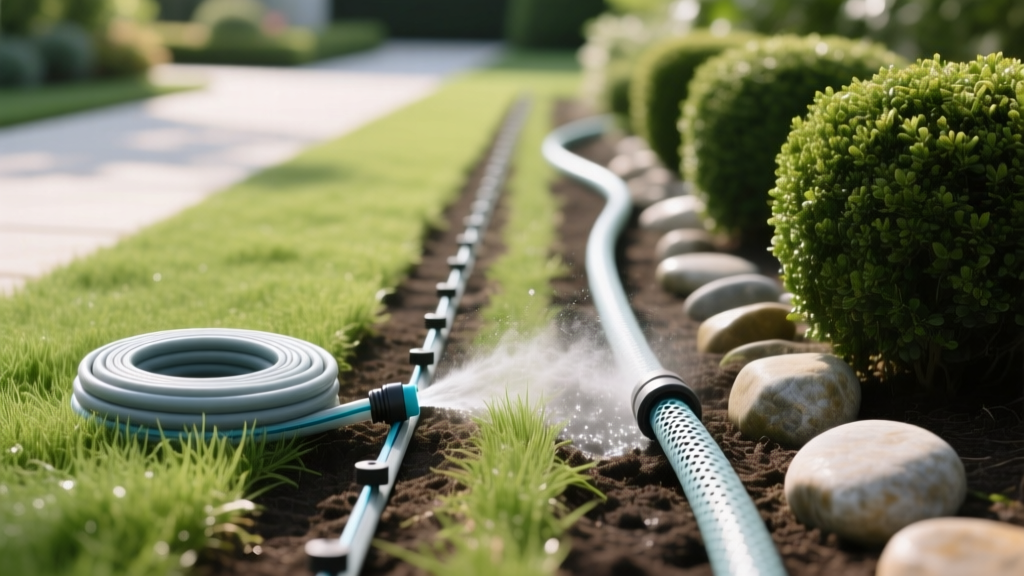
Drip Tape vs Soaker Hose for Lawn Borders: 2026 Guide
Emily WatsonPublished
The Great Border Irrigation Debate: Drip Tape vs. Soaker Hoses
As homeowners in 2026 face increasingly stringent municipal water restrictions and rising utility costs, optimizing every drop of water in the landscape has never been more critical. Lawn borders—the transitional zones between your main turfgrass and hardscapes, flower beds, or property lines—present a unique irrigation challenge. They are often narrow, densely planted, and prone to rapid evaporation when watered by traditional overhead sprinklers. To solve this, landscaping professionals and DIY enthusiasts alike are turning to low-volume micro-irrigation. But which system is best for your specific yard? In this comprehensive 2026 guide, we break down the technical differences, costs, and practical applications of drip irrigation tape versus soaker hoses for lawn borders.
Understanding Drip Irrigation Tape
Drip irrigation tape (often referred to by the popular brand name T-Tape) is a thin-walled, flat polyethylene tubing that expands when pressurized. It features precisely engineered, factory-installed emitters spaced at regular intervals (typically 6, 8, or 12 inches). According to the EPA WaterSense program, drip irrigation systems can achieve up to 90% water use efficiency by delivering water directly to the root zone, virtually eliminating wind drift and evaporation losses.
Pros of Drip Tape for Borders
- Precision Watering: Emitters deliver exact gallons-per-hour (GPH) outputs, allowing you to tailor water delivery to specific border plants.
- Uniformity on Slopes: Modern 2026 pressure-compensating (PC) drip tapes maintain a consistent flow rate even if your lawn border slopes or features uneven terrain.
- Cost-Effective for Long Runs: Drip tape is exceptionally cheap per linear foot, making it ideal for long, straight property line borders.
Cons of Drip Tape
- Low Durability: Standard 8-mil drip tape is susceptible to punctures from garden trowels, animal bites, and UV degradation if left exposed to direct sunlight.
- Strict Pressure Requirements: Drip tape operates optimally between 8 and 15 PSI. Connecting it directly to a standard 60-PSI outdoor spigot without a pressure regulator will cause the tape to burst.
- Rigidity: While it can handle gentle curves, drip tape kinks easily if forced around tight, 90-degree corners.
Understanding Soaker Hoses
Soaker hoses are constructed from porous materials—traditionally recycled rubber, but increasingly in 2026, food-safe polyurethane (PU)—that allow water to "sweat" or weep continuously along the entire length of the hose. They are a staple in traditional gardening due to their simplicity and ease of use.
Pros of Soaker Hoses
- Flexibility: Soaker hoses are highly pliable, making them the superior choice for winding lawn borders, curved retaining walls, and circular tree rings.
- Higher Pressure Tolerance: They can handle standard residential water pressure (up to 60 PSI) without requiring a pressure regulator, though a reducer is still recommended to prevent hose swelling.
- Forgiving Installation: Because they lack discrete emitters, you do not need to align specific holes with individual plants.
Cons of Soaker Hoses
- Uneven Distribution: Water pressure drops over long distances. A 100-foot soaker hose will output significantly more water near the spigot than at the far end.
- Mineral Clogging: The microscopic pores in the hose are highly susceptible to calcium and magnesium buildup in areas with hard water.
- Environmental Concerns: Older recycled-tire soaker hoses have been found to leach heavy metals. In 2026, experts strongly recommend purchasing virgin polyurethane soaker hoses to protect soil health.
Head-to-Head Comparison Chart
| Feature | Drip Irrigation Tape | Soaker Hose |
|---|---|---|
| Material | Thin-wall Polyethylene (8 to 15 mil) | Porous Recycled Rubber or Polyurethane |
| Operating Pressure | 8 - 15 PSI (Regulator Required) | 10 - 60 PSI |
| Water Distribution | Precise, spaced emitters | Continuous "sweat" along entire length |
| Max Recommended Length | Up to 400 feet (per zone) | Max 100 feet (to maintain even pressure) |
| Durability / Lifespan | 1 - 3 Seasons | 3 - 5 Seasons |
| Best Border Shape | Straight lines and gentle curves | Tight curves, circles, and winding beds |
| Estimated Cost (50 ft) | $15 - $25 | $25 - $45 |
Soil Types and Slope Dynamics
When designing your lawn border irrigation in 2026, you must account for your native soil profile. The United States Geological Survey (USGS) notes that soil infiltration rates dictate how quickly water can be absorbed before runoff occurs. In heavy clay soils, which have slow infiltration rates, soaker hoses can lead to puddling and surface runoff if left on for too long. Drip tape, with its spaced emitters and lower flow rates, allows water to slowly percolate into clay without overwhelming the soil's absorption capacity.
Conversely, if your lawn borders are situated on a steep incline, standard soaker hoses will suffer from severe pressure differentials. The lower end of the slope will receive excess water, while the upper end remains dry. Upgrading to pressure-compensating (PC) drip tape solves this issue entirely, as the internal diaphragms within the emitters equalize the water output regardless of gravity and elevation changes.
Step-by-Step Installation Best Practices for 2026
Whether you choose drip tape or a soaker hose, proper installation is the key to a lush, weed-free lawn border. Follow these updated steps for a professional-grade setup:
1. Integrate a Smart Irrigation Controller
Manual timers are a relic of the past. In 2026, connect your border irrigation zone to a smart Wi-Fi controller (such as the latest Rachio or B-hyve models). These devices use hyper-local weather data and evapotranspiration (ET) rates to automatically adjust watering schedules, ensuring your borders receive exactly what they need based on current humidity and temperature.
2. Install a Filter and Pressure Regulator
This step is non-negotiable for drip tape and highly recommended for soaker hoses. Attach a 200-mesh screen filter to your hose bibb or manifold to prevent debris from clogging emitters or soaker pores. Follow this with a 15-PSI pressure regulator for drip tape, or a 25-PSI regulator for soaker hoses to extend the lifespan of the materials.
3. Layout and Secure the Lines
Unroll your tubing and let it sit in the sun for 30 minutes to relax any memory kinks. Place the lines at the base of your border plants, approximately 2 inches away from the main stems to prevent crown rot. Secure the tubing every 3 feet using 6-inch galvanized steel landscape staples. For soaker hoses winding through tight curves, place staples closer together to prevent the hose from springing back.
4. Mulch for Protection and Efficiency
Never leave drip tape or soaker hoses exposed to the sun. UV radiation will degrade polyethylene and polyurethane within a single season. Cover the lines with 2 to 3 inches of organic hardwood mulch. This not only hides the unsightly tubing but also reduces surface evaporation by up to 40% and keeps the root zone cool during peak summer months.
Winterizing and Maintenance
To protect your investment, you must properly winterize your border irrigation system before the first hard freeze. Unlike rigid PVC sprinkler lines, micro-irrigation components are highly vulnerable to ice expansion. Disconnect all timers, filters, and pressure regulators and store them indoors. Open the end caps of your drip tape or the end plugs of your soaker hoses to allow trapped water to drain completely. If you live in a region with severe freezing cycles, use a portable air compressor set to a maximum of 20 PSI to gently blow out any remaining moisture from the lines.
Which Should You Choose?
The decision ultimately comes down to the geometry of your lawn borders and your willingness to perform routine maintenance. If your borders consist of long, straight edges along a driveway or fence line, and you want maximum water efficiency with minimal runoff, drip irrigation tape is the undisputed champion. However, if your landscape features meandering, curved garden beds, tight tree rings, and you prefer a more forgiving, plug-and-play setup, a high-quality polyurethane soaker hose will serve you beautifully throughout the 2026 growing season and beyond.
Conclusion
Upgrading your lawn borders to a low-volume micro-irrigation system is one of the smartest landscaping investments you can make this year. By understanding the distinct mechanical differences between drip tape and soaker hoses, you can eliminate dry patches, reduce your water bill, and promote deeper, healthier root systems for your border plantings. Assess your yard's topography, test your soil, and choose the system that aligns with your landscape's unique contours for a flawless, sustainable lawn edge.