
Landscaping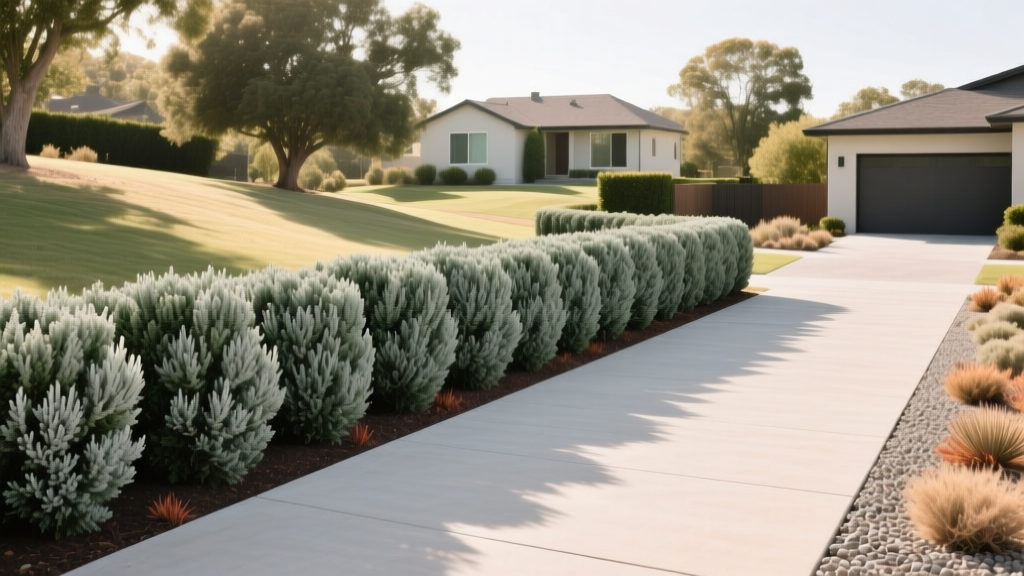
2026 Fire-Safe Driveway Borders Using Low-Growing Juniper
Anna KowalskiPublished
The Driveway as a Primary Defensible Fuel Break
In 2026, landscaping in fire-prone regions requires a strategic blend of aesthetic appeal and rigorous wildfire mitigation. For homeowners with long rural or suburban driveways, the paved surface itself acts as a primary horizontal fuel break. However, the borders lining these driveways often become neglected zones where dry grasses, dead leaves, and highly combustible shrubs accumulate. Designing a fire-resistant driveway border is essential to prevent surface fires from traveling up the driveway corridor toward your home. While many homeowners assume that all evergreens are strictly forbidden in fire-safe landscaping, low-growing junipers can be successfully integrated into driveway borders when placed in the correct defensible space zones, paired with non-combustible hardscaping, and meticulously maintained.
The Juniper Paradox: Volatile Oils vs. Ground-Hugging Habits
It is vital to address the elephant in the room: junipers contain terpenes, which are volatile organic compounds that make their foliage highly flammable. In the landscaping industry, unkempt junipers are sometimes colloquially referred to as 'gasoline bushes.' However, the fire risk of a plant is determined not just by its chemical makeup, but by its physical architecture and maintenance. Tall, upright junipers create 'ladder fuels' that allow ground fires to climb into the tree canopy. Conversely, low-growing, ground-hugging juniper varieties stay within inches of the soil surface. When these low-profile varieties are planted in isolated islands surrounded by gravel, kept free of dead undergrowth, and irrigated via subsurface drip lines, their fire risk is dramatically reduced. They provide year-round erosion control and lush greenery without the vertical threat of traditional shrubs.
Strategic Zoning: Where to Plant Juniper in 2026
To use juniper safely, you must adhere to modern defensible space zoning. According to CAL FIRE's defensible space guidelines, the area surrounding a home is divided into distinct zones. Zone 0 (0 to 5 feet from the house) must be completely ember-resistant and free of all combustible plants. Zone 1 (5 to 30 feet) requires lean, clean, and green landscaping with widely spaced, low-flammability plants. Low-growing junipers should generally be reserved for Zone 2 (30 to 100 feet) or Zone 3 (100+ feet). Because driveways often span hundreds of feet, the borders closest to the street or the property line fall perfectly into Zone 2 or 3. Here, low-growing junipers can be used to stabilize soil and define the driveway edge, provided they are spaced adequately to prevent continuous horizontal fuel continuity.
Top Low-Growing Juniper Varieties for Driveway Borders
When selecting junipers for a fire-managed driveway border in 2026, prioritize cultivars that hug the ground tightly and resist accumulating dead interior wood. Here are the top choices:
- Juniperus horizontalis 'Blue Rug' (Wilsonianii): This is the gold standard for groundcover. It rarely exceeds 4 to 6 inches in height and spreads up to 8 feet wide. Its dense, overlapping scale-like leaves choke out weeds, and its low profile prevents wind-blown embers from catching deep inside the foliage. In 2026, nursery pricing averages $85 to $110 per flat of 18 plugs.
- Juniperus conferta 'Blue Pacific': Slightly more vigorous and tolerant of coastal or humid conditions, this variety grows to about 12 inches tall. Its needle-like foliage is softer, and it performs exceptionally well in sandy soils often found along rural driveway edges.
- Juniperus horizontalis 'Bar Harbor': A classic, reliable cultivar that stays under 10 inches tall. It takes on a beautiful purplish-bronze hue in the winter, providing seasonal interest while maintaining a fire-safe, low-profile structure.
Hardscaping and Non-Combustible Buffers
The secret to making a low-growing juniper driveway border fire-resistant lies in the hardscaping. Never use wood mulch, bark chips, or pine needles around junipers. Instead, utilize a 3-inch layer of crushed decomposed granite (DG) or pea gravel. In 2026, bulk DG costs approximately $65 to $85 per ton, making it an affordable, non-combustible mulch alternative. The gravel serves three purposes: it retains soil moisture, it suppresses weed growth, and it acts as a thermal barrier that extinguishes wind-blown embers before they can reach the plant's volatile oils. Furthermore, plant junipers in 'islands' rather than continuous hedgerows. Leave 4 to 6 feet of bare gravel or paved surface between planting islands to break up horizontal fuel continuity.
Smart Irrigation for Moisture Retention
A well-hydrated plant is inherently more fire-resistant. Junipers are drought-tolerant once established, but during peak fire season (late summer to early fall), maintaining higher moisture content in the foliage reduces ignitability. Install subsurface Netafim drip lines beneath the gravel mulch. Pair this with a 2026 smart weather-based irrigation controller (such as the latest Rachio or B-hyve models) that automatically adjusts watering schedules based on local evapotranspiration rates and wildfire red-flag warnings. Subsurface drip prevents water waste and keeps the surface gravel dry, further reducing the chance of fungal issues in the juniper roots.
Comparison Chart: Driveway Border Plant Options
While low-growing juniper is a viable option for outer zones, it is helpful to compare it against other popular driveway border plants to make an informed decision for your specific property layout.
| Plant Variety | Mature Height | Fire-Resistant Rating | Recommended Zone | 2026 Avg. Cost (per flat) |
|---|---|---|---|---|
| Blue Rug Juniper | 4 - 6 inches | Moderate (Requires strict maintenance) | Zone 2 & 3 (30+ ft) | $85 - $110 |
| Creeping Rosemary | 12 - 18 inches | High (Low resin, high moisture) | Zone 1 & 2 (5+ ft) | $70 - $95 |
| Coyote Brush (Baccharis) | 12 - 24 inches | Very High (Native fire-adapted) | Zone 2 & 3 (30+ ft) | $90 - $120 |
| Dwarf Myrtle (Myrtus) | 24 - 36 inches | Moderate (Dense, needs pruning) | Zone 2 (30+ ft) | $110 - $140 |
Crucial Maintenance for Fire Resistance
As highlighted by the NFPA Firewise USA program, a fire-resistant landscape is not a 'plant it and forget it' endeavor; it requires ongoing maintenance. For low-growing junipers along a driveway border, you must implement a strict quarterly maintenance schedule. First, use a leaf blower to remove any dry pine needles, dead leaves, or wind-blown debris that have settled on top of the juniper foliage or within the gravel borders. Second, perform 'skirting' and interior cleaning. Reach beneath the dense canopy of the juniper and snip away any dead, brown twigs and branches. Dead wood is highly combustible and acts as a wick for embers. By keeping the interior of the plant open and free of dead material, you drastically reduce the plant's overall fuel load.
Managing Vehicle Exhaust and Ember Cast
Driveway borders are uniquely exposed to vehicle exhaust, hot catalytic converters, and kicking up sparks from tires on gravel. Ensure that your low-growing junipers are planted at least 18 to 24 inches away from the actual paved edge of the driveway. This gap prevents the plants from being scorched by vehicle heat and provides a physical buffer where wind-blown embers from distant wildfires can land on bare gravel and die out before reaching the vegetation. In 2026, landscape architects frequently use steel or composite edging to create a crisp, physical barrier between the gravel buffer zone and the planting island, ensuring the design remains intact and functional year after year.
Conclusion
Designing a fire-resistant driveway border using low-growing juniper is entirely possible when approached with a deep understanding of defensible space principles. By restricting these plants to Zone 2 and beyond, utilizing non-combustible gravel mulches, installing smart subsurface irrigation, and committing to rigorous dead-wood removal, you can enjoy the erosion control and evergreen beauty of junipers without compromising your home's wildfire resilience. As fire codes and climate conditions continue to evolve in 2026, proactive, zone-based landscaping remains your best defense against the unpredictable nature of wildfires.

