Pest Control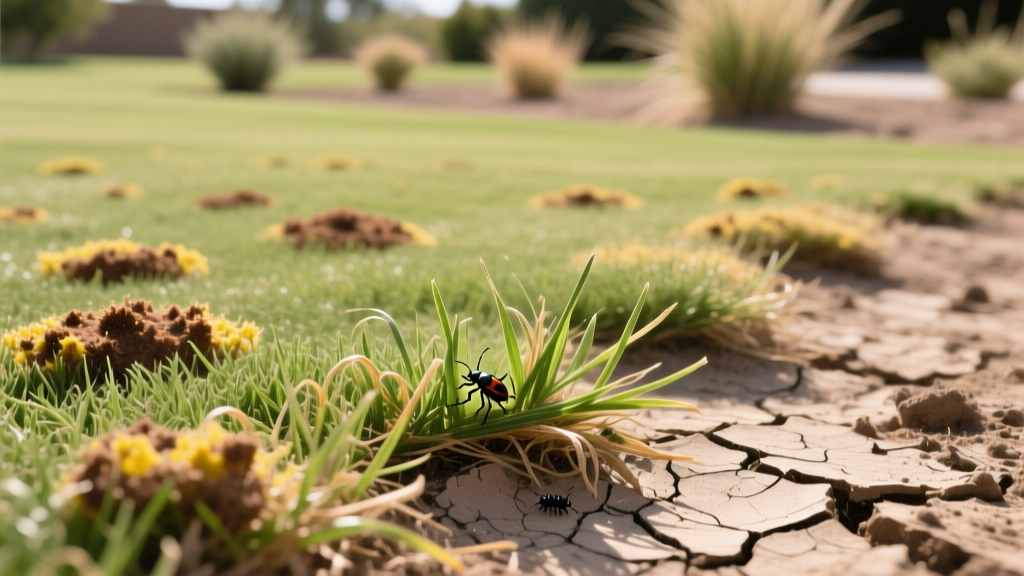
Water-Wise Chinch Bug Control for Drought-Stressed Lawns
Sarah ChenPublished
The Drought or Chinch Bug Dilemma
When summer temperatures soar and rainfall dwindles, homeowners often wake up to discover alarming brown patches spreading across their once-lush lawns. The immediate, instinctual reaction is to increase irrigation, assuming the turf is simply suffering from severe drought stress. However, this assumption frequently leads to a costly and environmentally damaging mistake. In many cases, the true culprit is not a lack of water, but the southern chinch bug (Blissus insularis) or the hairy chinch bug (Blissus leucopterus), depending on your region.
Chinch bugs are notorious for thriving in hot, dry conditions. They feed by piercing the grass blades and sucking out the plant's juices, simultaneously injecting a salivary toxin that blocks the grass's vascular system. This toxin prevents the plant from transporting water from its roots to its leaves, causing the turf to wilt, brown, and die—mimicking the exact symptoms of drought stress. Misdiagnosing this pest infestation as a watering issue leads to massive water waste without solving the underlying problem.
Identifying Chinch Bugs vs. True Drought Stress
Accurate diagnosis is the cornerstone of Integrated Pest Management (IPM) and water conservation. Before you adjust your irrigation timers or apply chemical treatments, you must determine whether your lawn is thirsty or infested. According to turfgrass entomologists at the University of Kentucky, chinch bug damage typically begins in sunny, open areas, particularly near heat-radiating hardscapes like sidewalks, driveways, and patios.
| Diagnostic Feature | True Drought Stress | Chinch Bug Damage |
|---|---|---|
| Browning Pattern | Uniform browning across large areas or entire irrigation zones. | Irregular, expanding yellow-to-brown patches, often starting near hardscapes. |
| Soil Moisture | Soil is dry, hard, and hydrophobic several inches below the surface. | Soil may be adequately moist; roots are intact but the vascular system is blocked. |
| Footprinting | Footprints or mower tracks remain visible on the turf for hours. | Grass may still be turgid (bouncy) in the early stages of infestation before total collapse. |
| Recovery Test | Turf bounces back within 24-48 hours after a deep, thorough irrigation. | Patches continue to brown and die despite heavy, repeated watering. |
The Coffee Can Flotation Test
If you suspect chinch bugs, perform the coffee can flotation test to confirm their presence and population density. This simple, zero-cost diagnostic tool is highly recommended by the University of Minnesota Extension.
- Take a standard metal coffee can and cut out both the top and bottom ends.
- Push the can about two inches deep into the soil at the margin of a damaged area (where the brown grass meets the green grass).
- Fill the can with water and wait for 5 to 10 minutes.
- Count the number of chinch bugs that float to the surface. They are tiny (about 1/6 inch long), black, and have distinctive white, hourglass-shaped markings on their wings.
- Treatment Threshold: If you count 15 to 20 or more chinch bugs per square foot (or per can), treatment is justified. Fewer than 15 usually indicates that natural predators are keeping the population in check, and the damage may be purely environmental.
The Hidden Water Cost of Misdiagnosis
Overwatering a chinch bug infestation is a lose-lose scenario for your lawn and your utility bill. A standard residential sprinkler system can output up to 1,500 gallons of water per hour. Homeowners attempting to 'flush out' pests or revive toxin-blocked grass often run their systems daily, wasting thousands of gallons of water over a single month. As highlighted by conservation experts at Water Use It Wisely, outdoor water use accounts for up to 60% of total household water consumption in arid and drought-prone regions.
Furthermore, excessive irrigation creates a shallow root system, making the grass even more vulnerable to future droughts. It also promotes secondary issues, such as fungal diseases like Pythium blight and brown patch, which thrive in warm, saturated soils. By accurately identifying the pest, you can implement targeted, water-wise solutions that save the turf and preserve local water resources.
Water-Wise IPM Strategies for Chinch Bugs
Once you have confirmed a chinch bug infestation exceeding the threshold, it is time to deploy an Integrated Pest Management strategy that prioritizes water conservation.
1. Cultural Controls: Moisture Retention and Thatch Management
Chinch bugs thrive in thick thatch layers, which provide a dry, protective habitat and block water from reaching the soil. If your thatch layer exceeds 0.5 inches, core aeration and dethatching are essential. Renting a power dethatcher typically costs around $80 per day. Removing this barrier ensures that when you do water, the moisture penetrates deeply into the root zone rather than evaporating off the thatch surface.
Additionally, raise your mower deck. Mowing your lawn at a height of 3 to 4 inches shades the soil surface, significantly reducing evaporation rates and keeping the soil cooler. Cooler soil temperatures naturally discourage chinch bug reproduction while encouraging deeper, more drought-resilient root growth.
2. Biological Controls: Fungal Pathogens and Predators
For an eco-friendly, water-conscious approach, utilize the naturally occurring entomopathogenic fungus Beauveria bassiana (available in commercial products like BotaniGard or BioCeres, costing approximately $40 to $60 per bottle). This fungus infects and kills chinch bugs without harming beneficial insects or requiring chemical runoff.
Water-Wise Application Tip: Beauveria bassiana requires high humidity to germinate and infect the pest. Instead of wasting water by irrigating the lawn to create humidity, apply the fungal spray late in the evening or early in the morning when natural dew is present on the grass blades. This leverages natural moisture cycles, eliminating the need for supplemental watering to activate the product.
Encourage natural predators like the big-eyed bug (Geocoris species) and predatory ground beetles by avoiding broad-spectrum insecticides. Big-eyed bugs look similar to chinch bugs but have prominent, bulging eyes and are voracious predators of turf pests.
3. Targeted Chemical Controls: Spot Treatment and Precision Watering
If biological controls are insufficient and the infestation threatens to destroy the lawn, targeted chemical intervention may be necessary. Products containing Bifenthrin (e.g., Talstar P) or Lambda-cyhalothrin (e.g., Scimitar) are highly effective, costing between $30 and $50 for a concentrate that treats thousands of square feet.
The Water-Wise Application Method: Do not broadcast spray the entire lawn. Chinch bugs rarely infest shaded or consistently moist areas uniformly. Apply the insecticide only as a spot treatment to the damaged patches and a 3-to-4-foot buffer zone into the surrounding healthy green grass.
Most liquid contact insecticides require being 'watered in' to move the active ingredient down through the thatch layer where the bugs reside. However, you do not need to run your sprinklers for an hour. Use a portable oscillating sprinkler and a rain gauge to apply exactly 0.1 to 0.2 inches of water. This typically takes only 10 to 15 minutes and is sufficient to wash the chemical off the grass blades and into the pest's habitat without causing deep percolation waste or chemical runoff into storm drains.
Long-Term Drought and Pest Resilience
The ultimate water-wise pest control strategy is prevention through superior turf genetics. If your lawn suffers recurrent chinch bug and drought issues, consider overseeding with endophyte-enhanced grass varieties. Endophytes are naturally occurring, beneficial fungi that live symbiotically inside the grass plant. They produce alkaloids that are mildly toxic to sap-sucking insects like chinch bugs, significantly reducing pest survival rates.
Fine fescues and specific cultivars of perennial ryegrass are excellent choices for drought-prone areas and often come fortified with these natural endophytes. By combining endophyte-enhanced seed with deep, infrequent watering practices (applying 1 inch of water per week, split into two sessions to encourage deep rooting), you build a lawn ecosystem that is inherently resistant to both the ravages of summer drought and the deceptive damage of the chinch bug.