Pest Control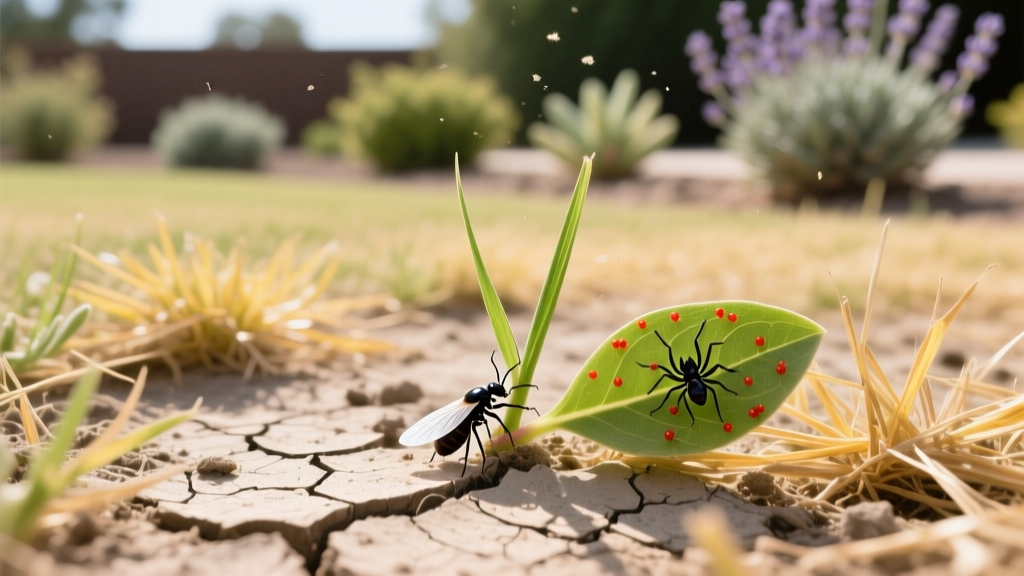
Drought-Stressed Lawns: Managing Chinch Bugs & Mites
James MillerPublished
The Hidden Link Between Drought Stress and Lawn Pests
When water restrictions tighten and summer heat intensifies, lawns enter a state of drought stress. While most homeowners worry about the cosmetic impact of a brown, dormant lawn, there is a hidden, more destructive consequence: increased vulnerability to specific turf pests. Drought-stressed grass undergoes physiological changes, including reduced turgor pressure and altered emission of volatile organic compounds (VOCs). These changes act as a beacon for sap-sucking insects, which find it easier to pierce the weakened plant tissues and extract nutrients.
Furthermore, the natural predators of these pests often decline in hot, arid conditions, allowing pest populations to explode unchecked. For eco-conscious and water-wise gardeners, managing these outbreaks requires a strategic approach that controls the infestation without violating local water conservation mandates or wasting precious resources.
Identifying the Culprits: Chinch Bugs vs. Spider Mites
Two of the most notorious pests that capitalize on dry, water-deprived lawns are the Southern Chinch Bug and the Spider Mite. Because their damage closely mimics drought stress, misdiagnosis is common, leading to unnecessary and wasteful watering attempts that fail to solve the underlying pest problem.
Southern Chinch Bugs (Blissus insularis)
Chinch bugs are a primary threat to St. Augustinegrass, Zoysiagrass, and Bermudagrass. They thrive in hot, dry, sunny areas of the lawn. Adults are small (about 1/5 inch long) with black bodies and white wings folded over their backs. They use piercing-sucking mouthparts to extract plant sap while injecting a toxic saliva that blocks the grass's vascular system.
Symptoms: Damage usually appears as irregular, yellowing patches that quickly turn brown and die. Unlike pure drought stress, which affects the entire lawn somewhat evenly or based on soil composition, chinch bug damage often starts near driveways, sidewalks, or foundations where heat radiates and soil dries out fastest. According to Texas A&M Agrilife Extension, parting the grass at the edge of the dying patch and looking for small, fast-moving insects near the soil line is the best way to confirm an infestation.
Spider Mites (Tetranychidae)
Spider mites are not insects but arachnids, and they are infamous for thriving in dusty, drought-stricken environments. They are microscopic, making visual identification of the pest itself difficult without a magnifying glass.
Symptoms: Mites pierce individual plant cells to feed, causing a stippling effect—tiny yellow or white dots on the grass blades. In severe infestations, fine silk webbing may be visible at the base of the turf. The UC Statewide IPM Program notes that mite populations can surge dramatically when dust settles on turf, which is common during dry spells without rain to wash the foliage clean.
Diagnostic Guide: Drought Stress vs. Pest Damage
| Indicator | Pure Drought Stress | Chinch Bug Damage | Spider Mite Damage |
|---|---|---|---|
| Pattern | Even browning or localized to poor-soil areas | Irregular patches near hardscapes/driveways | Localized stippling, often in dusty or shaded edges |
| Soil Moisture | Bone dry deep into the root zone | Dry, but pest presence confirmed at thatch line | Can occur in dry or moderately moist soils |
| Visual Clues | Grass blades fold or roll to conserve water | Yellowing turns to straw-brown; insects visible | Tiny yellow/white dots on blades; fine silk webbing |
| The 'Pull' Test | Roots are brittle but intact | Grass pulls up easily due to severed vascular tissue | Grass remains rooted but looks bleached/speckled |
Water-Wise Integrated Pest Management (IPM) Strategies
Treating pests during a drought requires methods that do not rely on heavy irrigation to activate chemicals or wash foliage. Here is a water-wise IPM approach tailored for drought conditions.
1. Cultural Controls & Soil Surfactants
- Raise the Mowing Height: Set your mower to 3 to 4 inches. Taller grass shades the soil, reducing evaporation and keeping the root zone cooler, which deters chinch bugs that prefer hot, exposed soil surfaces.
- Leave Clippings: Grass clippings act as a natural mulch, returning moisture and nutrients to the soil. They also harbor beneficial insects like the Big-eyed bug (Geocoris spp.), a natural predator of chinch bugs.
- Apply Soil Surfactants: Drought-baked soils often become hydrophobic, causing water to run off. Applying a soil wetting agent (surfactant) ensures that the minimal water you are allowed to use penetrates deeply into the thatch layer where pests reside, maximizing the efficacy of biological and granular treatments without wasting a drop.
2. Biological Controls: Deploying Drought-Tolerant Beneficials
Beneficial nematodes (specifically Steinernema carpocapsae) can be applied to target chinch bug nymphs in the thatch layer. While nematodes require some soil moisture to survive, applying them during permitted watering days or right after a light, allowed irrigation can establish a biological defense. For spider mites, releasing predatory mites like Phytoseiulus persimilis offers excellent control. These predators are highly effective and do not require additional water applications to thrive, making them ideal for drought-restricted zones.
3. Targeted Chemical Controls: Minimizing Water Usage
When biological and cultural controls are insufficient, targeted chemical interventions are necessary. Water-wise application means avoiding liquid hose-end sprayers that waste water and instead opting for granular formulations or concentrated spot treatments.
- Granular Insecticides: Products containing Bifenthrin (e.g., Talstar PL Granules) or Lambda-cyhalothrin can be applied directly to the affected areas. Granules require only a minimal amount of water to water them into the thatch layer (about 1/8 inch of irrigation), which is often permissible even under strict drought ordinances for pest control purposes. Apply at a rate of 1.15 to 1.4 lbs per 1,000 square feet.
- Insecticidal Soaps and Neem Oil: For localized spider mite outbreaks, ready-to-use insecticidal soaps or Neem oil sprays are highly effective. These contact pesticides coat and suffocate the mites. Because they are applied via small pump sprayers, they use mere ounces of water per square foot, entirely bypassing the need for hose irrigation. Apply in the early evening to prevent rapid evaporation and protect pollinators.
A Water-Wise Action Plan for Homeowners
To protect your lawn during a drought without wasting water, follow this chronological action plan:
- Monitor Weekly: Inspect the perimeter of your lawn, especially near hardscapes, using a coffee can filled with water to float out chinch bugs (the 'float test'). Push the can into the soil at the edge of a damaged patch and fill it with water; chinch bugs will float to the surface within minutes.
- Adjust Mowing: Immediately raise your mower deck to the highest setting to shade the soil and reduce turf stress.
- Spot Treat: Use a 2-gallon pump sprayer with insecticidal soap for isolated mite webs, or apply granular bifenthrin to chinch bug hotspots.
- Leverage Micro-Irrigation: If local laws permit 'pest control exemptions' for watering, use a targeted drip line or a single oscillating sprinkler strictly on the infected 10x10 foot zone to water in granular treatments, rather than running the entire sprinkler system.
Conclusion
Drought conditions do not have to mean surrendering your lawn to destructive pests. By understanding the physiological link between water stress and pest vulnerability, and by utilizing water-wise IPM strategies, you can maintain a resilient landscape. Relying on granular treatments, biological predators, and smart cultural habits ensures that your pest control efforts remain effective, economical, and environmentally responsible, even in the driest of summers. For more detailed regional guidelines, consult the University of Florida IFAS Extension resources on turfgrass pest management.