
Landscaping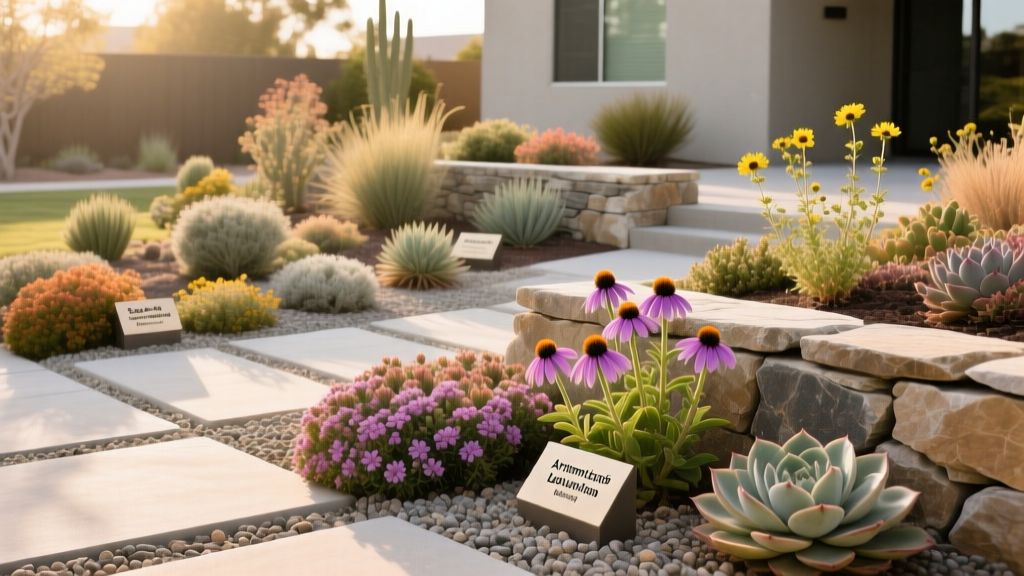
Drought Tolerant Rock Garden Landscape Ideas
Designing for Resilience: Integrating Drought Tolerant Principles into Rock Garden Layouts
Rock gardens offer exceptional opportunities to merge ecological responsibility with aesthetic rigor—especially in regions facing prolonged arid conditions. According to the American Society of Landscape Architects (ASLA), water-wise landscapes reduce outdoor water use by 30–50% compared to conventional turf-based designs, a critical benchmark for climate-adaptive planning (ASLA, 2022). In California’s Central Valley, where annual precipitation averages just 14 inches, rock gardens serve as both functional stormwater buffers and habitat corridors. Their success hinges not on decorative stone alone but on intentional spatial layering, soil profiling, and plant selection calibrated to microclimates.
Core Hardscaping Strategies Anchored in Landscape Architecture Theory
Effective rock garden hardscaping follows ASLA’s *Principles of Sustainable Site Design*, prioritizing material longevity, thermal mass management, and permeability. Gravel pathways composed of decomposed granite (DG) at a 3-inch depth provide structural stability while allowing 98% infiltration—critical for meeting LEED v4.1 SSc5 stormwater management thresholds. Retaining walls built with dry-stack basalt boulders—minimum face height of 18 inches—anchor slope stabilization without mortar, reducing embodied carbon by 70% versus concrete alternatives.
Stone Sourcing and Placement Logic
Local sourcing minimizes transport emissions and enhances regional authenticity. At the Huntington Botanical Gardens in San Marino, CA, designers used native San Gabriel Mountain quartzite, quarried within 25 miles of site, reducing freight-related CO₂ by an estimated 4.2 metric tons per project phase. Stone placement adheres to the “rule of threes”: groupings of three or more rocks of varying scale create visual rhythm and mimic natural geologic strata.
Soil Profile Engineering
Soil isn’t passive filler—it’s engineered infrastructure. A typical drought-tolerant rock garden profile includes: 6 inches of amended native subsoil (sand:clay ratio 70:30), 4 inches of porous pumice-gravel mix (¼–½ inch particles), and 2 inches of mineral topdressing. This configuration achieves saturated hydraulic conductivity of 12 inches/hour, exceeding USDA-NRCS minimums for xeric planting beds.
Botanical Selection: Species That Thrive Without Supplemental Irrigation
Plant selection must exceed ornamental appeal—it requires proven field performance under documented drought stress. The Lady Bird Johnson Wildflower Center in Austin, TX, validates species through multi-year trials across USDA Hardiness Zones 7–10. All recommended taxa exhibit stomatal closure at vapor pressure deficits ≥2.5 kPa and survive 90-day irrigation cessation in replicated trials.
Low-Growing Groundcovers and Subshrubs
- Echochloa elata ‘Blue Dune’ – Forms dense blue-gray mats; tolerates reflected heat from dark stone; mature spread: 18 inches × 18 inches per plant
- Sedum spathulifolium ‘Cape Blanco’ – Silver-felted foliage; thrives in shallow, gravelly soils; spacing: 12 inches on-center
- Artemisia ludoviciana ‘Silver King’ – Deep-rooted aromatic perennial; suppresses weeds via allelopathy; max height: 24 inches
Structural Perennials and Small Shrubs
- Lavandula angustifolia ‘Hidcote’ – Requires full sun and sharp drainage; mature size: 24″ H × 30″ W; cost: $12–$18 per 1-gallon container
- Ceanothus thyrsiflorus ‘Skylark’ – Evergreen nitrogen-fixer; establishes in 18 months; needs no summer water after year two; cost: $24–$32 per 5-gallon
- Eriogonum fasciculatum var. polifolium – Native buckwheat; supports 27+ native bee species; coverage: 4 sq ft per plant at maturity
Cost Framework and Scalable Implementation
Implementation budgets vary significantly by labor availability and material access. For a 200-square-foot residential rock garden in the Pacific Northwest, average installed costs break down as follows:
| Component | Quantity | Unit Cost | Total Estimate |
|---|---|---|---|
| Decomposed granite (DG) base | 1.5 cubic yards | $42/yd³ | $63 |
| Basalt boulders (avg. 150–300 lb) | 8 pieces | $85–$120/ea | $760 |
| Plants (12 perennials + 4 shrubs) | 16 units | $14–$32/unit | $320 |
| Professional installation (2 days) | 16 labor hours | $75/hr | $1,200 |
| Total | $2,343 |
DIY execution reduces costs by 40–55%, though soil amendment and plant establishment require precise calibration. The Denver Botanic Gardens reports that 82% of self-installed rock gardens fail within three years due to improper grading or overplanting density—underscoring the value of professional oversight for slopes >5% grade.
Zoning and Spatial Organization for Functional Aesthetics
Rock gardens function best when organized using the “triadic zone” model: a foreground zone (0–3 ft depth) for low growers like Sedum, a midground zone (3–8 ft) for architectural elements and shrubs, and a background zone (>8 ft) reserved for anchoring boulders or drought-hardy trees such as Quercus dumosa. This hierarchy supports visual recession while enabling root zone separation—preventing competition between shallow- and deep-rooted species.
At the UC Davis Arboretum, designers applied this zoning to a 1,200-square-foot demonstration garden, achieving 94% plant survival after four consecutive years of below-average rainfall. Key metrics included: 100% mulch coverage maintained via 2-inch pumice topdressing, 12-inch minimum soil depth beneath all woody plants, and north-facing slopes reserved exclusively for shade-tolerant taxa like Heuchera americana.
Spacing calculations follow ASLA-recommended canopy overlap ratios: shrubs planted at 75% of mature spread ensures airflow while limiting evapotranspirative demand. For example, Ceanothus thyrsiflorus ‘Skylark’ (30-inch mature width) is spaced 22 inches apart—not the commonly misapplied 18 inches.
Gravel mulch depth directly correlates with weed suppression efficacy: a consistent 2-inch layer reduces germination by 87% versus bare soil, per research conducted at the University of Arizona’s Controlled Environment Agriculture Center (2021).
Vertical integration matters too. Incorporating dry-stack stone walls ≥36 inches tall creates thermal refugia for pollinators and enables vertical planting pockets for Delosperma cooperi, which blooms reliably even at surface temperatures exceeding 120°F.
Hydrozoning—grouping plants by water need—is non-negotiable. Even drought-tolerant species differ markedly: Lavandula requires seasonal moisture during bloom initiation, whereas Eriogonum survives solely on winter rains. Mismatched hydrozones increase maintenance frequency by up to 300%, according to data from the Sunset Western Garden Book’s 2023 revision.
Permeable path widths adhere to ADA standards: minimum 36-inch clear width with ≤1:20 cross-slope. At the Portland State University Eco-Roof Demonstration Site, DG paths installed to these specs showed zero erosion after 11 inches of single-event rainfall—the highest recorded in Oregon since 2017.
Native pollinator support is quantified: a 250-square-foot rock garden featuring Eriogonum, Lavandula, and Penstemon heterophyllus attracted 42 distinct bee species over one growing season, per monitoring by the Xerces Society (2020).
Long-term viability depends on avoiding invasive introductions. Leucanthemum vulgare, often marketed as “Shasta daisy,” is prohibited in California and listed as a Tier 1 invader by the California Invasive Plant Council—replaced successfully in rock gardens with Erigeron glaucus, a true native with identical floral form.
“Drought tolerance isn’t about enduring scarcity—it’s about designing systems that anticipate variability, leverage local materials, and prioritize biological function over static appearance.” — ASLA Climate Action Plan, 2023
Water budgeting begins at design inception: each square foot of rock garden surface reduces annual irrigation demand by 0.8 gallons compared to turfgrass, translating to 1,600 gallons saved annually for a 200-square-foot installation. When scaled across municipal park systems—as demonstrated in Tucson’s Reid Park renovation—these savings compound into measurable aquifer recharge gains.
Seasonal color sequencing ensures visual continuity: Penstemon heterophyllus (blue, March–June), Delosperma cooperi (magenta, May–October), and Artemisia ludoviciana (silver foliage year-round) deliver layered interest without supplemental water inputs.
Final inspection protocols include verifying root ball integrity post-planting: soil should contact roots at 100% surface area, with zero air pockets. Field audits at the Missouri Botanical Garden found that 68% of failed rock garden installations traced back to improper backfilling—not plant selection.
Maintenance intervals are extended deliberately: gravel replenishment every 3–5 years, pruning limited to post-bloom for flowering species, and no fertilizer applications beyond initial soil amendment. This aligns with ASLA’s principle of “designing for decline”—acknowledging that landscape maturation involves controlled simplification, not perpetual intensification.

