Home & Garden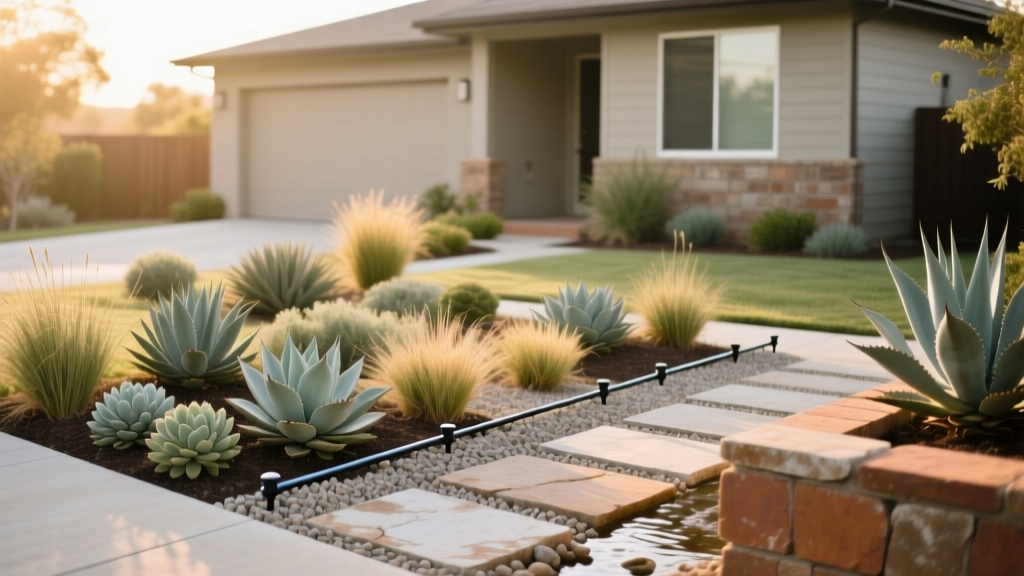
Designing a Drought-Tolerant Xeriscape Front Yard Layout
Lisa ThompsonPublished
The Philosophy of Modern Xeriscape Design Planning
Designing a drought-tolerant front yard is no longer about settling for a barren landscape of gravel and a single cactus. Modern xeriscaping bridges the gap between ecological responsibility and high-end curb appeal. By strategically planning your garden layout, you can drastically reduce water consumption while creating a vibrant, textured outdoor space. According to the Environmental Protection Agency (EPA), outdoor water use accounts for nearly 30% of total household water consumption, and can spike to 60% in arid climates. Transitioning to a planned xeriscape can reduce landscape water use by 50% to 75%.
Successful xeriscape planning requires a shift in perspective: viewing water as a precious design element rather than an unlimited resource. This involves careful site analysis, soil amendment, hydrozoning, and the integration of smart irrigation technology. Below is a comprehensive guide to planning and designing a water-efficient front yard layout from the ground up.
Hydrozoning: The Core of Water-Efficient Layouts
Hydrozoning is the practice of grouping plants with similar water, sun, and soil requirements together. This prevents the common design flaw of overwatering drought-tolerant plants just to keep a nearby moisture-loving plant alive. When drafting your landscape plan, divide your front yard into three distinct hydrozones:
- The Oasis Zone (0-5 feet from the house): This area is highly visible and benefits from roof runoff and shade. Here, you can plant moderate-water-use species like Salvia greggii (Autumn Sage) or Muhlenbergia capillaris (Pink Muhly Grass). These plants provide lush color and soften the architectural lines of your home.
- The Transition Zone (5-15 feet from the house): This zone receives full sun and requires less water. Use low-water-use shrubs and ornamental grasses that establish deep root systems. Plants like Agastache rupestris (Sunset Hyssop) and Ceanothus (California Lilac) thrive here.
- The Arid Zone (15+ feet from the house and parkways): The outer edges of your property should be reserved for extremely drought-tolerant, native, or adapted species. Think Agave parryi, Yucca rostrata, and various Sedum groundcovers that rely almost exclusively on natural rainfall once established.
Practical Hydrozoning Measurements and Spacing
Proper spacing is critical in xeriscape design. Unlike traditional English gardens that rely on plants growing together to form a mass, xeriscape plants often need airflow to prevent fungal diseases and room for their mature root structures. Plan for mature width, not nursery size. For example, an Agave americana can reach 6 feet in width; planting it 2 feet from a walkway will result in hazardous spines and expensive relocation costs later. Always apply a 3-inch layer of coarse organic mulch or 2-inch layer of decomposed granite inorganic mulch, keeping it 2 inches away from the root crown to prevent rot.
Integrating Smart Drip Irrigation into Your Design
Overhead spray heads are incredibly inefficient, losing up to 50% of water to wind drift and evaporation. The University of California Agriculture and Natural Resources (UC ANR) strongly advocates for drip irrigation, which delivers water directly to the root zone at a slow rate, achieving up to 90% efficiency.
When planning your irrigation layout, abandon the idea of a single grid. Instead, design independent valves for each hydrozone.
- Mainline and Sub-main: Use 1/2-inch blank polyethylene tubing for mainlines, buried 4-6 inches deep. Transition to 1/4-inch micro-tubing for individual plant connections.
- Drip Emitters vs. Inline Drip: For mass plantings and groundcovers, use inline drip tubing like Netafim Techline CV (approx. $0.45 per linear foot). The built-in check valves prevent low-head drainage, keeping the system clean and ensuring uniform water distribution on slopes.
- Smart Controllers: Replace legacy timers with a Wi-Fi-enabled smart controller like the Rachio 3 (approx. $230) or Orbit B-hyve. These devices connect to local weather stations and automatically skip watering cycles when rain is forecasted, adjusting run times based on seasonal evapotranspiration rates.
Hardscaping and Permeable Pathways
Hardscaping reduces the total irrigable square footage of your yard while adding structure and geometric contrast to soft plantings. When designing pathways and patios, prioritize permeable materials that allow rainwater to percolate into the soil, recharging local aquifers and reducing street runoff.
Decomposed Granite (DG) Pathways: DG provides a beautiful, natural crunch and excellent permeability. To prevent it from washing away or turning to mud, plan for a 4-inch base of compacted Class II road base (3/4-inch minus gravel). Top this with 2 inches of DG mixed with a natural stabilizer like Gator Dust. The material cost is highly economical, averaging $1.50 to $2.50 per square foot.
Permeable Pavers: For a more formal look, permeable concrete pavers set over a bed of open-graded crushed stone allow water to infiltrate the ground. Expect higher material and labor costs, ranging from $8.00 to $15.00 per square foot installed.
Xeriscape Plant Palette and Cost Comparison
Selecting the right plants from the nursery is where your design comes to life. Below is a structured comparison of popular, low-water-use plants ideal for front yard xeriscaping, including their mature dimensions and estimated nursery costs for 1-gallon specimens.
| Common Name | Botanical Name | Hydrozone | Mature Size (H x W) | Est. Cost (1-Gal) |
|---|---|---|---|---|
| Autumn Sage | Salvia greggii | Oasis / Transition | 3 ft x 3 ft | $12 - $16 |
| Pink Muhly Grass | Muhlenbergia capillaris | Transition | 3 ft x 3 ft | $15 - $22 |
| Parry's Agave | Agave parryi | Arid | 2 ft x 3 ft | $25 - $40 |
| Texas Ranger | Leucophyllum frutescens | Arid / Transition | 6 ft x 6 ft | $18 - $25 |
| Blue Chalksticks | Senecio serpens | Arid (Groundcover) | 1 ft x 2 ft | $10 - $14 |
Phased Implementation Timeline and Budgeting
Executing a xeriscape design is best done in phases to manage labor and budget. For a standard 1,000-square-foot front yard, a complete professional installation can range from $5,000 to $12,000, while a DIY approach focusing on materials alone will cost between $1,500 and $3,500.
- Phase 1: Demolition and Soil Prep (Weeks 1-2): Remove existing turf. Instead of chemical herbicides, consider solarization using clear plastic sheeting during the hottest summer months, or manually sod-cutting. Amend heavy clay soils with 2 inches of expanded shale or pumice to improve drainage, which is vital for drought-tolerant root systems.
- Phase 2: Hardscaping and Irrigation (Weeks 3-4): Lay down pathway borders, compact the road base, and trench for irrigation mainlines. Pressure-test the drip system before covering with mulch.
- Phase 3: Planting and Mulching (Weeks 5-6): The optimal time to plant xeriscape species is in early autumn or early spring. This allows the plants to establish deep root systems during the cooler, wetter months before facing the stress of summer heat.
Long-Term Maintenance and Smart Home Integration
A planned xeriscape is low-maintenance, not no-maintenance. To further optimize your garden's efficiency, integrate wireless soil moisture sensors, such as the Hunter Soil-Clik, into your smart irrigation zones. These sensors bypass the watering schedule if the soil already retains adequate moisture at the root level, preventing the most common cause of xeriscape plant death: root rot from overwatering.
Annually, replenish organic mulch to maintain a 3-inch depth, and prune back dormant ornamental grasses in late winter to encourage vigorous spring growth. By thoughtfully planning your layout, respecting hydrozones, and leveraging smart technology, your front yard will become a resilient, stunning testament to sustainable landscape design.
