
Landscaping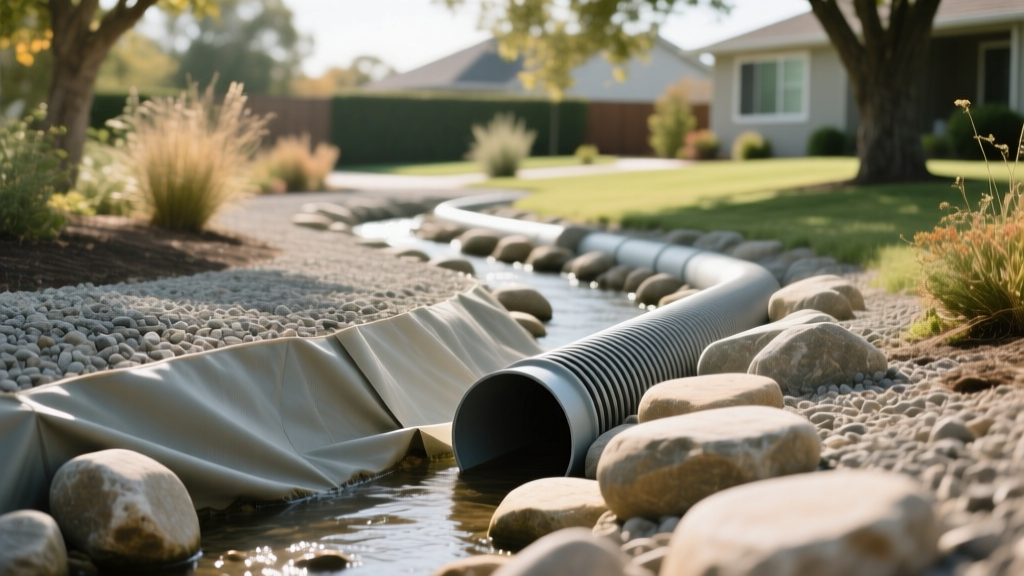
2026 Dry Creek Bed Drainage Pipe & River Rock Guide
Mike RodriguezPublished
The Synergy of Surface and Subsurface Drainage
In 2026, extreme weather patterns and heavier localized downpours have made traditional surface grading and simple swales insufficient for many residential landscapes. Homeowners are increasingly turning to dry creek beds to manage runoff while enhancing curb appeal. However, a dry creek bed built solely with river rock and landscape fabric can easily wash out or become overwhelmed during severe storms. The ultimate solution for modern landscape architecture is integrating a hidden landscape drainage pipe beneath the aesthetic rock layers. This hybrid approach—combining the visual charm of a natural creek bed with the high-volume evacuation capacity of a subsurface French drain—ensures your yard remains protected and beautiful year-round.
By pairing a perforated drainage pipe with heavy-duty geotextile fabric and strategically sized river rock, you create a multi-tiered water management system. The surface rocks slow down water velocity, preventing soil erosion, while the subsurface pipe captures and redirects the bulk of the water volume away from your home's foundation. According to the Environmental Protection Agency (EPA), integrating permeable landscaping features with subsurface drainage is one of the most effective green infrastructure approaches for managing residential stormwater runoff and reducing local sewer burden.
Essential Materials and 2026 Pricing
Before breaking ground, it is crucial to gather the right materials. The 2026 landscaping market offers advanced polymers and fabrics that resist UV degradation and soil acidity far better than older models. Here is what you will need for a standard 50-foot dry creek bed drainage system:
- Perforated Drainage Pipe: NDS EZ-Flow or Schedule 40 PVC (approx. $1.50 to $3.00 per linear foot).
- Geotextile Landscape Fabric: Heavy-duty non-woven (4 oz to 6 oz weight) to allow water permeation while blocking soil (approx. $0.60 to $1.10 per square foot).
- Base Gravel: 3/4-inch crushed stone or pea gravel for pipe bedding (approx. $50 to $75 per ton).
- Decorative River Rock: 3-inch to 5-inch rounded river rock for the surface layer (approx. $90 to $140 per ton).
- Landscape Pins: 6-inch galvanized steel staples to secure the fabric.
- Tools: Trenching shovel, laser level, plate compactor, utility knife, and wheelbarrow.
Step-by-Step Installation Guide
Step 1: Planning the Route and Slope
Water requires gravity to move. Plan your creek bed route to follow the natural depression of your yard, leading away from your foundation toward a municipal storm drain, a dry well, or a safe daylight exit point. Using a laser level, establish a minimum slope of 1/8 inch per foot (a 1% grade). For heavier water volumes, a 1/4 inch per foot slope is highly recommended to ensure the drainage pipe does not back up during peak rainfall.
Step 2: Digging the Trench
Dig a trench that is 18 to 24 inches wide and roughly 14 to 18 inches deep. The width allows for a meandering, natural-looking creek bed on the surface, while the depth accommodates the pipe, base gravel, and a thick layer of river rock. Ensure the trench bottom is relatively flat and free of sharp rocks that could puncture the fabric or pipe over time.
Step 3: Lining with Landscape Fabric
Line the entire trench with your heavy-duty non-woven geotextile fabric. Do not use cheap woven weed barrier cloth; it will clog with silt and cause the drainage system to fail. The fabric should drape down into the trench and extend at least 12 inches up each side. Overlap any seams by a minimum of 12 inches to prevent soil intrusion. Secure the edges temporarily with landscape pins.
Step 4: Installing the Perforated Drainage Pipe
Lay the perforated landscape drainage pipe in the center of the trench. If using corrugated pipe, ensure the holes are facing downward or to the sides, allowing water to enter from the bottom as the trench saturates. Cover the pipe with 2 to 3 inches of base gravel. This gravel layer acts as a primary filter, keeping fine sediments away from the pipe perforations. For expert guidance on pipe placement and gravel filtration, refer to the NDS French Drain Installation Guidelines.
Step 5: Adding Base Gravel and River Rock
Fill the trench with base gravel until you are about 4 to 5 inches below the ground surface. Then, begin placing your 3-inch to 5-inch river rock. Vary the rock sizes and place larger boulders along the outer edges and in the curves of the creek bed to mimic natural water erosion patterns. Fold the excess landscape fabric over the top layer of gravel before placing the river rock, or trim it neatly just below the surface so it remains entirely hidden.
Material Comparison: Corrugated vs. PVC Drainage Pipe
Choosing the right pipe is critical for the longevity of your dry creek bed. Below is a comparison of the two most popular landscape drainage pipe options available in 2026.
| Feature | NDS Corrugated EZ-Flow | Schedule 40 PVC (Perforated) |
|---|---|---|
| Durability | Moderate; can crush under heavy earth-moving equipment. | Extremely High; handles heavy loads and deep trenches. |
| Flow Rate | High; features built-in polystyrene aggregate. | Moderate to High; depends on perforation density. |
| Installation | Easy; flexible, requires no fabric wrapping (pre-wrapped). | Moderate; rigid, requires manual fabric wrapping and gluing. |
| Best Use Case | Standard residential dry creek beds and shallow swales. | Deep trenches, under driveways, or high-volume zones. |
| 2026 Avg Cost | $1.75 per linear foot | $2.85 per linear foot |
Selecting the Right Landscape Fabric and River Rock
The success of your drainage system hinges on the relationship between the fabric and the rock. In 2026, landscaping best practices dictate that non-woven geotextile fabrics are the gold standard for drainage applications. Unlike woven slit-films, non-woven fabrics resemble felt; they allow water to pass through in all directions while trapping soil particles. A 4 oz to 6 oz weight is ideal for creek beds, providing enough tensile strength to withstand the shifting weight of heavy river rocks.
When selecting river rock, avoid small stones like pea gravel for the surface layer. During heavy storms, high-velocity water will easily wash pea gravel out of the bed and into your lawn or street. Instead, use 3-inch to 5-inch river rock as your primary surface material. The mass of these larger stones holds them in place during surges, while the gaps between them allow water to rapidly percolate down to the base gravel and into the drainage pipe. You can use smaller 1-inch to 2-inch stones as accent pieces along the dry edges of the bed to create a natural gradient.
Long-Term Maintenance and Longevity
A properly installed dry creek bed with a subsurface drainage pipe is virtually maintenance-free, but a few seasonal checks will ensure it operates perfectly for decades. According to University of Minnesota Extension water management guidelines, keeping debris out of drainage inlets is the most critical factor in preventing system failure.
- Autumn Leaf Removal: Use a leaf blower to clear fallen leaves from the river rock. If leaves decompose in the rock crevices, they create a sludge that blocks water from reaching the subsurface pipe.
- Spring Flushing: Once a year, use a garden hose on high pressure to flush out fine silt that may have settled into the base gravel layer.
- Weed Management: While the heavy-duty fabric prevents most weeds, wind-blown seeds can lodge in the top layer of river rock. Hand-pull any weeds immediately before their roots can penetrate the geotextile barrier.
- Rock Redistribution: After exceptionally severe storms, some river rocks may shift. Simply rake or hand-place them back into their natural arrangement to maintain the aesthetic and functional integrity of the creek bed.
Conclusion
Integrating a landscape drainage pipe into a dry creek bed design transforms a simple decorative feature into a powerful stormwater management tool. By utilizing modern 2026 materials like heavy-duty non-woven geotextiles and high-flow perforated pipes, homeowners can protect their property from erosion and flooding while enjoying the serene, natural beauty of a river rock creek bed year-round. Whether you are managing a minor slope issue or redirecting a major downspout discharge, this hybrid drainage approach offers the perfect balance of form and function.

