
Landscaping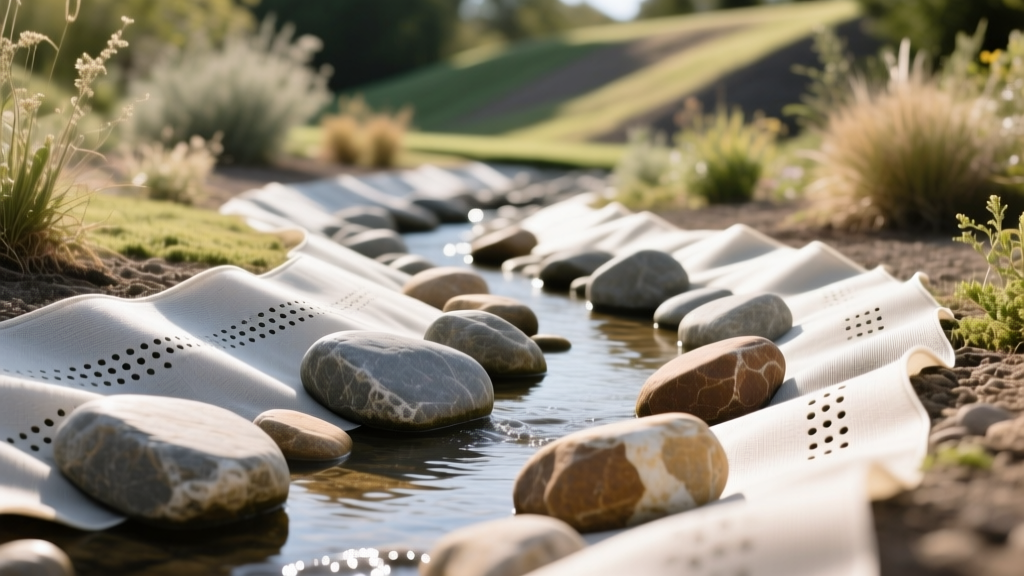
2026 Dry Creek Bed Design: River Rock, Fabric & Soil Aeration Tips
Lisa ThompsonPublished
The Drainage Dilemma: When Core Aeration Is Not Enough
Every seasoned landscaper knows that healthy turf begins beneath the surface. For years, core aeration has been the gold standard for relieving soil compaction, breaking up thatch, and improving water infiltration in struggling lawns. By pulling small plugs of soil from the ground, core aeration allows oxygen, nutrients, and moisture to reach the root zone. However, as extreme weather events and heavy spring downpours become more frequent in 2026, many homeowners are discovering that aeration alone cannot solve severe surface runoff issues.
When your yard features heavy clay soil, steep grading, or natural low-lying basins, water pools faster than even the most thoroughly aerated soil can absorb it. Standing water leads to root rot, fungal diseases, and massive topsoil erosion. This is where integrating a dry creek bed design with river rock and heavy-duty landscape fabric transitions from a purely aesthetic choice to a critical drainage solution. By combining the deep-soil benefits of core aeration on your turf with the surface-water management of a dry creek bed, you create a comprehensive, eco-friendly yard drainage system.
Core Aeration vs. Dry Creek Beds: A 2026 Drainage Hierarchy
Understanding when to use aeration versus when to install hardscaping is vital for modern landscape planning. Below is a comparison of how these methods address water management in 2026.
| Drainage Method | Primary Function | Best Soil Type | 2026 Avg. Cost (per 1,000 sq ft) |
|---|---|---|---|
| Core Aeration | Relieves compaction, improves subsurface infiltration | Loam, moderate clay | $75 - $120 |
| Dry Creek Bed | Channels surface runoff, prevents erosion | Heavy clay, sloped yards | $600 - $1,200 |
| French Drain | Subsurface water redirection via perforated pipe | All types (high water table) | $1,000 - $2,500 |
According to the University of Minnesota Extension, removing soil cores is essential for compacted lawns, but it does not replace the need for surface grading or directional drainage in poorly sloped yards. A dry creek bed acts as the visual and functional artery that carries excess water away from your home's foundation and vulnerable garden beds.
Essential Materials for a Modern Dry Creek Bed
The success of a dry creek bed relies entirely on the quality of its materials. In 2026, landscaping trends heavily favor naturalistic, permeable, and long-lasting materials that support local ecosystems while managing stormwater.
1. Commercial-Grade Woven Landscape Fabric
Do not use cheap, non-woven black plastic weed barriers. These trap moisture, tear easily, and degrade under UV exposure. Instead, invest in a commercial-grade woven geotextile fabric (typically 3 to 5 ounces per square yard). This material allows groundwater to percolate into the soil below while completely blocking weed growth and preventing the river rock from sinking into the mud over time.
2. Mixed River Rock and Boulders
To mimic a natural stream, you need a variety of stone sizes. You will need large anchor boulders (12 to 24 inches) to line the outer curves of the creek, medium cobbles (3 to 5 inches) to fill the center, and smaller river rock (3/4 to 2 inches) to pack the edges and create a realistic water-washed look. In 2026, locally sourced granite and basalt river rocks are highly recommended to reduce the carbon footprint associated with shipping heavy stone.
3. Metal or Composite Landscape Edging
To keep the river rock contained and prevent it from migrating into your aerated lawn during heavy rains, install steel or high-density composite landscape edging along the trench borders before laying the fabric.
Step-by-Step Installation Guide
Step 1: Map the Flow and Plan the Design
Wait for a heavy rainstorm and observe your yard. Note where water naturally pools and the path it takes when it overflows. Use bright landscaping spray paint to mark the path of your new dry creek bed. A natural creek is never perfectly straight; incorporate gentle meanders, widening the bed in flat areas and narrowing it in steeper sections to control water velocity.
Step 2: Core Aeration and Soil Preparation
Before you begin digging, perform a core aeration on the surrounding lawn. Heavy foot traffic and wheelbarrows during the creek bed installation will severely compact the adjacent turf. By aerating first, you relieve existing compaction and give the grass a chance to recover and establish deeper roots. Furthermore, managing surface runoff is critical. The USGS notes that unmanaged overland runoff leads to severe topsoil erosion; aerating the surrounding turf ensures that minor, everyday rainfall is absorbed by the lawn, reserving the dry creek bed for heavy storm events.
Step 3: Excavate the Trench
Dig a trench roughly 2 to 3 feet wide and 1 to 1.5 feet deep. Ensure the trench slopes downward at a minimum grade of 1 inch per 10 feet to guarantee proper water flow toward your designated discharge area, such as a municipal storm drain or a dry well. Tamp the soil firmly at the base of the trench.
Step 4: Lay the Landscape Fabric
Roll out your woven geotextile landscape fabric, ensuring it extends at least 6 inches up the sides of the trench. Overlap any seams by a minimum of 12 inches to prevent weeds from sneaking through the gaps. Secure the fabric tightly to the soil using 6-inch galvanized landscape staples placed every 2 feet along the edges and seams.
Step 5: Place Boulders and River Rock
Start by placing your large anchor boulders along the outside edges of the curves, burying them slightly into the fabric so they look naturally settled. Next, lay down a 2-inch base layer of medium cobbles. Finally, fill the remaining depth with your smaller mixed river rock, mounding it slightly higher in the center to create a convex, natural streambed profile.
2026 Cost Breakdown: River Rock and Fabric
Budgeting accurately is essential for hardscaping projects. Material costs have fluctuated, but here is what you can expect to pay for a standard 50-foot long, 3-foot wide dry creek bed in 2026.
| Material | Quantity Needed (150 sq ft) | Estimated 2026 Cost |
|---|---|---|
| Woven Geotextile Fabric | 200 sq ft (with overlap) | $110 - $160 |
| Anchor Boulders (Granite) | 0.5 Tons | $150 - $250 |
| Mixed River Rock (1-3 inch) | 2.5 Tons (for 3-inch depth) | $250 - $400 |
| Landscape Staples & Edging | 100 ft edging, 50 staples | $120 - $180 |
| Total DIY Material Cost | $630 - $990 |
Hiring a professional landscaping crew in 2026 will typically add $1,500 to $3,000 in labor costs, depending on your region and the complexity of the excavation.
Long-Term Maintenance and Lawn Integration
A dry creek bed is remarkably low-maintenance, but it is not entirely maintenance-free. Over time, wind-blown debris, autumn leaves, and silt can accumulate between the river rocks, eventually creating a medium for weed seeds to germinate on top of the fabric. To prevent this, use a leaf blower on a low setting or a specialized landscaping vacuum to clear organic debris every fall and spring.
Furthermore, the EPA highlights that directing runoff into structured, vegetated, or rock-lined channels prevents nonpoint source pollution by slowing water down and allowing natural filtration. To enhance this ecological benefit, integrate native, moisture-loving plants along the banks of your dry creek bed. In 2026, eco-conscious landscapers are heavily utilizing plants like Blue Flag Iris, Swamp Milkweed, and ornamental ferns. These plants not only hide the edges of the landscape fabric and metal edging, but their deep root systems also help stabilize the soil and absorb excess moisture from the surrounding aerated lawn.
By combining the subsurface health benefits of annual core aeration with the surface-level drainage mastery of a properly constructed river rock and fabric dry creek bed, you ensure your landscape remains vibrant, erosion-free, and beautifully functional for decades to come.

