
Landscaping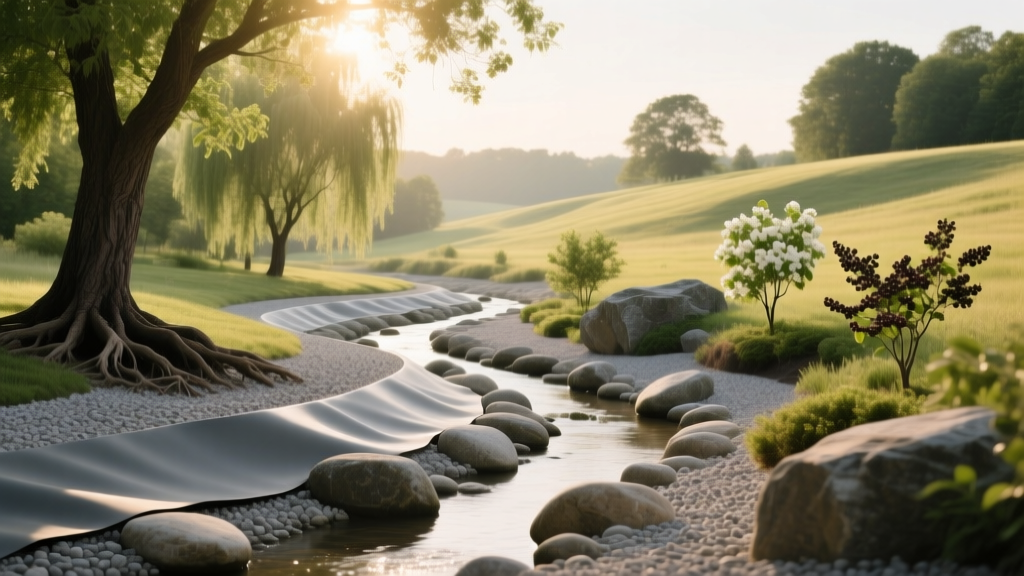
2026 Dry Creek Bed Design: Tree Planting, Rock & Fabric Guide
Sarah ChenPublished
Integrating Dry Creek Beds with Tree Landscaping in 2026
As extreme weather patterns and heavy rainfall events become more frequent, residential landscaping in 2026 has heavily shifted toward sustainable drainage solutions. The dry creek bed, often functioning as a residential bioswale, is no longer just a decorative hardscape feature; it is a vital stormwater management tool. When combined with strategic tree selection and planting, a dry creek bed transforms into a functional, beautiful riparian ecosystem that stabilizes soil, filters runoff, and enhances curb appeal.
Designing a dry creek bed with river rock and landscape fabric requires a delicate balance. You must manage water flow and suppress weeds while simultaneously creating a hospitable environment for deep-rooted trees. According to the EPA's Green Infrastructure guidelines, integrating vegetation into drainage channels significantly improves water quality and reduces the heat island effect. This comprehensive guide will walk you through selecting the right trees, sourcing modern geotextiles and river cobble, and executing a flawless installation that protects both your hardscape and your newly planted trees.
Selecting the Right Trees for Creek Bed Banks
Trees planted along the banks of a dry creek bed face a unique hydrological challenge: they must tolerate periodic inundation during heavy storms and extended drought when the bed is completely dry. Furthermore, their root systems must be robust enough to hold the soil in place without disrupting the underlying landscape fabric or pushing up the river rock.
When visiting your local nursery in 2026, look for species designated for rain gardens or riparian buffers. The USDA Plants Database is an excellent resource for verifying a tree's native range and moisture tolerance before making a purchase.
Top 5 Trees for Dry Creek Bed Integration
| Common Name | Botanical Name | Mature Height | Moisture Tolerance | Root System Profile |
|---|---|---|---|---|
| River Birch | Betula nigra | 40-70 ft | High (Flood & Drought) | Fibrous, shallow but wide-spreading |
| Willow Oak | Quercus phellos | 60-80 ft | Moderate to High | Deep taproot with lateral stabilizers |
| Bald Cypress | Taxodium distichum | 50-70 ft | Extreme (Standing Water) | Wide base, develops 'knees' in wet soil |
| Red Maple | Acer rubrum | 40-60 ft | High | Dense, adaptable, excellent soil binder |
| American Sycamore | Platanus occidentalis | 75-100 ft | High | Massive, aggressive, deep anchoring |
Pro Tip: Avoid planting trees with highly aggressive, water-seeking roots (like Weeping Willows or Silver Maples) directly adjacent to the creek bed if you have underground irrigation or drainage pipes nearby, as they will compromise the infrastructure.
Sourcing Materials: River Rock and Landscape Fabric
The longevity of your dry creek bed depends entirely on the quality of the materials beneath and around the trees. In 2026, industry standards for residential drainage have evolved, and using outdated materials will lead to weed infestations and rock migration.
Choosing the Right Landscape Fabric
Do not use cheap, non-woven polypropylene or black plastic sheeting. Plastic prevents water from percolating into the soil, defeating the purpose of a bioswale and drowning your tree roots. Instead, invest in a heavy-duty woven geotextile fabric. Look for a weight of at least 4.4 oz per square yard. This woven material allows water to pass through into the subsoil while providing a high-tensile barrier that prevents heavy river rock from sinking into the mud over time. Expect to pay between $0.45 and $0.85 per square foot for commercial-grade woven fabric in 2026.
Selecting River Rock and Cobble
A natural-looking creek bed utilizes varying sizes of stone. For the main channel, use 3 to 5-inch river cobble. This size is heavy enough that it will not wash away during a 100-year storm event. For the banks and edges, use 1 to 2-inch river gravel to create a transitional gradient. Avoid crushed stone or limestone, as the sharp edges look unnatural and the material can alter the soil pH, negatively affecting your trees. Budget approximately $80 to $120 per ton for delivered, washed river rock.
Step-by-Step Construction and Tree Planting Guide
Integrating trees into a hardscape drainage feature requires a specific sequence of operations. Follow these steps to ensure your trees thrive and your creek bed functions perfectly.
Step 1: Trenching and Grading
Excavate your creek bed channel to a depth of 12 to 18 inches. Ensure the trench has a gentle slope of at least a 2% grade (a 2-inch drop for every 100 inches of length) to encourage water flow. When digging the planting holes for your trees along the banks, ensure the holes are twice as wide as the root ball but no deeper, following the Arbor Day Foundation's planting guidelines. Keep the excavated soil away from the trench to prevent backfill.
Step 2: Laying the Geotextile Fabric
Roll out your woven landscape fabric across the entire excavated channel and up the banks. Overlap all seams by at least 6 inches and secure them with heavy-duty landscape staples every 3 feet. Critical Tree Integration Step: When the fabric reaches your pre-dug tree holes, do not simply lay the fabric over the hole. Instead, cut a large 'X' into the fabric directly over the planting zone, folding the flaps back. This ensures the tree's root flare will have direct contact with the native soil and can breathe properly.
Step 3: Planting the Trees
Place your selected trees into the holes. Backfill with the native soil, gently tamping down to remove large air pockets. The root flare (where the trunk widens at the base) must be slightly above the surrounding grade. Never wrap the root ball in the landscape fabric, as this will girdle the roots as they expand and cause the tree to fail within a few seasons.
Step 4: Placing the River Rock
Begin placing your 3 to 5-inch river cobble in the center of the fabric-lined channel, building up a depth of at least 3 to 4 inches. Use the 1 to 2-inch gravel to fill in the gaps and line the edges. Trunk Protection: Keep all river rock at least 6 to 8 inches away from the base of your newly planted trees. Piling rock against the trunk traps moisture against the bark, inviting fungal diseases and rot. Fill this 6-inch buffer zone with natural hardwood mulch instead.
Long-Term Maintenance and Care
A well-constructed dry creek bed with integrated trees requires minimal but specific maintenance. In the autumn, use a leaf blower to clear fallen leaves from the river rock; decomposing leaves will turn into a sludge that clogs the woven fabric and creates a medium for weed seeds to germinate. Inspect the landscape fabric annually to ensure the river rock has not shifted and exposed the material to UV degradation. Prune your trees to maintain an open canopy, allowing sunlight to reach the creek bed and preventing excessive moisture buildup on the stones. By following these 2026 best practices, your dry creek bed will serve as a stunning, ecologically beneficial anchor in your landscape for decades to come.

