
Landscaping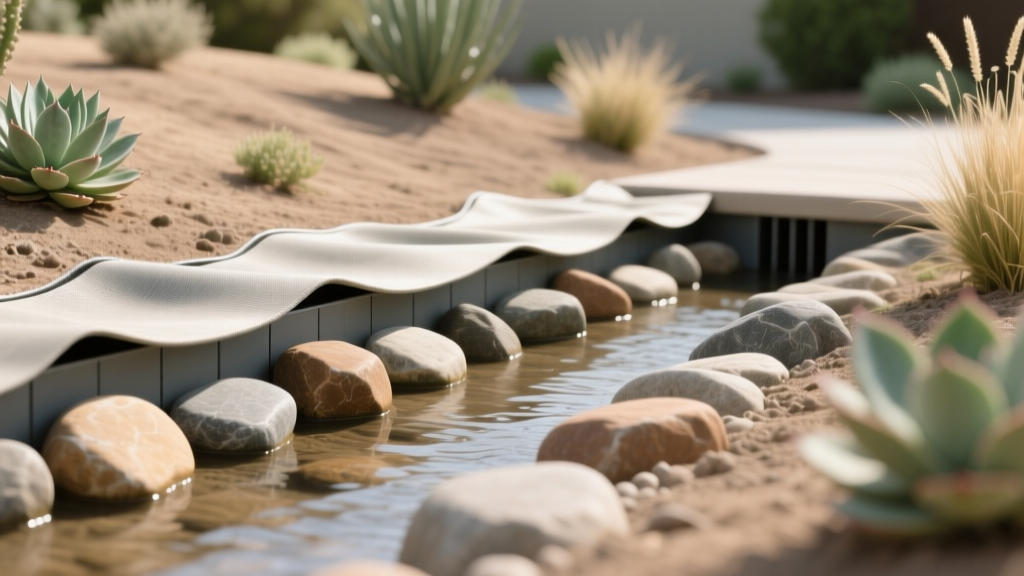
Build a Dry Creek Bed French Drain: 2026 Rock Guide
Emily WatsonPublished
The Evolution of Yard Drainage in 2026
As weather patterns shift and 2026 brings more frequent, high-volume rainfall events to many regions, traditional surface grading is no longer sufficient for protecting residential foundations and preventing severe soil erosion. Homeowners and landscape architects are increasingly turning to hybrid drainage solutions. One of the most effective and visually stunning methods is integrating a subsurface French drain installation beneath an aesthetically designed dry creek bed. By combining the heavy-duty water displacement of a perforated pipe system with the natural beauty of river rock and heavy-duty landscape fabric, you can create a functional drainage artery that looks like a natural landscape feature.
According to the EPA's Green Infrastructure guidelines, managing stormwater at the source through permeable, naturalistic channels significantly reduces municipal sewer burden and prevents localized flooding. A dry creek bed alone handles surface runoff, but during a torrential 2026 downpour, surface tension and soil saturation can lead to overflow and washouts. By embedding a French drain directly beneath the rock channel, you double your drainage capacity, ensuring that both surface and subsurface water are swiftly routed away from vulnerable areas.
Why Integrate a French Drain Beneath a Dry Creek Bed?
A standalone dry creek bed is essentially a shallow, rock-lined swale. While excellent for directing mild surface runoff, it lacks the volume capacity for severe storms. Conversely, a traditional French drain—a gravel-filled trench containing a perforated pipe wrapped in geotextile fabric—is a subsurface workhorse but leaves an unsightly scar of exposed gravel on your lawn.
Merging the two provides the best of both worlds:
- Maximum Hydraulic Capacity: The surface rock handles immediate sheet flow, while the subsurface pipe captures groundwater and excess saturation.
- Erosion Prevention: The landscape fabric and interlocking river rocks prevent the trench walls from collapsing during high-velocity water events.
- Curb Appeal: What looks like a deliberate, Zen-inspired xeriscape feature is actually a high-performance drainage system.
- Reduced Maintenance: Properly layered river rock over a French drain prevents the pipe from becoming clogged with surface debris and topsoil.
Essential Materials and 2026 Cost Estimates
To execute this hybrid project, you must source materials that can withstand constant moisture and UV exposure where exposed. Here is what you need for a standard 50-foot installation in 2026:
- Perforated Drainage Pipe: 4-inch SDR 35 PVC or rigid corrugated pipe. Avoid cheap flexible corrugated tubing, which crushes easily under the weight of river rock.
- Landscape Fabric: Heavy-duty, woven geotextile fabric (minimum 4 oz per square yard). Non-woven fabrics will clog with silt within a single season.
- Base Gravel: Washed, crushed 3/4-inch angular gravel. Do not use round pea gravel for the base, as it does not lock together to support the pipe.
- River Rock and Boulders: A mix of 3-to-5-inch river rock for the main channel, 1-to-3-inch rock for chinking, and 12-inch or larger boulders for bank stabilization.
Step-by-Step Installation Guide
Step 1: Trenching and Grading
Map out a meandering, naturalistic path for your creek bed, avoiding perfectly straight lines. Dig a trench that is approximately 24 to 36 inches wide and 18 to 24 inches deep. The most critical factor in any French drain installation is the slope. You must maintain a minimum grade of 1/8 inch to 1/4 inch per foot to ensure gravity moves the water toward your designated discharge point, such as a pop-up emitter or a municipal storm drain. Use a laser level or a string line to verify your grade before proceeding.
Step 2: Landscape Fabric Deployment
Line the entire trench with your heavy-duty woven landscape fabric. The fabric must drape over the sides of the trench and extend at least 12 inches beyond the lip on both sides. This excess fabric will be folded back over the top of the gravel base later to create a burrito wrap effect, which is essential for keeping fine topsoil and silt out of your French drain aggregate. As noted by Penn State Extension stormwater management resources, proper geotextile separation is the number one factor in preventing premature drain failure due to soil infiltration.
Step 3: French Drain Pipe and Gravel Base
Pour a 3-to-4-inch layer of washed, crushed 3/4-inch gravel into the bottom of the fabric-lined trench. Lay your 4-inch perforated PVC pipe on top of this base, ensuring the perforations face downward. This counterintuitive placement prevents sediment from washing directly into the holes and allows water to wick up through the gravel bed into the pipe. Cover the pipe with another 4 to 6 inches of crushed gravel. Now, fold the excess landscape fabric over the top of the gravel, overlapping the seams by at least 6 inches. You now have a fully encapsulated, traditional French drain sitting at the bottom of your dry creek bed channel.
Step 4: River Rock Layering and Boulder Placement
With the subsurface drain sealed, it is time to build the aesthetic surface layer. Begin by placing your large anchor boulders along the edges of the trench, burying them slightly into the soil to mimic natural outcroppings. Next, fill the channel with your 3-to-5-inch river rock to a depth of about 4 to 6 inches. Finally, use the smaller 1-to-3-inch river rock to fill in the gaps between the larger stones and the boulders. This varied layering not only creates a highly realistic, natural creek bed appearance but also dissipates the kinetic energy of rushing surface water, protecting the landscape fabric beneath from UV degradation and physical tearing.
Material Comparison Chart: 2026 Aggregates
| Material Type | Size / Specification | Primary Drainage Function | 2026 Est. Cost (per ton) |
|---|---|---|---|
| Crushed Angular Gravel | 3/4 inch Washed | Subsurface pipe bedding and structural support | $45 - $65 |
| Small River Rock | 1 inch - 3 inch Rounded | Transition layer, chinking, and edge softening | $120 - $150 |
| Large River Rock | 3 inch - 5 inch Rounded | Primary surface flow channel and UV protection | $140 - $180 |
| Natural Boulders | 12 inch - 24 inch Fieldstone | Bank stabilization, flow redirection, aesthetics | $200 - $350 |
Long-Term Maintenance and Best Practices
Even the most meticulously installed dry creek bed French drain requires occasional maintenance to perform optimally through the 2026 seasons and beyond. Because the surface is open to the elements, windblown debris, autumn leaves, and organic matter can accumulate between the river rocks.
To maintain peak hydraulic efficiency:
- Biannual Raking: Use a stiff-tined landscaping rake to gently agitate the top layer of river rock in the spring and fall. This dislodges trapped silt and allows it to wash through the rock matrix rather than forming an impermeable crust.
- Leaf Blowing: During autumn, use a high-powered leaf blower on a low setting to clear organic debris from the surface rocks before it decomposes into muck.
- Inspect Discharge Points: Ensure that the pop-up emitters or daylighted pipe exits at the end of your French drain are clear of rodent nests, ice dams, or vegetative overgrowth.
- Top-Dressing: Every 3 to 5 years, the river rock may settle or shift during heavy floods. Budget to add a 1-inch top-dressing of fresh 3-to-5-inch river rock to maintain the aesthetic profile and protect the underlying layers.
By treating your dry creek bed not just as a decorative garden feature, but as a critical piece of subsurface drainage infrastructure, you safeguard your property against the increasingly unpredictable weather patterns of the modern era. The integration of heavy-duty landscape fabric, rigid perforated piping, and carefully sized river rock ensures that your landscape remains dry, stable, and breathtakingly beautiful for decades to come.

