Gardening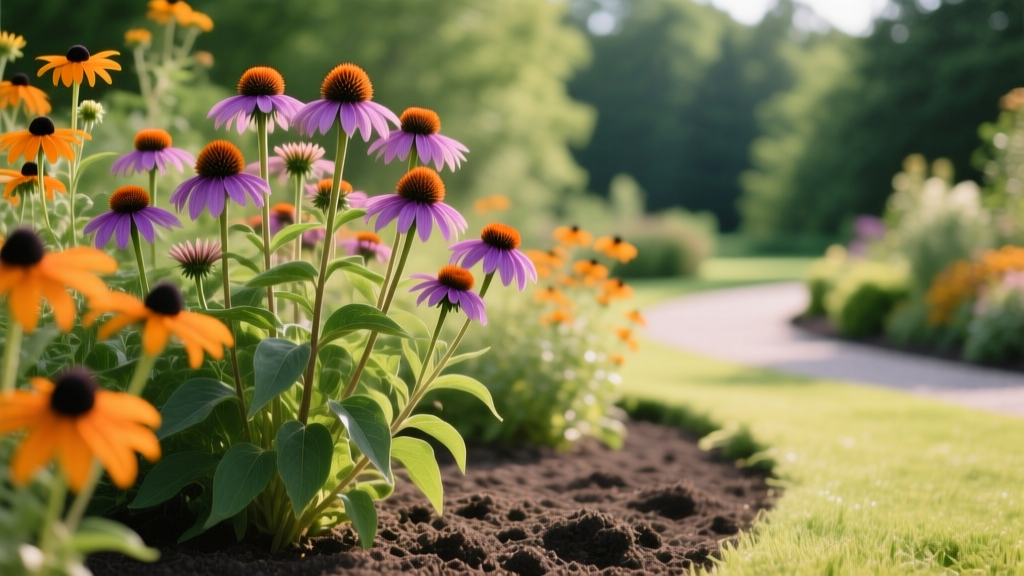
2026 Coneflower & Black-Eyed Susan Design & Core Aeration Guide
Robert HayesPublished
The 2026 Native Garden Renaissance: Echinacea and Rudbeckia
Gardening in 2026 is defined by a powerful shift toward ecological resilience, water conservation, and the support of local pollinator networks. At the absolute forefront of this movement are two North American native powerhouses: the Purple Coneflower (Echinacea purpurea) and the Black-Eyed Susan (Rudbeckia hirta and Rudbeckia fulgida). These perennials are celebrated for their vibrant, daisy-like blooms, their ability to withstand extreme summer heat, and their vital role in sustaining native bee and butterfly populations. However, as many home gardeners transition from traditional turfgrass to perennial flower beds, they encounter a hidden barrier that threatens the survival of these drought-tolerant plants: severe soil compaction.
While most homeowners associate core aeration strictly with lawn care, it is actually one of the most critical, yet frequently overlooked, soil preparation steps for establishing a thriving perennial flower garden. If you are planning a coneflower and black-eyed Susan garden design this year, understanding how to properly core aerate your soil will be the difference between a struggling, stunted flower bed and a spectacular, towering pollinator haven.
The Hidden Key to Perennial Success: Core Aeration
Why does a perennial garden need core aeration? When you convert a former lawn area or a heavily trafficked yard space into a garden bed, the soil is often densely compacted. According to the Cornell University Soil Health Program, soil compaction destroys the pore spaces necessary for water infiltration, gas exchange, and root penetration. In compacted clay soils, water pools on the surface or runs off entirely, while oxygen is starved from the root zone.
Coneflowers and black-eyed Susans are notoriously intolerant of 'wet feet' and poorly drained soils. While they are drought-tolerant once established, their deep taproots (in the case of Echinacea) and extensive fibrous root systems (in Rudbeckia) require loose, friable soil to anchor themselves and access deep moisture reserves during the peak of summer. Core aeration solves this by physically extracting 2-to-3-inch plugs of soil from the ground. Unlike spike aeration, which merely punches holes and can actually worsen compaction by pressing soil outward, core aeration removes the mass, creating permanent channels for air, water, and organic matter to reach the subsoil.
Step-by-Step Core Aeration for New Perennial Beds
Before you purchase your plants or lay down mulch, you must prepare the canvas. Here is how to execute a proper core aeration for a new perennial bed in the 2026 gardening season:
1. Timing and Moisture Preparation
The ideal time to aerate and prepare your bed is in early spring or early fall. The soil must be moist, but not saturated. Water the designated garden area deeply 24 to 48 hours before you plan to aerate. If the soil is too dry, the aerator tines will not penetrate; if it is too wet, the tines will clog with mud and fail to pull clean plugs.
2. Selecting the Right Equipment
For beds larger than 100 square feet, renting a walk-behind gas-powered core aerator or utilizing a modern 2026 electric model is highly recommended. The latest 80V lithium-ion cordless aerators offer excellent torque without the emissions or noise of gas engines. For smaller, tight spaces or existing beds where you are doing maintenance, a heavy-duty manual foot-press coring tool is sufficient.
3. The Aeration Process
- Mark Utilities: Always call your local utility marking service before aerating to avoid striking underground lines.
- First Pass: Run the aerator over the entire garden bed area in one direction.
- Second Pass: Make a second pass perpendicular to the first to ensure a dense grid of aeration holes, aiming for roughly 15 to 20 holes per square foot.
- Leave the Plugs: Do not rake up the soil plugs! Leave them on the surface. Over the next few weeks, rain and irrigation will break them down, returning beneficial microorganisms to the topsoil.
Designing Your Coneflower and Black-Eyed Susan Layout
With the soil physically opened and breathing, you can now focus on the aesthetic and ecological design of your garden. The Mt. Cuba Center, a premier botanical garden focused on native plants, emphasizes that planting in 'drifts' or sweeping masses mimics natural ecosystems and provides a much more impactful visual display than scattering individual plants. Their extensive Echinacea trial evaluations highlight the importance of selecting cultivars that offer strong structural integrity and multi-season interest.
When designing your layout, place the taller Coneflowers (which typically reach 3 to 4 feet in height) toward the back or center of the bed. Position the slightly shorter Black-Eyed Susans (2 to 3 feet) in the mid-ground or foreground. Intersperse them with ornamental grasses like Little Bluestem (Schizachyrium scoparium) to provide a textural contrast and support the tall flower stems against high winds.
2026 Cultivar Comparison Chart
Choosing the right cultivars is essential for a long-lasting display. Below is a comparison of top-performing varieties that thrive in properly aerated, well-draining soils:
| Plant Name | Type | Mature Height | Bloom Color | Key 2026 Design Feature |
|---|---|---|---|---|
| Echinacea 'PowWow Wild Berry' | Coneflower | 24-30 inches | Deep Rose-Pink | Exceptional branching; massive bloom count without deadheading. |
| Echinacea 'Purpurea' | Coneflower | 36-48 inches | Purple with orange cone | Classic native straight species; highly attractive to goldfinches in winter. |
| Rudbeckia 'Goldsturm' | Black-Eyed Susan | 24-30 inches | Golden Yellow | The industry standard for reliability and vigorous spreading via rhizomes. |
| Rudbeckia 'American Gold Rush' | Black-Eyed Susan | 24-28 inches | Bright Yellow | Superior disease resistance to septoria leaf spot; compact, mounding habit. |
Post-Aeration Topdressing and Planting Strategy
Once your grid of aeration holes is established and the plugs are resting on the surface, the next step is topdressing. This is where you permanently alter the soil structure. Spread a 1-inch layer of high-quality, screened organic compost over the entire bed. Using a stiff rake or a push broom, work the compost directly into the open aeration holes. This technique, often called 'plugging with compost,' ensures that the deep channels remain open and filled with nutrient-rich organic matter rather than collapsing back into heavy clay.
When it is time to plant your Echinacea and Rudbeckia plugs, dig your planting holes. You will immediately notice that the soil is significantly easier to dig and crumbles beautifully. Space your plants 18 to 24 inches apart to ensure adequate airflow, which is critical for preventing fungal diseases like powdery mildew, especially in humid summer climates. According to the University of Minnesota Extension, proper spacing and well-drained soil are the primary defenses against the foliar diseases that commonly plague Rudbeckia species in late summer.
'The foundation of any successful perennial garden is not the plant itself, but the soil architecture. By utilizing core aeration and compost topdressing, we transition from merely feeding the plant to feeding the soil ecosystem, resulting in deeper roots and unmatched drought resilience.' - 2026 Sustainable Landscaping Report
Maintaining Soil Structure in Established Beds
What happens in the years following your initial 2026 planting? You cannot run a mechanical core aerator over an established perennial bed without severely damaging the root crowns of your coneflowers and black-eyed Susans. However, soil will naturally settle and compact over time due to rain, foot traffic, and gravity.
To maintain the benefits of your initial aeration, adopt a 'no-till' and 'no-step' philosophy for your garden beds. Install decorative stepping stones or mulch pathways so you never have to walk on the root zones. Every early spring, use a broadfork or a deep-rooting hand aerator to gently lift and fracture the soil between the plant crowns without turning it over. Follow this with a light, half-inch topdressing of compost. This annual maintenance mimics the natural decomposition cycle of the prairie, ensuring your Echinacea and Rudbeckia remain vigorous, deeply rooted, and spectacularly colorful for decades to come.
