Lawn Care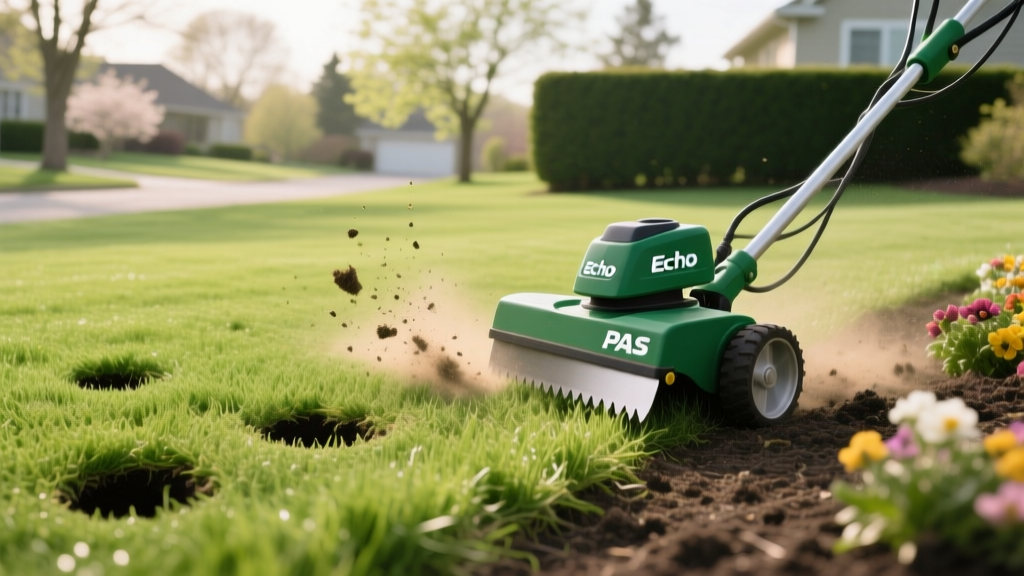
2026 Echo PAS Edger And Core Aeration Workflow Guide
Mike RodriguezPublished
The Intersection of Core Aeration and Precision Edging in 2026
When it comes to professional-grade lawn care in 2026, achieving a pristine, healthy landscape requires more than just mowing and fertilizing. It demands a strategic approach to soil health and boundary management. Core aeration remains the undisputed champion for combating soil compaction, allowing vital oxygen, water, and nutrients to penetrate the root zone. However, running heavy, gas-powered or commercial-grade battery core aerators near landscape beds, sidewalks, and driveways often results in torn turf, scalped edges, and damaged hardscaping. This is where the Echo PAS (Pro Attachment Series) edger attachment becomes an indispensable tool in your seasonal workflow.
Integrating the Echo PAS edger into your core aeration routine is not just about aesthetics; it is about protecting your landscape architecture and ensuring the aerator operates within a defined, safe boundary. By establishing a crisp trench before aeration and refining it afterward, you prevent the aerator's tines from catching and ripping the turf margin. In this comprehensive 2026 guide, we will explore how to seamlessly pair the Echo PAS edger attachment with your core aeration schedule for both cool-season and warm-season grasses.
Why Edge Before and After Core Aeration?
Many homeowners and landscaping professionals view edging and aeration as entirely separate tasks. In reality, they are deeply interconnected. According to the University of Minnesota Turf Science program, core aeration is essential for relieving soil compaction and managing thatch, but the physical process involves heavy machinery that can easily damage undefined lawn borders.
Pre-Aeration Edging: Creating a Buffer Zone
Before you bring a heavy core aerator onto the lawn, the edges are often overgrown, with grass creeping into mulch beds or over sidewalks. If you aerate without edging first, the front tines of the aerator can easily catch this overhang, ripping out large chunks of turf and destroying the clean line between your lawn and garden beds. Using the Echo PAS edger to cut a deep, clean 'V' trench creates a physical buffer. This trench acts as a guide and a barrier, ensuring the aerator's wheels and tines stay strictly within the turf zone.
Post-Aeration Edging: Cleanup and Refinement
Core aeration is a messy process. The machine pulls thousands of soil plugs, and when operating near the perimeter, mud, thatch, and soil plugs inevitably spill over into your landscape beds or onto your concrete. After the aeration pass, the Echo PAS edger attachment is used to re-cut the trench. The spinning blade effortlessly throws the spilled soil and aeration plugs back onto the lawn, restoring the crisp boundary without the need for hours of manual raking and hand-trimming.
The 2026 Echo PAS System: Power Meets Precision
The Echo Pro Attachment Series has evolved significantly by 2026, offering both high-torque gas options and the incredibly powerful eFORCE 56V commercial battery platforms. For edging, the specific attachment is the Echo EDGEO (or PAS-EDGE depending on your region's current catalog). This attachment features a heavy-duty steel blade, a specialized debris guard, and an adjustable depth wheel that is critical when working around freshly aerated, soft soil.
Pairing the EDGEO attachment with a 2026 Echo PAS-2620 gas powerhead or the high-capacity PAS-2120 battery powerhead provides the relentless torque needed to slice through thick, clay-heavy soil and dense root mats that often border aeration zones. The quick-release coupler allows you to swap from a blower attachment (to clear debris before aeration) to the edger attachment in seconds, streamlining your entire lawn care workflow.
The Ultimate 2026 Aeration and Edging Workflow
To maximize the health of your lawn and the efficiency of your equipment, follow this step-by-step workflow tailored for the 2026 landscaping season.
Step 1: Utility Marking and Preparation
Before any blade or tine touches the soil, safety and infrastructure protection are paramount. Always remember to contact Call 811 a few days before your scheduled aeration and edging day to have underground utilities marked. Hitting a shallow irrigation line or fiber optic cable with an edger blade or aerator tine is a costly and dangerous mistake.
Step 2: Pre-Aeration Edging with the Echo PAS
Attach the EDGEO to your Echo PAS powerhead. Set the depth wheel to a moderate setting—about 1.5 to 2 inches deep. Walk the entire perimeter of your lawn, cutting a continuous, clean edge along all driveways, sidewalks, and mulch beds. This removes the overgrown 'lip' of grass and establishes the boundary line for your aerator.
Step 3: Core Aeration Execution
With the edges defined, run your core aerator. Keep the machine at least 2 to 3 inches away from the freshly cut edge to prevent the tines from collapsing the trench wall. Overlap your aeration passes to ensure maximum soil relief, especially in high-traffic areas where compaction is most severe.
Step 4: Post-Aeration Edge Refinement
Once aeration is complete, you will notice soil plugs and mud scattered across your hardscaping and garden beds. Fire up the Echo PAS edger again. Adjust the depth wheel slightly deeper (up to 2.5 inches) to cut through any debris that settled into the trench. The blade's rotation will naturally flick the aeration plugs and excess soil back onto the turf, leaving your beds and walkways immaculate.
Equipment Comparison: Managing Lawn Borders
How does the Echo PAS edger attachment compare to other methods when dealing with the heavy soil disruption caused by core aeration? Below is a 2026 comparison chart.
| Edging Method | Time Efficiency | Plug Displacement Power | Upfront Cost (2026) | Best Use Case |
|---|---|---|---|---|
| Echo PAS EDGEO Attachment | High | Excellent (Throws plugs back to turf) | ~$130 (Attachment only) | Full property workflows, post-aeration cleanup |
| Dedicated Stick Edger | Medium | Good | $250 - $400 | Single-task properties, no other PAS needs |
| Manual Half-Moon Spade | Very Low | Poor (Requires manual lifting) | $30 - $50 | Small garden beds, delicate landscape borders |
| String Trimmer (Edging mode) | Medium | Poor (Smears mud, doesn't cut trenches) | $150 - $300 | Light grass overhang, not for aeration zones |
Managing Soil Plugs and Edge Cleanup
A common question in 2026 lawn care forums is what to do with the thousands of soil plugs left behind after core aeration, particularly those piled up near the lawn's edge. As noted by the University of Missouri Extension, leaving the plugs on the lawn is highly beneficial. They contain vital microorganisms that help break down thatch, and they eventually wash back into the aeration holes and surrounding turf, returning topsoil to the surface.
By using the Echo PAS edger to flick the perimeter plugs back onto the grass rather than into the mulch beds, you keep your landscape design intact while allowing the soil biology to do its work. If you have a massive accumulation of plugs on the hardscaping, use an Echo PAS blower attachment to blast them back onto the lawn before making your final edging pass.
Timing Your Aeration and Edging for 2026
The timing of this dual-process workflow depends entirely on your grass type. For cool-season grasses (like Kentucky Bluegrass, Tall Fescue, and Perennial Ryegrass), the optimal window for core aeration and heavy edging is late summer to early fall (late August through October). The turf is entering its peak growth phase and will quickly recover from the edging cuts and aeration holes.
For warm-season grasses (like Bermuda, Zoysia, and Centipede), you must perform this workflow in late spring to early summer (May through June) when the grass is actively growing and can aggressively push new roots into the freshly aerated soil and heal the edged boundaries. Edging dormant or semi-dormant warm-season grass right before aeration can lead to severe turf dieback along the borders.
Echo PAS Edger Maintenance for the 2026 Season
Core aeration season puts immense stress on your equipment. The EDGEO attachment is slicing through compacted soil, hidden roots, and occasional gravel near driveways. To maintain peak performance in 2026, adhere to this maintenance schedule:
- Blade Sharpening: Dull blades tear the grass rather than slicing it, leading to frayed, brown edges that take weeks to heal. Remove the blade and sharpen it on a bench grinder after every 10 hours of heavy edging.
- Gear Case Lubrication: The EDGEO gear case operates inches from the soil, constantly exposed to moisture and aeration dust. Grease the gear case with Echo's premium lithium-complex grease every 25 hours of operation to prevent internal corrosion.
- Debris Guard Inspection: The metal debris guard takes a beating from flying aeration plugs and small stones. Check the mounting bolts regularly to ensure the guard remains securely in place, protecting you and your property from high-velocity projectiles.
Conclusion
Mastering lawn care in 2026 requires viewing your landscape as an interconnected ecosystem. Core aeration addresses the subterranean health of your turf, while precision edging defines its visual boundaries and protects your hardscaping. By integrating the Echo PAS edger attachment into your aeration workflow, you save time, protect your property from heavy machinery damage, and achieve the manicured, professional-grade finish that defines a truly exceptional lawn.