Lawn Care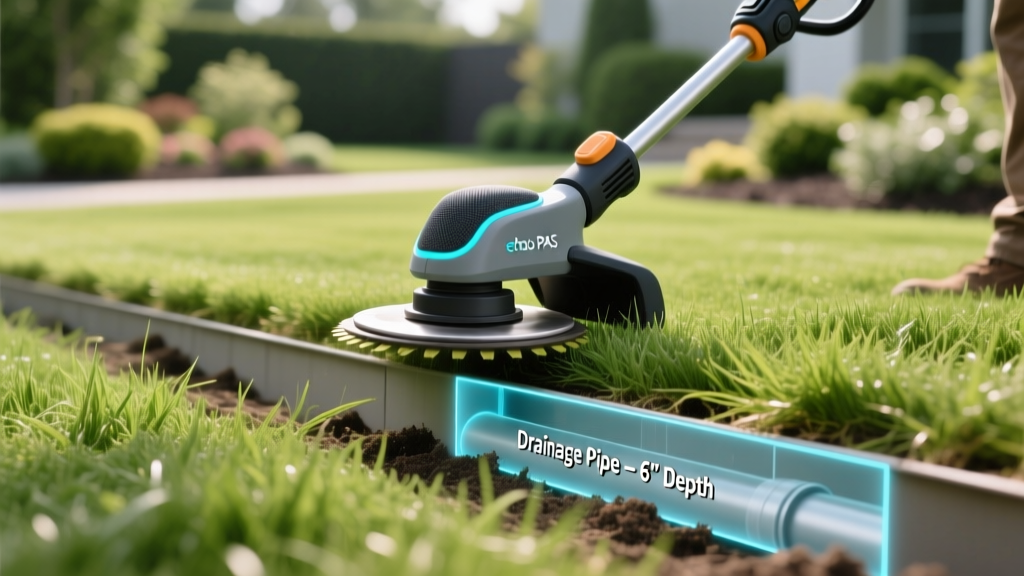
Echo PAS Edger: Safe Lawn Edging Over Drainage Pipes 2026
Lisa ThompsonPublished
The Intersection of Hardscaping and Subsurface Drainage
Creating crisp, defined borders between your turfgrass and hardscapes is one of the most satisfying aspects of lawn care. However, as modern landscaping increasingly prioritizes stormwater management, the subsurface environment of our yards has become a complex web of corrugated pipes, PVC lines, and French drains. According to the EPA's Green Infrastructure guidelines, proper subsurface drainage is essential for preventing soil erosion and protecting home foundations. Yet, this hidden infrastructure presents a unique hazard when performing routine lawn edging.
If you are using the highly popular Echo PAS (Pro Attachment Series) system, you are wielding a tool capable of slicing through compacted soil, thick rhizomes, and unfortunately, shallow landscape drainage pipes. Striking a corrugated drain pipe or a rigid PVC joint with a high-RPM steel edger blade can result in catastrophic flooding, costly excavation repairs, and ruined turf. In 2026, with landscape drainage codes becoming stricter and shallow pop-up emitters becoming the norm, understanding how to safely operate your Echo PAS edger attachment over drainage zones is a mandatory skill for both homeowners and landscaping professionals.
Why the 2026 Echo PAS Edger is the Industry Standard
The Echo Pro Attachment Series has long been a staple in the lawn care industry due to its modular versatility. In 2026, powerheads like the Echo PAS-2620 and the battery-powered PAS-2500 deliver immense torque to the edger attachment, spinning the 8-inch steel blade at speeds that easily cut through overgrown Bermuda and Zoysia stolons. The edger attachment features a depth adjustment lever and a heavy-duty debris guard, making it ideal for trenching and defining edges.
However, the very power that makes the Echo PAS edger effective is what makes it dangerous to subsurface infrastructure. The blade can cut up to 5 inches deep. While this is perfect for severing deep turf roots, it places the blade directly in the strike zone of shallow downspout extensions, driveway channel drains, and pop-up emitter lines that are often buried merely 2 to 4 inches below the soil surface.
Mapping Your Landscape Drainage Pipes
Before you even start the engine of your Echo PAS powerhead, you must identify where your drainage pipes are routed. As noted by Penn State Extension's landscape management resources, subsurface drainage systems typically follow the path of least resistance, gravity-feeding from downspouts and low-lying catch basins toward the street, alleyway, or a designated dry well.
- Identify Pop-Up Emitters: These are the most common casualties of edging. They are usually located at the very edge of the property line or near the sidewalk, connected by shallow corrugated pipes.
- Locate Catch Basins: Often installed near driveway aprons or patio corners, the pipes exiting these basins usually run parallel to the hardscape edge—the exact path you will be edging.
- Use a Soil Probe: If you do not have the original landscape blueprints, use a thin, flexible fiberglass soil probe or a long screwdriver to gently probe the soil 6 inches away from the concrete edge to feel for the hollow resistance of a buried pipe.
Configuring the Echo PAS Edger Attachment for Safe Clearances
The golden rule of edging over drainage zones in 2026 is to never let the blade penetrate deeper than the top of your turf's root zone. You are cutting grass stolons and thatch, not digging a new trench. The Echo PAS edger attachment features a quick-release depth adjustment pin. You must utilize this feature to limit your blade exposure.
Blade Depth Adjustment Matrix for Drainage Safety
| Drainage Pipe Type | Typical Burial Depth (2026 Standards) | Echo PAS Edger Max Safe Depth | Risk Level |
|---|---|---|---|
| Corrugated French Drain | 6 - 12 inches | 3 inches | Low (if set correctly) |
| Rigid PVC (SDR 35) | 12 - 24 inches | 4 inches | Very Low |
| Shallow Pop-Up Emitter Line | 2 - 4 inches | 2 inches | HIGH |
| Downspout Extension | 1 - 3 inches | 1.5 inches | HIGH |
When approaching a known drainage zone, pull the depth adjustment pin on your Echo PAS edger and raise the blade guard so that no more than 2 to 2.5 inches of the blade is exposed below the soil line. This shallow setting will still cleanly sever the grass edge but will safely glide over the top of shallow corrugated pipes.
Step-by-Step Edging Over Drainage Zones
- Clear the Surface: Use a leaf blower or a stiff bristle broom to clear away loose mulch, gravel, and debris from the edge of the concrete. Exposed gravel can be thrown by the Echo PAS blade, and hidden rocks can deflect the blade downward into a pipe.
- Engage the Throttle and Let it Spin: Bring the Echo PAS powerhead to full RPM before lowering the blade into the soil. Dropping a stationary blade into the dirt and then revving the engine causes the blade to dig aggressively, increasing the chance of a deep strike.
- The 'Hover' Technique: As you walk along the edge over a drainage zone, do not push the edger down forcefully. Let the weight of the machine and the guide wheel do the work. Keep your upward pressure light, essentially 'hovering' the blade just inside the soil profile.
- Watch the Discharge Chute: The Echo PAS edger throws soil and debris to the left. If you suddenly see chunks of white PVC, black corrugated plastic, or geotextile fabric flying out of the chute, release the throttle immediately. You have grazed a pipe.
- Navigate Joints and Fittings: Drainage pipes are most vulnerable at the joints, couplings, and T-fittings, which sit slightly higher than the pipe itself. Slow your walking pace when approaching areas where you suspect a downspout ties into the main lateral line.
Navigating Pop-Up Emitters and Catch Basins
Pop-up emitters are designed to remain flush with the ground until water pressure forces them open. Because they sit right at the soil surface, edging around them requires extreme precision. Do not attempt to edge directly against the plastic rim of a pop-up emitter with the Echo PAS steel blade. The blade will catch the plastic lip, shattering the emitter and potentially sending a shard of metal flying.
Instead, stop the edger 6 inches short of the emitter. Use a manual half-moon edger or a sharp landscaping spade to hand-cut the turf around the emitter base. This manual approach guarantees you will not crack the plastic housing or sever the flexible swing pipe that connects the emitter to the main drainage line. Similarly, when edging near the grates of 9x9 or 12x12 inch catch basins, keep the Echo PAS guide wheel firmly on the concrete to prevent the blade from wandering into the plastic grate slots.
Post-Edging Cleanup and Drainage Maintenance
Edging throws a significant amount of topsoil and thatch onto adjacent hardscapes. If your driveway or sidewalk features integrated drainage channel grates or permeable paver joints, this debris can quickly clog the system. After completing your pass with the Echo PAS edger, it is vital to perform immediate cleanup.
Use a high-powered backpack blower to clear the soil away from drainage grates. Never use a pressure washer to blast the edging debris into the drainage grates, as this will wash heavy clay and sand deep into the corrugated pipes, leading to severe clogs and sediment buildup over time. By combining the precision of the 2026 Echo PAS edger attachment with a mindful approach to subsurface infrastructure, you can achieve perfectly manicured lawn borders while ensuring your landscape drainage system continues to protect your property from water damage for years to come.