Lawn Care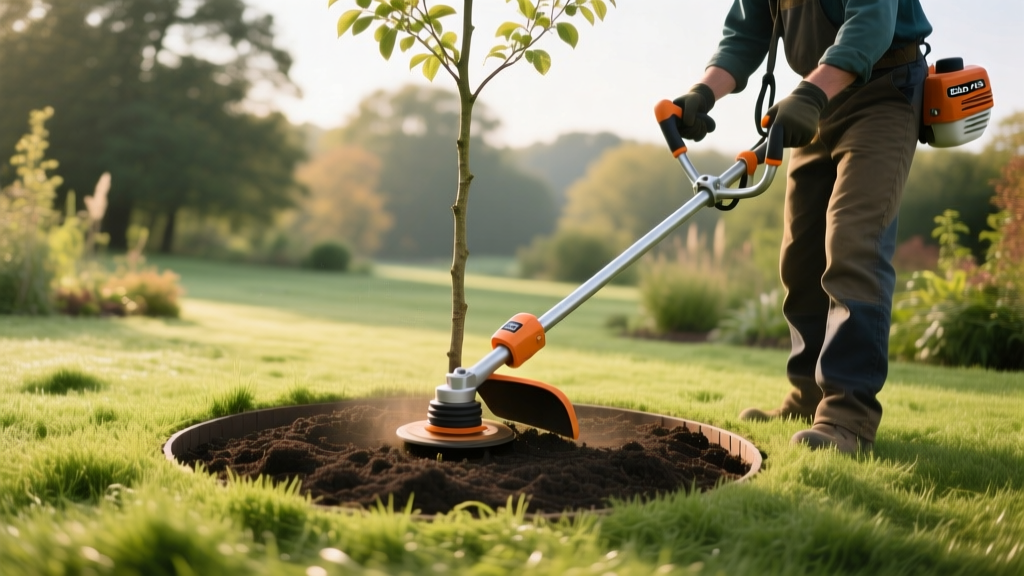
Echo PAS Edger Attachment For Tree Rings: 2026 Guide
Sarah ChenPublished
The Critical Role of Tree Rings in Modern Landscaping
When it comes to tree selection and planting, the work does not end once the root ball is in the ground and backfilled. One of the most vital steps in ensuring the long-term health, growth rate, and structural integrity of a newly planted tree is establishing a dedicated, turf-free mulch ring. Turfgrass is an aggressive competitor for water, nutrients, and soil oxygen. According to the University of Minnesota Extension, removing competing grasses from the base of a tree significantly reduces transplant shock and accelerates root establishment in the critical first three years of growth.
Furthermore, maintaining a clean edge around your tree planting zone protects the delicate trunk flare from mechanical damage caused by string trimmers and mower decks. In 2026, landscaping professionals and dedicated homeowners alike are turning to modular power systems to achieve clean, precise tree rings without the back-breaking labor of manual trenching. The Echo Pro Attachment Series (PAS), specifically equipped with the Echo PAS edger attachment, has emerged as the premier tool for carving out these essential planting borders.
Why the Echo PAS Edger Attachment is the 2026 Standard
The Echo PAS system allows users to swap multiple attachments onto a single powerhead. By 2026, the shift toward high-torque, battery-powered options like the Echo eFORCE 56V PAS powerheads has made edging around delicate tree zones quieter, emission-free, and highly efficient, though the legendary 2-stroke gas models (like the PAS-2620) remain a staple for commercial landscaping crews tackling massive properties.
The dedicated Echo PAS edger attachment features a heavy-duty steel blade and an adjustable depth guide. Unlike standard string trimmers that merely scalp the surface, the edger attachment slices vertically through the soil profile. This is especially critical when dealing with rhizomatous warm-season grasses like Bermuda or Zoysia, which will quickly invade a newly planted tree's mulch basin if the root barrier is not properly severed.
Key Features for Tree Planting Zones
- Adjustable Depth Guide: Allows you to set the trench depth from 1 to 5 inches, perfect for cutting through shallow turf roots without damaging deeper, newly establishing tree anchor roots.
- Heavy-Duty Steel Blade: Slices cleanly through compacted clay and rocky loam commonly found in new construction planting sites.
- Debris Guard: Directs soil and turf clods away from the operator and prevents them from bouncing back onto the freshly exposed tree root flare.
Step-by-Step: Cutting the Perfect Tree Planting Border
Creating a tree ring is not just about drawing a circle in the dirt; it requires an understanding of the tree's biology and the surrounding soil ecology. The International Society of Arboriculture (ISA) recommends that mulch rings extend as far out as the tree's drip line, though a minimum 3-to-4-foot diameter ring is the practical standard for the first few years post-planting.
Step 1: Determine and Mark the Radius
Measure a minimum of 24 inches outward from the trunk in all directions to create a 4-foot diameter circle. Use a piece of string tied to a stake at the trunk's center, or utilize a flexible landscaping hose to outline the circle. Once you are satisfied with the shape, mark the perimeter with non-toxic landscaping spray paint. This visual guide ensures your Echo PAS edger follows a perfectly uniform path.
Step 2: Configure the Echo PAS Edger
Attach the edger attachment to your PAS powerhead. For newly planted trees, you want to sever the grass roots without creating a massive trench that could dry out the adjacent tree roots. Adjust the metal depth guide to the second or third notch (approximately 2 to 3 inches deep). Ensure the blade is spinning freely and clear of any rocks or thick surface roots before engaging the throttle.
Step 3: Execute the Cut
Put on your safety glasses, hearing protection, and heavy-duty boots. Position the Echo PAS edger so the blade sits directly on top of your painted line. Engage the throttle to full speed before the blade touches the soil. Walk slowly and steadily along the perimeter, letting the weight of the machine and the momentum of the blade do the work. Do not force the machine; pushing too hard can stall the engine or overheat a battery-powered eFORCE unit.
Step 4: Remove the Sod and Prepare the Basin
Once the circle is completely severed, use a flat transfer shovel or a manual half-moon edger to pop up the interior sod. Remove the grass and its root mat entirely. This exposes the soil, allowing you to lightly loosen the top inch of dirt to encourage tree feeder roots to expand outward into the surrounding landscape.
Tool Comparison: Echo PAS vs. Alternatives for Tree Rings
While there are many ways to edge a landscape bed, creating a precise, circular tree ring requires specific tool dynamics. Below is a comparison of common methods used in 2026 for establishing tree borders.
| Tool | Precision | Effort Level | Best For | 2026 Avg Cost |
|---|---|---|---|---|
| Echo PAS Edger Attachment | High | Low | Clean trenches, tough soils, rhizomatous grass | $129.99 |
| Manual Half-Moon Edger | Medium | High | Small beds, soft loam, quiet neighborhoods | $35.00 |
| Standalone Gas Edger | High | Medium | Straight lines, long borders, driveway edges | $299.00 |
| Spade / Shovel | Low | High | Rough clearing, irregular shapes, rocky soil | $45.00 |
As the table illustrates, the Echo Pro Attachment Series offers the best balance of precision and low physical effort, making it the superior choice for homeowners and professionals managing multiple tree planting sites.
Post-Edging Tree Care and Mulching Rules
Once the Echo PAS edger has created your pristine border, the next step is applying mulch. However, improper mulching can undo all the benefits of your hard work. The practice of 'volcano mulching'—piling mulch high against the tree trunk—is a leading cause of trunk girdling, fungal diseases, and rodent damage in young trees.
The 3-3-3 Rule for Tree Mulching
- 3 Inches Deep: Apply a uniform layer of organic mulch (such as shredded hardwood or pine bark) no deeper than 3 inches. This retains moisture while allowing oxygen to penetrate the soil.
- 3 Feet Wide: Ensure the mulch fills the entire ring you just cut with the Echo PAS edger, maintaining a consistent depth.
- 3 Inches Away: Keep the mulch at least 3 inches away from the actual trunk of the tree. The root flare must remain exposed to the air to prevent rot and encourage proper trunk taper.
Maintenance of the Echo PAS Edger Attachment
To ensure your edger attachment continues to slice cleanly through turfgrass for years to come, routine maintenance is required. After every use, scrape caked mud and grass sap from the blade guard and depth guide. The gear case at the base of the attachment requires periodic lubrication; check the grease level every 50 hours of operation and refill with high-quality lithium-based gear grease as specified in the 2026 Echo operator's manual.
Additionally, inspect the steel blade for dullness or nicks. A dull blade will tear grass roots rather than slicing them, leaving a ragged edge that is more susceptible to disease and drought stress. You can sharpen the edger blade using a standard metal file or an angle grinder, ensuring you maintain the original factory bevel angle for optimal soil penetration.
Conclusion
Selecting the right tree and planting it at the correct depth are foundational steps in landscaping, but protecting that investment from aggressive turfgrass is what ensures long-term vitality. By utilizing the Echo PAS edger attachment, you can effortlessly carve out precise, professional-grade tree rings that conserve water, eliminate mechanical trunk damage, and provide a beautiful, manicured aesthetic to your property. As landscaping practices in 2026 continue to emphasize ecological health and efficiency, mastering the art of the tree ring with modular power tools is an essential skill for any serious lawn and garden enthusiast.