Home & Garden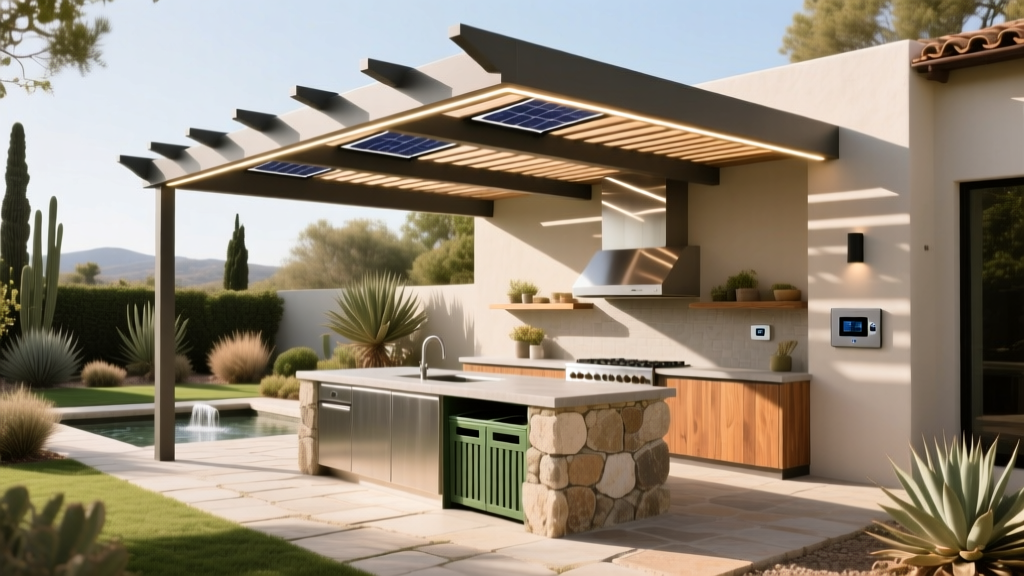
Designing an Energy-Efficient Outdoor Kitchen and Smart Pergola
Sarah ChenPublished
Bridging Indoor Comfort and Outdoor Sustainability
The modern home landscape is no longer just a yard; it is a seamless extension of your indoor living space. As homeowners increasingly seek to merge garden-to-table cooking with outdoor entertainment, the demand for sophisticated outdoor kitchens has surged. However, building an outdoor culinary space without a strategic design plan can lead to excessive energy consumption, weather damage, and poor usability. By approaching your outdoor kitchen and pergola design through the lens of energy efficiency and bioclimatic planning, you can create a stunning, functional space that minimizes your carbon footprint and maximizes year-round comfort.
Planning an energy-efficient outdoor kitchen requires a holistic approach. You must consider passive solar heating, natural ventilation, smart home integration, and sustainable material selection. This comprehensive guide will walk you through the essential design phases, from microclimate mapping to selecting the right solar-integrated appliances, ensuring your outdoor oasis is as kind to the environment as it is to your guests.
Step 1: Microclimate Mapping and Site Placement
Before pouring concrete or ordering stainless steel, you must understand your yard's microclimate. The placement of your outdoor kitchen dictates its energy efficiency. A poorly placed kitchen might require massive overhead heaters in the winter or energy-draining misting systems in the summer.
- Sun Path Analysis: In the Northern Hemisphere, position your cooking and prep areas to face north or east. This prevents the afternoon sun from overheating your outdoor refrigerator and makes the cooking space more comfortable during peak summer usage.
- Windbreaks and Ventilation: Utilize existing evergreen trees or build slatted privacy screens to block prevailing winter winds. This passive windbreak reduces the need for electric patio heaters. Conversely, ensure the grilling area is situated where natural cross-breezes can carry smoke away from the seating area without needing electric exhaust hoods.
- Utility Routing: Plan your trenching for 220V electrical drops, gas lines, and plumbing before any hardscaping begins. Trenching should be done in the late fall or early spring when the ground is workable and your lawn is dormant, minimizing turf damage.
Step 2: The Bioclimatic Smart Pergola
A traditional wood pergola offers minimal weather protection, but a bioclimatic smart pergola actively manages sunlight, rain, and airflow. Brands like Azenco (R-Blade) and StruXure offer motorized louvered roof systems that integrate directly with smart home ecosystems like Control4 or Somfy.
These systems feature extruded aluminum louvers that rotate up to 160 degrees. In the winter, you can angle the louvers fully open to allow passive solar heat to warm the patio and the exterior walls of your home, slightly reducing your indoor heating load. In the summer, you can tilt them to block harsh UV rays while keeping the sides open for natural ventilation, entirely eliminating the need for outdoor ceiling fans or misting systems.
According to the National Fire Protection Association (NFPA), when integrating a grill under a pergola or covered structure, you must maintain strict clearance distances—typically a minimum of 5 feet from the cooking surface to any combustible overhead material, unless the structure is specifically rated for commercial ventilation.
Cost Expectation: Motorized aluminum pergolas typically range from $65 to $150 per square foot, installed. While the upfront cost is higher than cedar, the zero-maintenance powder-coated aluminum and energy-saving passive climate control offer a superior long-term ROI.
Step 3: Energy-Efficient Appliance Planning
The core of an outdoor kitchen is its appliances. Traditional gas grills are notoriously inefficient, with much of the heat lost to the ambient air. By incorporating a mix of high-efficiency electric and targeted gas appliances, you can drastically reduce fuel consumption.
Appliance Efficiency Comparison Chart
| Appliance Type | Energy Source | Thermal Efficiency | Avg. Installed Cost |
|---|---|---|---|
| Outdoor Induction Cooktop | Electric (220V) | ~90% | $800 - $1,500 |
| Infrared Gas Grill | Propane / Natural Gas | ~60-65% | $1,500 - $3,500 |
| Wood Pellet Smoker | Pellets / 110V | ~70% | $900 - $2,000 |
| Energy Star Outdoor Fridge | 110V (High Insulation) | High (Low Draw) | $1,800 - $3,000 |
Consider installing an outdoor-rated induction cooktop (such as those from Gaggenau or Wolf) for side dishes and sauces. Induction transfers energy directly to the cookware, meaning almost zero ambient heat is wasted, keeping your patio cooler and reducing fire hazards. For primary grilling, infrared gas burners (like those found in Lynx or Blaze LTE grills) use ceramic plates to radiate heat directly into the food, reducing preheat times and propane usage by up to 30% compared to traditional convection tube burners.
Step 4: Smart Lighting and Solar Integration
Lighting bridges the gap between daytime functionality and evening ambiance, but it can also be a massive energy drain if not planned correctly. The U.S. Department of Energy strongly recommends utilizing LED fixtures paired with smart controls to minimize outdoor energy consumption.
Instead of running high-voltage halogen floodlights, design a low-voltage (12V) LED lighting plan. Brands like FX Luminaire and Kichler offer smart transformers that connect to your Wi-Fi, allowing you to dim lights, set schedules based on local sunset times, and integrate with motion sensors.
- Task Lighting: Install waterproof, low-wattage LED puck lights under your outdoor kitchen cabinets. At just 3-5 watts each, they provide brilliant illumination for chopping and plating without drawing significant power.
- Ambient Solar Pathways: Use high-lumen solar LED bollards along the pathways leading to the kitchen. Modern solar lights with monocrystalline panels and lithium-iron-phosphate (LiFePO4) batteries can store enough energy to last through the night, entirely off-grid.
- Overhead Smart Strings: For the pergola, use commercial-grade LED bistro lights with smart plugs. You can reduce brightness to 20% during late-night lounging, saving energy and reducing light pollution.
Step 5: Sustainable Hardscaping and Countertops
The materials you choose for your outdoor kitchen and surrounding patio play a vital role in the local ecosystem. Traditional dark concrete and asphalt absorb massive amounts of heat, contributing to the urban heat island effect and raising the ambient temperature of your patio.
The Environmental Protection Agency (EPA) advocates for the use of cool, permeable pavements to mitigate heat absorption and manage stormwater runoff. Consider using permeable interlocking concrete pavers (PICP) for your patio floor. These pavers allow rainwater to seep through the joints and into a gravel sub-base, naturally filtering the water and replenishing local groundwater tables rather than overwhelming municipal storm drains.
For the kitchen countertops, avoid porous natural stones like marble or limestone, which require harsh chemical sealants. Instead, opt for Dekton by Cosentino. Dekton is an ultra-compact surface made from a blend of recycled glass, porcelain, and quartz. It is entirely UV-resistant (preventing fading), impervious to frost, and can withstand direct contact with hot pots and pans, eliminating the need for trivets and reducing the risk of accidental fires.
Budgeting and Project Timeline
A fully integrated, energy-efficient outdoor kitchen and smart pergola is a significant investment. Here is a realistic breakdown of costs and timing for a mid-to-high-end 200-square-foot project:
- Design and Permitting (Weeks 1-4): $1,500 - $3,000. Includes 3D renderings, structural engineering for the pergola footings, and municipal permits.
- Utility Trenching and Hardscaping (Weeks 5-8): $8,000 - $15,000. Excavation, permeable paver base installation, and running dedicated 220V and 110V GFCI circuits.
- Pergola Installation (Weeks 9-10): $15,000 - $25,000. Crane delivery and assembly of the motorized aluminum louvered system.
- Cabinetry, Countertops, and Appliances (Weeks 11-14): $20,000 - $40,000. Marine-grade polymer cabinetry, Dekton fabrication, and drop-in energy-efficient appliances.
By front-loading your planning and prioritizing energy-efficient appliances, smart shading, and permeable hardscaping, your outdoor kitchen will not only elevate your home's value but also serve as a sustainable, low-impact hub for garden-to-table living for decades to come.
