Gardening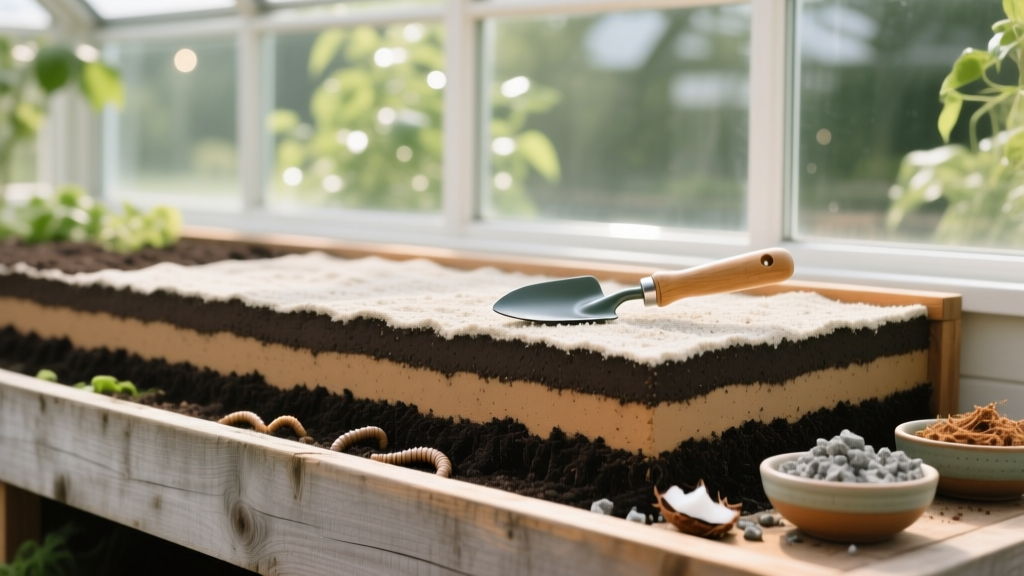
Expert Raised Bed Soil Mix Recipes for Maximum Yields
Emily WatsonPublished
The Foundation of High-Yield Raised Beds
Building a raised bed vegetable garden is one of the most rewarding investments a home gardener can make. Unlike traditional in-ground gardening, where you must amend native clay or sandy soils over several seasons, raised beds offer a blank canvas. However, this advantage comes with a strict caveat: the soil you introduce must be structurally sound, biologically active, and perfectly calibrated for drainage and moisture retention. In this comprehensive guide, we break down expert-level soil mixing, layering techniques, and amendment strategies used by master gardeners and commercial organic farms to guarantee maximum yields.
The Science of Raised Bed Soil Dynamics
The primary challenge of contained growing environments is balancing aeration with water retention. In a standard raised bed, gravity pulls water downward much faster than in native ground soil. If your mix contains too much topsoil or heavy compost, it will compact over time, suffocating roots and inviting anaerobic diseases like Pythium (root rot). Conversely, a mix that is too porous will require daily watering and leach essential water-soluble nutrients like nitrogen and calcium before your plants can absorb them. The goal is to create a loamy, crumbly texture that holds moisture like a sponge while allowing excess water to drain freely.
The Modern Expert Soil Ratio
For decades, Mel Bartholomew's famous 'Square Foot Gardening' mix (one-third peat moss, one-third vermiculite, one-third blended compost) was the gold standard. Today, horticultural experts advocate for a modified, more sustainable blend. Peat moss extraction damages sensitive peatland ecosystems, and vermiculite can sometimes contain trace heavy metals if not sourced rigorously. The modern expert alternative replaces these with coco coir and pumice or perlite.
| Component | Purpose | Expert Recommendation | Est. Cost (cu ft) |
|---|---|---|---|
| Coco Coir | Moisture retention | Rio Hamza Compressed Coir | $1.50 |
| Compost | Nutrients & biology | Black Kow or local dairy | $0.80 |
| Pumice | Aeration & drainage | Hess Pumice (1/4 inch) | $1.20 |
| Worm Castings | Microbial life | Wiggle Worm Soil Builder | $2.50 |
The ideal volumetric ratio for this modern mix is 40% high-quality compost, 30% coco coir, 20% pumice or perlite, and 10% worm castings. This blend ensures a cation exchange capacity (CEC) high enough to hold onto fertilizers while maintaining the 25% air-filled porosity required for vigorous root respiration.
The Modified Hugelkultur Base Layer
Filling an 18-inch deep raised bed entirely with premium potting mix is prohibitively expensive. A standard 4-foot by 8-foot bed with a target soil depth of 1.5 feet requires roughly 48 cubic feet of soil. At an average blended rate of $4 to $6 per cubic foot, you are looking at $200 to $300 per bed. To reduce costs while improving long-term soil biology, experts utilize a modified Hugelkultur layering technique for the bottom 6 to 8 inches of the bed.
- Step 1: Lay down overlapping sheets of uncoated cardboard directly on the native soil to suppress weeds. Remove all plastic tape.
- Step 2: Add a 4-inch layer of arborist wood chips, decaying logs, or dried leaves. This carbon-rich base acts as a slow-release sponge.
- Step 3: Sprinkle a high-nitrogen organic fertilizer (like blood meal) over the wood chips to accelerate decomposition and prevent nitrogen tie-up in the upper soil layers.
- Step 4: Add your premium soil mix on top, filling the remaining 10 to 12 inches of the bed.
Calculating Soil Volume and Bulk Purchasing
To avoid overbuying or running short, you must calculate the exact cubic footage of your raised bed. The formula is: Length (ft) x Width (ft) x Depth (ft) = Total Cubic Feet. For our 4x8 bed with 1.5 feet of premium soil (excluding the Hugelkultur base), the math is: 4 x 8 x 1.5 = 48 cubic feet. Since most bulk soil suppliers sell by the cubic yard (which equals 27 cubic feet), you will need roughly 1.8 cubic yards of total material. Always order 10% extra to account for immediate settling and the mixing process.
Essential Soil Amendments and pH Balancing
Even the best base mix requires targeted amendments to support heavy feeders like tomatoes, brassicas, and squash. Before adding synthetic or organic fertilizers, you must understand your baseline pH. Most vegetables thrive in a slightly acidic range of 6.2 to 6.8.
According to the University of Maryland Extension, 'raised bed soils should be tested every two to three years, as intensive planting and frequent watering rapidly deplete specific micronutrients and can cause pH fluctuations due to the buffering capacity of organic matter.'
You can request a comprehensive soil test from your local cooperative extension office for approximately $15 to $25. Based on typical extension recommendations, here is a baseline amendment recipe for a 4x8 raised bed (assuming a neutral starting pH):
- Espoma Organic Garden-tone (4-3-4): 4 cups, providing a slow-release baseline of NPK.
- Azomite Trace Minerals: 2 cups, replenishing over 70 depleted micronutrients.
- Kelp Meal: 2 cups, supplying natural growth hormones and potassium for fruit set.
- Calcium (Gypsum or Oyster Shell Flour): 3 cups, crucial for preventing blossom end rot in tomatoes and peppers.
Inoculating with Mycorrhizal Fungi
Expert growers never skip the biological inoculation step. Mycorrhizal fungi form symbiotic relationships with vegetable root systems, effectively extending the root network by up to 100 times its original mass. This allows plants to access water and immobile nutrients like phosphorus from the deeper layers of your raised bed. When preparing your soil mix, add 1 tablespoon of a granular endomycorrhizal inoculant (such as Wildroot Organic) per cubic foot of soil. Do not use synthetic fertilizers high in phosphorus immediately after inoculation, as excess phosphorus will inhibit the fungi's ability to colonize the roots.
Mixing Methodology: The Tarp Tumbling Technique
Do not attempt to mix your soil components directly inside the wooden frame. The corners will remain unmixed, and you risk damaging the bed's interior liner. Instead, use the 'Tarp Tumbling' method. Lay a heavy-duty 10x12-foot canvas tarp on your driveway or lawn. Add your compost, coir, pumice, and amendments in layers. Grab opposite corners of the tarp with a partner and pull upward, rolling the soil pile over itself. Repeat this from all four sides for about 10 minutes until the color and texture are completely uniform. Shovel the finished mix into your raised bed and water it deeply to activate the microbial life and settle the coir.
Seasonal Maintenance and Recharging
Raised bed soil will naturally shrink by 15% to 20% during the first growing season as organic matter decomposes and the soil structure settles. This is entirely normal. Do not panic and dump heavy topsoil on top to fill the void. Instead, practice annual top-dressing. Every early spring, apply a 1-inch layer of fresh compost and a light dusting of organic fertilizer to the surface. In the fall, plant a cover crop like crimson clover or winter rye to protect the soil structure from heavy rains and add green manure when you chop and drop it in the spring.
Troubleshooting Common Soil Issues
Water Pooling on the Surface
If water takes more than a few minutes to drain into the bed, your mix has compacted or contains too much fine compost. Remedy this by using a broadfork to gently aerate the bed in the fall, and incorporate 20% more pumice or perlite the following spring.
White Mold on the Base Layer
Gardeners often panic when they see white, web-like mold growing on the wood chips in their Hugelkultur base. This is beneficial mycelium breaking down the carbon. It is a sign of a highly active, healthy soil food web and will directly benefit your plant roots.
Nutrient Lockout
If your plants are stunted and showing purple or yellowing leaves despite regular feeding, your pH may have drifted outside the 6.2-6.8 range, locking out nutrients. A simple digital soil pH meter or a professional extension test will confirm this. If the soil is too acidic (below 6.0), incorporate agricultural lime; if too alkaline (above 7.2), add elemental sulfur or peat moss.
Conclusion
Mastering your raised bed soil mix is the single most impactful step you can take toward a bountiful harvest. By investing in high-quality, sustainable components, utilizing a cost-saving Hugelkultur base, and maintaining the biological health of your soil through annual amendments and fungal inoculation, you create a living ecosystem that will sustain heavy yields for years to come.
