Gardening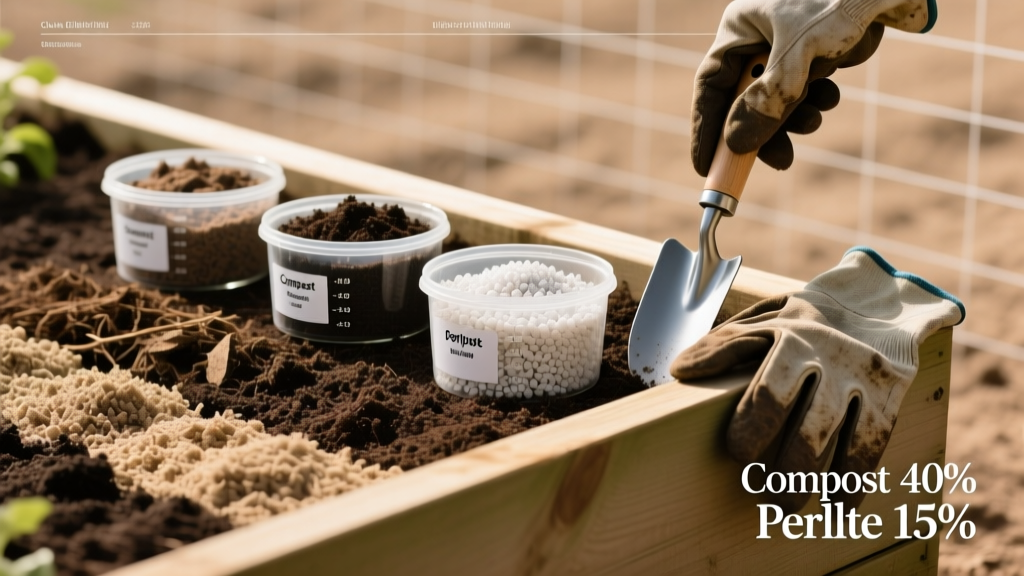
Expert Raised Bed Soil Mix Guide: Best Ratios & Tips
James MillerPublished
The Foundation of a Thriving Garden: Why Soil Mix Matters
When building a raised bed garden, the lumber or stone borders are just the frame—the soil inside does the real work. Unlike in-ground gardening, where you’re stuck working with whatever clay or sand your yard has, raised beds let you start fresh. But that freedom means you get to choose what goes in. You need soil that drains well, holds nutrients, and gives roots room to spread without getting waterlogged. A lot of new gardeners fill their beds with cheap topsoil or plain garden dirt—and end up with compacted, soggy soil that stunts plants.
What you want is a loose, crumbly mix—loamy, not heavy—that holds moisture but lets extra water run through. This guide walks through a practical, three-part soil recipe used by gardeners who’ve built and filled dozens of beds, along with tips on adjusting it for different crops and conditions.
The 3-Part Raised Bed Soil Formula
Many people still use Mel’s Mix (one-third compost, one-third vermiculite, one-third peat moss), but things have shifted. Peat moss harvesting harms bogs, and vermiculite can be pricey and hard to find in large quantities. Today, most experienced gardeners use a simpler, more sustainable version that balances drainage, nutrients, and life in the soil.
Component 1: High-Quality Topsoil or Garden Soil (The Base)
This makes up about 40 to 50 percent of your mix. It adds minerals and weight—enough to keep tall plants like tomatoes and corn from tipping over. Don’t use bagged potting soil here; it’s too light and expensive for filling a whole bed. Instead, get screened topsoil from a local landscape supplier. Make sure it’s screened to at least 3/8 inch to remove rocks, twigs, and weed roots. If your topsoil is heavy clay, drop it to 30 percent and add more aeration material.
Component 2: Diverse Compost Blend (The Nutrient Engine)
Compost should be 30 to 40 percent of your mix. It feeds plants slowly, supports beneficial microbes, and helps unlock nutrients in the soil. The key is variety—not just one kind. Mix at least three types to cover more ground nutritionally and biologically:
- Composted Cow or Poultry Manure: Good all-around source of nitrogen and phosphorus.
- Mushroom Compost: High in calcium—helps prevent blossom end rot in tomatoes and peppers.
- Worm Castings (Vermicompost): Packed with plant-available nutrients and growth compounds. Use a little—it’s pricey, but seedlings respond well.
- Homemade Yard Waste Compost: Adds fungal networks and stable carbon-rich humus.
Component 3: Aeration and Moisture Retention (The Structure)
This final 10 to 20 percent keeps roots breathing. Roots need oxygen just like we do—if they sit in water too long, they rot. Coconut coir is now the go-to replacement for peat moss. It comes in bricks, expands when wet, and holds lots of water without breaking down. For better drainage, add coarse horticultural sand or perlite.
Comparing Aeration Amendments: Perlite vs. Vermiculite vs. Coarse Sand
Your climate and crops matter when choosing an aeration material. Here’s how they stack up:
| Amendment | Water Retention | Drainage & Aeration | Best Use Case | Approximate Cost per Cu Ft |
|---|---|---|---|---|
| Coconut Coir | Very High | Moderate | Arid climates, thirsty crops (cucumbers, melons) | $2.50 - $3.50 |
| Coarse Perlite | Low | Very High | Humid climates, Mediterranean herbs, root crops | $3.00 - $4.00 |
| Vermiculite | High | Moderate | Seed starting, moisture-loving leafy greens | $4.50 - $6.00 |
| Coarse Sand | Very Low | High | Heavy topsoil bases, allium family, carrots | $0.50 - $1.00 |
Tailoring Your Soil Mix for Specific Crops
A general mix works fine for most gardens, but tweaking ratios helps certain crops do better. Heavy feeders like brassicas need more compost; carrots and parsnips need looser, sandier soil to grow straight.
- Leafy Greens and Brassicas: 50% Topsoil, 40% Compost, 10% Coir. They love rich, moist soil.
- Root Crops (Carrots, Radishes, Parsnips): 40% Topsoil, 20% Compost, 40% Coarse Sand and Perlite. Too much nitrogen leads to forked or hairy roots; sand helps them push down cleanly.
- Nightshades (Tomatoes, Peppers, Eggplant): 40% Topsoil, 40% Diverse Compost (with extra worm castings), 20% Coir and Perlite. Tomatoes pull a lot of nutrients and benefit from calcium and microbial activity.
- Mediterranean Herbs (Rosemary, Thyme, Oregano): 30% Topsoil, 10% Compost, 30% Coarse Sand, 30% Perlite. These herbs hate sitting in damp soil and need sharp drainage.
Calculating Soil Volume and Budgeting Costs
To know how much soil to order, multiply length × width × depth (all in feet). Then add about 10% extra—freshly mixed soil settles after watering.
For a standard 4-foot by 8-foot bed that’s 10 inches deep (0.83 ft), the math is 4 × 8 × 0.83 = 26.56 cubic feet. Add 10%, and you’re looking at roughly 29 cubic feet. Buying in bulk from a landscape supplier is usually cheaper than bagged soil from hardware stores. A cubic yard (27 cubic feet) of good blended garden soil runs $45–$75 locally, while the same volume in bags can cost over $150.
Best Practices for Filling, Watering, and Settling
Filling matters as much as mixing. Don’t step on the soil or tamp it down—keep it fluffy. Try the water-settling method instead: Fill the bed to about two inches below the rim, then soak it gently with a hose. Let it drain and settle overnight. Repeat two or three times over a week. That knocks out air pockets and brings the level down to where you want it for planting.
Testing and Adjusting Soil pH for Optimal Uptake
Even great soil won’t feed plants well if the pH is off. Most vegetables grow best between pH 6.2 and 6.8. Test before planting—use a digital pH meter or send a sample to your local extension office. If it’s too acidic, add agricultural lime (about 5 pounds per 100 square feet). If it’s too alkaline—which can happen with limestone-heavy topsoil or lots of mushroom compost—add elemental sulfur or pine needle mulch. Retest every year; compost breaks down and tends to lower pH over time.
What Research Says About Compost in Raised Beds
Studies back up using plenty of compost in raised beds. Cornell University’s College of Agriculture and Life Sciences found that adding quality compost improves soil structure and boosts Cation Exchange Capacity (CEC)—meaning the soil holds onto calcium, magnesium, and potassium instead of washing them away with watering. For intensive vegetable growing, Cornell recommends keeping compost at 30 to 40 percent of the mix to sustain fertility without synthetic fertilizer.
'The biological activity stimulated by generous compost applications in raised beds creates a living soil food web. This web naturally suppresses soil-borne diseases and makes nutrients available to plants precisely when they need them, reducing the reliance on external inputs.' - Cornell University Cooperative Extension Guidelines on Soil Health.
Annual Rejuvenation and Long-Term Maintenance
Raised beds aren’t “fill and forget.” Intensive planting uses up nutrients, and organic matter breaks down—so the soil level drops an inch or two each season. To keep things productive, top-dress each spring before planting: spread a one-inch layer of fresh, diverse compost and a light sprinkle of organic granular fertilizer (like Espoma Garden-tone 3-4-4). Gently work it into the top three inches with a hand fork—don’t dig deep and disturb old root channels. Do this yearly, and your soil will get richer and more alive with each season.
