Home & Garden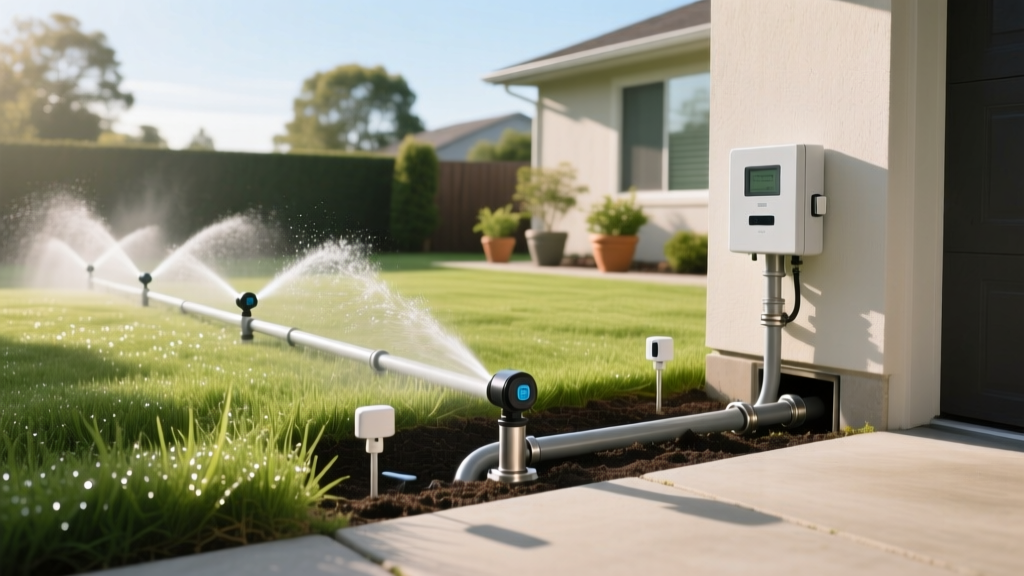
Expert Smart Irrigation Setup Tips for Residential Lawns
Mike RodriguezPublished
The Evolution of Lawn Hydration
Transitioning from a traditional timer-based sprinkler system to a smart irrigation network is one of the most impactful upgrades a homeowner can make for their outdoor living space. Traditional controllers operate on rigid schedules, often watering lawns during rainstorms or failing to adjust for seasonal evapotranspiration rates. Smart irrigation systems bridge the gap between landscape health and resource conservation by utilizing real-time environmental data. As experts in home and garden care, we have compiled this comprehensive guide on best practices for selecting, installing, and calibrating smart irrigation systems to ensure your residential lawn thrives while minimizing water waste.
Selecting the Right Smart Controller
The brain of your smart irrigation setup is the controller. When evaluating options, prioritize models that are EPA WaterSense certified, as these have been independently tested to prove they save water and money. Leading models in the current market include the Rachio 3, Orbit B-hyve, and Rain Bird ST8I-2.0. Each offers distinct advantages depending on your landscape complexity.
For most residential setups, the Rachio 3 is the gold standard due to its intuitive app interface and hyper-local weather intelligence. However, it requires a stable 2.4GHz Wi-Fi connection at the controller location. If your controller is housed in a detached garage or a far corner of the basement, you may need to install a Wi-Fi extender or opt for a system that utilizes a dedicated cellular or radio-frequency hub, such as certain commercial-grade Rain Bird models adapted for high-end residential use.
Weather-Based Controllers vs. Soil Moisture Sensors
Understanding the difference between weather-based (ET) controllers and soil moisture sensors is critical for expert-level calibration. Weather-based controllers calculate Evapotranspiration (ET) by pulling data from local weather stations, factoring in temperature, humidity, solar radiation, and wind speed. They adjust watering schedules automatically based on atmospheric demand.
Conversely, soil moisture sensors measure the actual volumetric water content in the root zone. While ET controllers are excellent for broad adjustments, they can sometimes misjudge microclimates in your yard, such as heavily shaded areas or zones with poor drainage. The best practice is a hybrid approach: use a weather-based smart controller as the primary scheduler, but integrate wireless soil moisture sensors into zones that deviate from the yard's average conditions.
Strategic Zone Configuration and Hydrozoning
A smart controller cannot overcome poor hydraulic design. Before programming your new system, audit your sprinkler zones to ensure they follow the principles of hydrozoning. Hydrozoning involves grouping plants with similar water, sunlight, and soil requirements into the same irrigation zone.
- Turfgrass Zones: Keep lawns separate from garden beds. Turf typically requires shallow, frequent watering or deep soakings depending on the grass type (e.g., Kentucky Bluegrass vs. Bermudagrass).
- Shrub and Perimeter Zones: Shrubs and deep-rooted perennials require less frequent but deeper watering. If your current system mixes turf spray heads with shrub drip lines on the same valve, re-pipe the manifold to separate them.
- Shade vs. Sun: South-facing lawns in full sun evaporate water significantly faster than north-facing lawns shaded by oak or maple trees. Split these into distinct zones so the smart controller can apply varying runtimes.
Expert Installation and Calibration Best Practices
Proper physical installation of sensors and flow meters is just as important as the software setup. If you are integrating soil moisture sensors, placement depth is paramount. According to turfgrass science guidelines, sensors should be buried at the root zone depth to provide accurate readings. For most residential cool-season and warm-season turfgrasses, this means burying the sensor probe exactly 6 inches below the soil surface. For deep-rooted shrubs or newly planted trees, place a secondary sensor at a depth of 12 to 18 inches.
When calibrating your smart controller for the first time, input the most accurate data possible into the zone settings. Do not rely on the default settings. You must specify the soil type (e.g., clay, loam, or sand), the slope percentage, and the sprinkler head type (rotor, fixed spray, or drip). Clay soils absorb water slowly, meaning the controller must utilize 'cycle and soak' programming to prevent runoff. By setting the soil type to clay in the app, the smart controller will automatically split a 20-minute watering session into three 7-minute cycles, allowing water to infiltrate the dense soil structure.
Cost Breakdown and Return on Investment
Upgrading to a smart irrigation system requires an upfront investment, but the reduction in municipal water bills and the prevention of landscape loss yield a strong return on investment. Below is a detailed cost analysis for a standard 5-zone residential property.
| Component | Estimated Cost | Expert Recommendation |
|---|---|---|
| Smart Controller (8-Zone) | $150 - $250 | Rachio 3 or Orbit B-hyve |
| Wireless Soil Moisture Sensor | $60 - $90 | Hunter Wireless Rain-Clik or proprietary brand |
| Smart Flow Meter | $80 - $120 | Essential for leak detection and precise water tracking |
| Professional Installation (Optional) | $300 - $600 | Recommended if manifold rewiring or trenching is needed |
| Annual Water Savings | $150 - $400 | Based on EPA WaterSense data for smart vs. clock timers |
Most homeowners recoup their hardware costs within 1.5 to 2 irrigation seasons through reduced water utility bills. Furthermore, many local water municipalities offer rebates ranging from $50 to $150 for installing EPA WaterSense certified controllers, which can drastically reduce your initial out-of-pocket expenses.
Seasonal Maintenance and Winterization
Smart systems reduce daily maintenance, but they are not immune to seasonal wear. In late autumn, before the first hard freeze, your smart irrigation system must be properly winterized. While the controller can automatically shut off water based on freezing temperatures, the physical pipes remain vulnerable. Hire a professional to perform a compressed air blowout of the irrigation lines, using an air compressor that delivers high volume (CFM) at a low pressure (under 50 PSI for PVC, under 80 PSI for polyethylene) to safely evacuate standing water without damaging the sprinkler heads or valves.
Additionally, if you utilize above-ground wireless sensor hubs or rain gauges, bring them indoors or store them in a dry garage during the winter months to protect the internal lithium batteries and circuitry from extreme sub-zero temperatures. In early spring, about two weeks before your historical last frost date, reinstall the sensors, boot up the controller, and run a manual test of every zone to check for blown diaphragms or cracked lateral lines caused by winter frost heave.
Authoritative Guidelines and WaterSense Certification
To ensure your setup aligns with national conservation standards, always defer to the guidelines established by the Environmental Protection Agency (EPA) WaterSense program. The EPA notes that traditional irrigation systems can waste up to 50 percent of the water they apply due to wind, evaporation, and runoff. By upgrading to a WaterSense labeled smart controller, the average home can save nearly 7,600 gallons of water annually.
According to the University of Florida IFAS Extension, integrating smart irrigation controllers with proper soil moisture sensors can reduce residential landscape water use by up to 70 percent compared to traditional time-clock controllers, without any measurable decline in turfgrass quality.
By combining expert hardware selection, precise hydrozoning, and data-driven calibration, you can transform your residential lawn into a resilient, energy-efficient landscape that seamlessly integrates with your modern smart home ecosystem. Embracing these best practices not only protects your local watershed but also ensures your garden remains the envy of the neighborhood year-round.
