Gardening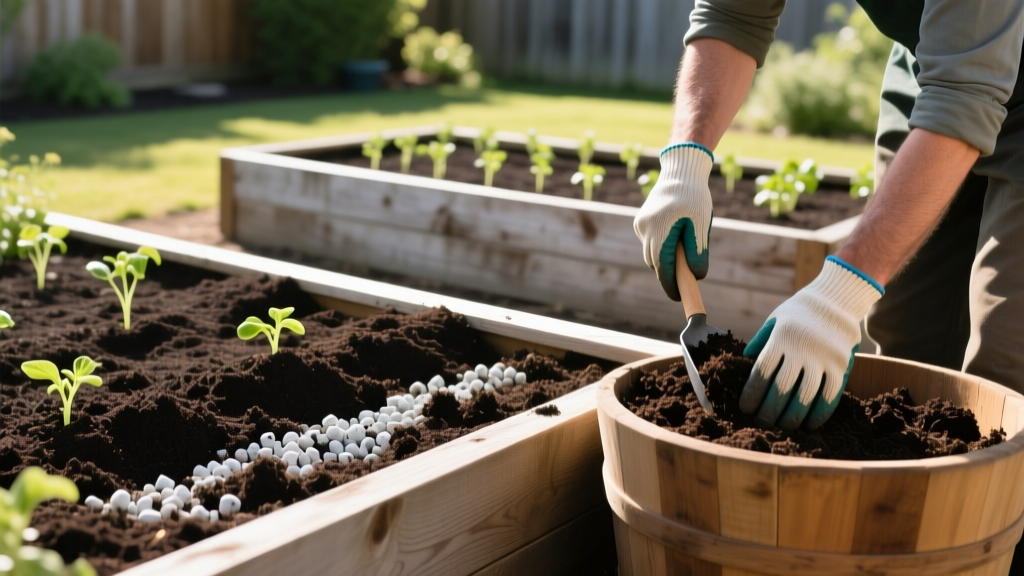
Expert Soil Mixing Formulas for Raised Garden Beds
Sarah ChenPublished
The Science of Raised Bed Soil
Building a raised garden bed is only half the battle; the true secret to a bountiful harvest lies beneath the surface. Unlike traditional in-ground gardening, raised beds function more like giant containers. They require a specialized soil architecture that balances moisture retention, nutrient density, and structural drainage. Filling a raised bed with native dirt or cheap topsoil is a common beginner mistake that inevitably leads to compaction, waterlogging, and stunted root growth.
As a senior horticulturist, I have tested dozens of soil amendments and blending ratios over the past decade. In this comprehensive guide, we will explore expert-level soil mixing formulas, precise volumetric calculations, cost-saving bulk strategies, and long-term maintenance protocols to ensure your raised beds produce maximum yields year after year.
The Hugelkultur Base: An Expert Cost-Saving Strategy
Before we discuss the primary growing medium, we must address the bottom layer of your raised bed. If you are building beds that are 18 to 24 inches deep, filling them entirely with premium soil mix is prohibitively expensive and unnecessary. Instead, utilize the Hugelkultur method for the bottom 30% to 40% of the bed.
- Carbon Layer: Fill the bottom 6 to 8 inches with decaying logs, thick branches, and woodchips. Avoid using cedar, black walnut, or pine, as these contain natural allelopathic chemicals that can inhibit vegetable growth.
- Nitrogen Buffer: Add a 2-inch layer of high-nitrogen organic matter, such as aged manure or grass clippings, directly over the wood. This prevents the decaying carbon from robbing the upper soil layers of nitrogen during the decomposition process.
- Barrier: Place a layer of cardboard or landscape fabric to separate the base layer from your premium soil mix, preventing the soil from washing down into the wood gaps.
This technique not only cuts your soil costs by nearly a third but also creates a sponge-like reservoir that wicks moisture upward during dry summer spells.
The Two Premier Expert Soil Formulas
For the primary growing zone (the top 12 inches of your bed), you need a mix that remains friable and nutrient-rich. Here are the two most reliable formulas used by commercial market gardeners and expert horticulturists.
Formula 1: The Adapted 'Thirds' Mix (Best for Moisture Retention)
Originally popularized by square-foot gardening pioneers, this formula is ideal for arid climates or gardeners who struggle with consistent watering schedules.
- 33% Coarse Vermiculite (Grade #3 or #4): Provides exceptional aeration and moisture retention. Do not use fine vermiculite, as it breaks down and causes compaction.
- 33% Sphagnum Peat Moss or Coconut Coir: Acts as the primary water-holding sponge. Coconut coir is increasingly preferred by experts due to its renewable sourcing and neutral pH (peat moss is highly acidic and requires lime buffering).
- 34% Diverse Organic Compost: Use a blend of at least three different compost sources (e.g., mushroom compost, vermicompost, and composted poultry manure) to ensure a broad spectrum of micronutrients.
Formula 2: The Mineral-Heavy Loam Mix (Best for Structural Integrity)
This formula is favored for heavy-feeding crops like tomatoes, peppers, and brassicas. It mimics high-quality loam and provides superior anchorage for deep taproots.
- 50% High-Quality Sandy Loam Topsoil: Sourced from a reputable landscape supplier. It must be screened and free of clay clods and weed seeds.
- 30% Organic Compost: Provides the biological engine and slow-release nutrients.
- 10% Pumice or Perlite: Ensures sharp drainage and prevents the loam from compacting over time.
- 10% Worm Castings and Mineral Dust: Incorporate pure earthworm castings alongside a broad-spectrum mineral amendment like Azomite or glacial rock dust to replenish trace minerals.
Calculating Volume and Sourcing Materials
To execute these formulas, you must understand volumetric math. A standard raised bed measuring 4 feet wide by 8 feet long by 1 foot deep requires exactly 32 cubic feet of soil. If you are utilizing the Hugelkultur base for the bottom 4 inches, you only need to purchase and mix 21.5 cubic feet of your premium formula.
When sourcing materials, avoid the small 1-quart bags found in big-box garden centers. Instead, look for 1.5 to 2.0 cubic-foot bales of peat/coir, and 1-cubic-foot bags of compost. For vermiculite and pumice, source from agricultural feed stores or specialty hydroponic suppliers, as hardware stores often overcharge for small quantities.
Cost Comparison: Bulk Delivery vs. Bagged Soil
One of the most frequent questions I receive is whether to buy bagged soil or order bulk delivery. For a single 4x8 bed, bagged is usually more economical and offers higher quality control. For three or more beds, bulk delivery becomes the clear winner. Below is a cost breakdown for filling one 4x8 bed (32 cubic feet) using Formula 2.
| Material | Volume Needed | Bagged Cost (Est.) | Bulk Cost (Est.) |
|---|---|---|---|
| Sandy Loam Topsoil | 16 cu ft | $40.00 | $15.00 |
| Organic Compost Blend | 10 cu ft | $45.00 | $20.00 |
| Pumice / Perlite | 3 cu ft | $25.00 | N/A (Bagged only) |
| Worm Castings / Minerals | 3 cu ft | $35.00 | N/A (Bagged only) |
| Total Estimated Cost | 32 cu ft | $145.00 | $70.00* |
*Note: Bulk costs assume a minimum delivery fee is amortized across multiple yards of material. If ordering only 1 cubic yard, bulk delivery fees will make it more expensive than bagged.
Expert Preparation and Mixing Best Practices
Mixing soil is not as simple as dumping bags into a wooden box. To achieve a homogeneous, biologically active medium, follow these professional steps:
- Pre-Hydrate Your Sponges: Peat moss and coconut coir are naturally hydrophobic when dry. If you mix them dry and water them later, the water will channel straight through. Always hydrate these materials in a wheelbarrow or heavy-duty tarp 24 hours before mixing them with your compost and minerals.
- The Tarp Roll Method: For small batches, place your dry and pre-hydrated ingredients on a heavy-duty tarp. Grab opposite corners and pull them over the pile to roll the soil onto itself. Repeat this from all four corners until the color and texture are completely uniform.
- Inoculate with Mycorrhizae: As you fill the bed, lightly dust the layers with a granular mycorrhizal fungi inoculant (such as MycoApply or a comparable organic brand). This symbiotic fungus will attach to your plant roots, effectively increasing their surface area by 100x and unlocking bound phosphorus in the soil.
- Settle and Water: Once filled, water the bed deeply and let it settle for 48 hours. You will likely notice the soil level drop by 2 to 3 inches. Top it off with a final layer of pure compost before planting.
Annual Maintenance and Nutrient Replenishment
A raised bed is a closed ecosystem; every time you harvest a tomato or pull a cabbage, you are permanently removing nutrients from that soil. Expert gardeners never treat soil as a one-time purchase.
Spring Top-Dressing: Two weeks before your last frost date, apply a 1-inch layer of fresh vermicompost across the surface of the bed. Gently scratch it into the top 2 inches of soil using a hand cultivator. Follow this with a balanced, slow-release organic granular fertilizer (like a 5-5-5 NPK blend, such as Espoma Garden-tone) at a rate of 3 pounds per 32 square feet.
Fall Cover Cropping: To protect soil structure over the winter, sow a cover crop of crimson clover and winter rye in early autumn. In the spring, chop the cover crop at the soil line and let it decompose in place, returning vital nitrogen and organic matter back into the system.
Authoritative Insights on Soil Health
When addressing common soil mistakes, it is vital to rely on peer-reviewed horticultural science rather than internet folklore. Many novice gardeners attempt to save money by digging up their native yard soil to fill raised beds.
According to the University of Maryland Extension, utilizing native garden soil in raised beds often leads to severe compaction and poor drainage. Native soils lack the necessary porosity required for the rapid drainage environment of a raised bed. The Extension strongly advises against using topsoil alone, recommending instead a blend that incorporates generous amounts of organic compost and structural amendments to maintain long-term friability and biological activity.
Furthermore, soil pH must be monitored annually. Most vegetables thrive in a pH range of 6.2 to 6.8. If your municipal water source is highly alkaline, or if you used excessive peat moss, your pH may drift. Invest in a digital soil pH meter or send a sample to your local university extension office. If the pH drops below 6.0, incorporate pulverized garden lime at a rate of 5 pounds per 100 square feet in the fall, allowing it several months to buffer the soil chemistry before spring planting.
Final Thoughts on Soil Investment
Treating your raised bed soil as a living, breathing organism rather than mere 'dirt' is the hallmark of an expert gardener. By investing in the correct ratios of drainage materials, diverse composts, and biological inoculants, you create a resilient foundation that will support vigorous root systems and heavy yields. While the initial cost and labor of mixing a premium formula may seem daunting, the reduction in water usage, fertilizer dependency, and disease pressure will pay dividends for decades to come.
