Gardening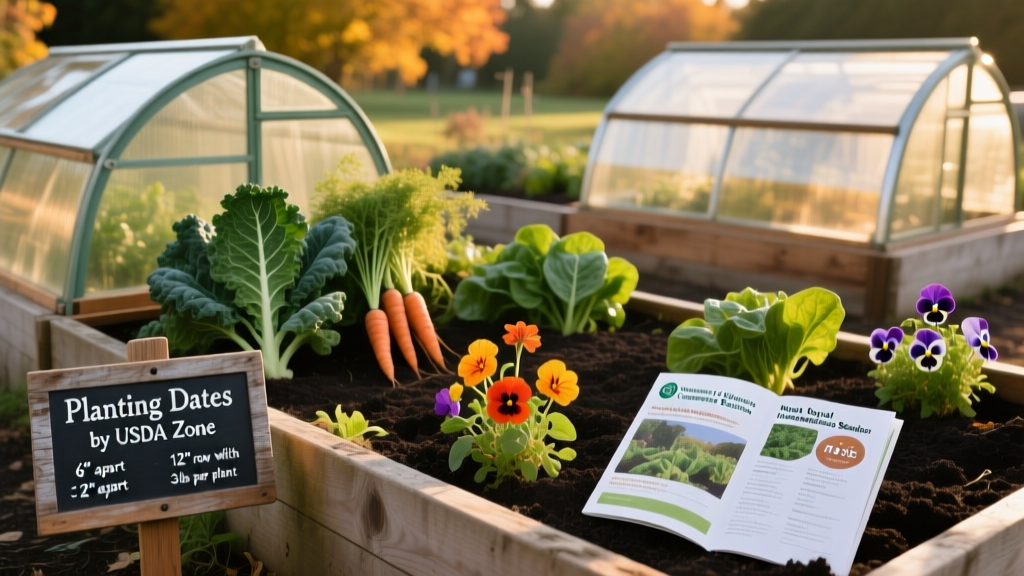
Extending The Fall Garden With Cold Frames
How Cold Frames Extend the Harvest Season
Cold frames are low, unheated structures with transparent tops—typically made of polycarbonate, tempered glass, or rigid plastic—that trap solar energy and insulate crops from frost. Unlike greenhouses, they rely solely on passive solar gain and thermal mass, making them exceptionally energy-efficient and accessible for home gardeners. University of Vermont Extension reports that properly sited cold frames can maintain internal temperatures 10–20°F warmer than ambient air on sunny days, and 5–10°F warmer on clear, calm nights (UVM Extension, 2022). This microclimate enables continued growth of cool-season vegetables well past the first hard frost, often adding six to ten weeks of harvest in northern zones.
Selecting and Siting Your Cold Frame
Orientation and placement critically influence performance. For maximum solar capture, position cold frames with the transparent lid facing true south in the Northern Hemisphere. Avoid shading from trees, fences, or buildings—especially between 10 a.m. and 3 p.m. Elevate frames slightly on gravel or stone to prevent water pooling and improve drainage. The Royal Horticultural Society (RHS) recommends a minimum 2-inch slope on the lid to shed rain and snow, and cautions against placing frames directly on heavy clay without subsoil amendment (RHS, 2021). In urban settings like Portland, Oregon, gardeners at the Portland State University Community Garden have successfully used repurposed cedar frames with double-walled polycarbonate lids mounted on insulated concrete bases to retain heat overnight.
Optimal Dimensions and Construction Materials
Standard cold frame dimensions range from 3 ft × 6 ft to 4 ft × 8 ft—large enough for efficient heat retention but small enough for manual management. Lid height should be at least 12 inches at the back and taper to 6 inches at the front to optimize light entry angle. Wooden frames built from rot-resistant cedar or redwood last 8–12 years untreated; pressure-treated lumber is discouraged due to leaching concerns near edible crops. Thermal mass elements—such as dark-colored bricks or water jugs placed inside—absorb heat by day and release it slowly at night.
Planting Timing by USDA Hardiness Zone
Success hinges on aligning planting dates with local frost patterns and crop cold tolerance. Below are recommended sowing windows for fall succession planting under cold frames:
- Zone 3–4: Sow spinach, mâche, and claytonia in late July to early August; harvest begins mid-October and continues through December if temperatures stay above 15°F.
- Zone 5–6: Plant arugula, kale ‘Dwarf Blue Curled’, and parsley transplants from August 15–September 10; first harvest occurs 25–30 days after transplanting.
- Zone 7–8: Direct-seed lettuce ‘Winter Density’ and corn salad (valerianella) September 1–20; yields average 0.75 lb per sq ft over 8–12 weeks.
- Zone 9–10: Sow cilantro, radishes ‘Cherry Belle’, and bok choy October 1–15; harvest window extends into February with minimal supplemental row cover.
- Zone 11: Cold frames are rarely needed year-round but serve effectively for protecting tender herbs like chervil during rare 40°F nights.
Spacing Guidelines for Maximum Yield
Overcrowding reduces airflow and invites disease, while excessive spacing wastes thermal capacity. Recommended in-frame spacings include:
- Kale ‘Red Russian’: 12 inches between plants, 18 inches between rows → average yield: 1.2 lb per plant over 10 weeks
- Spinach ‘Tyee’: 4 inches apart in staggered blocks → 0.4 lb per sq ft per cutting, with 2–3 cuttings possible
- Lettuce ‘Arctic King’: 8 inches square → 0.6 lb per head at maturity, with outer leaves harvested weekly
- Radishes ‘French Breakfast’: 1 inch apart in rows spaced 6 inches → harvest ready in 22 days, 0.3 lb per sq ft per planting
- Parsley ‘Plain Leaf’: 6 inches apart → 0.25 lb per plant over winter, with leaf harvest beginning 70 days post-transplant
Soil Management Under Cover
Cold frame soils require careful attention to moisture, fertility, and structure. Because frames limit natural rainfall infiltration, irrigation must be precise—overwatering causes damping-off, especially in low-light winter conditions. Cornell Cooperative Extension advises using drip tape or a fine rose watering can to deliver water directly to roots without wetting foliage (Cornell CE, 2020). Prior to fall planting, amend soil with ½ inch of finished compost and ¼ cup of organic granular fertilizer (e.g., 5-3-4) per sq ft. Avoid fresh manure: its microbial activity generates excess heat and ammonia volatilization, which damages sensitive seedlings.
Soil pH should remain between 6.2 and 6.8 for optimal nutrient availability. In Madison, Wisconsin, community garden plots monitored by the UW-Madison Extension showed that cold frame beds maintained higher microbial biomass (+23% vs. open beds) when covered with 2 inches of shredded hardwood mulch applied after seeding—provided mulch was pulled back slightly around emerging seedlings to prevent collar rot.
Harvest Protocols and Yield Expectations
Harvest timing affects both quality and longevity. Leafy greens taste sweetest after several light frosts (28–32°F), which convert starches to sugars. However, prolonged exposure below 22°F halts photosynthesis and increases cell rupture risk. Use scissors or a sharp knife to harvest outer leaves only—this encourages regrowth and extends productivity. For root crops like radishes and carrots, harvest before soil freezes solid; in Zone 5, carrots stored in situ under 6 inches of straw mulch inside cold frames remained crisp and usable until March 10.
Yield data collected across five seasons at the UC Davis Student Farm revealed consistent outputs per 10 sq ft cold frame area:
| Crop | Planting Date (Zone 6) | Days to First Harvest | Total Yield (lb/10 sq ft) | Last Harvest Date |
|---|---|---|---|---|
| Spinach ‘Gazelle’ | Aug 20 | 42 | 4.8 | Dec 12 |
| Kale ‘Winterbor’ | Sep 5 | 58 | 6.3 | Feb 18 |
| Lettuce ‘Little Gem’ | Sep 15 | 52 | 3.1 | Jan 22 |
Flowers benefit similarly: pansies, violas, and snapdragons planted in early September under cold frames in Zone 7 produced blooms continuously from November through March, with flower counts averaging 27 blooms per plant per week during peak production (Virginia Tech Department of Horticulture trial, 2019).
Troubleshooting Common Cold Frame Issues
Condensation buildup on interior surfaces signals poor ventilation—open the lid 2–4 inches on mornings above freezing to reduce humidity and prevent fungal pathogens. If soil crusts or forms a white efflorescence, leach salts with a thorough soaking followed by surface scratching. Pest pressure remains low under frames, but aphids may colonize kale in mild spells; a 1:10 dilution of insecticidal soap applied at dusk controls infestations without harming beneficials.
During extended cloudy periods, supplemental lighting is unnecessary for most cool-season crops—but maintaining soil temperatures above 40°F is essential for root function. Inserting a soil thermometer probe 2 inches deep reveals whether thermal mass or insulation adjustments are needed. At the Rodale Institute’s experimental farm in Kutztown, Pennsylvania, frames lined with reflective aluminum foil on north walls increased internal light intensity by 18% and raised average soil temps by 2.3°F during December.
“The cold frame isn’t just a season extender—it’s a living laboratory where soil biology, solar geometry, and plant physiology converge. When managed with attention to microclimate cues, it delivers reliable food and beauty long after the garden appears dormant.” — Dr. Linda Chalker-Scott, Washington State University Extension (2023)
Rotation remains vital: avoid planting brassicas in the same frame location two years consecutively to reduce clubroot risk. Instead, follow kale with spinach or lettuce, then finish with a cover crop like crimson clover seeded in late February for nitrogen fixation and spring soil conditioning. In coastal Maine, the Coastal Maine Botanical Gardens uses cold frames not only for production but also to overwinter tender perennials like lavender ‘Hidcote’ and thyme ‘Elfin’, holding them at 28–34°F—the ideal dormancy range for woody herbs.
Monitoring daily high/low temperatures inside the frame with a max-min thermometer helps refine management decisions. A reading consistently above 85°F on sunny days indicates inadequate venting; sustained readings below 20°F overnight suggest need for added insulation—such as horticultural fleece draped over plants at dusk—or relocation to a more sheltered site. With thoughtful design and responsive care, cold frames transform marginal autumn and winter months into productive, resilient growing periods.
For region-specific recommendations, consult your local cooperative extension office: the University of Vermont Extension offers free cold frame plans adapted for northern climates; the University of Florida IFAS provides frost-tolerant cultivar lists for subtropical zones; and the RHS provides detailed construction diagrams tested across UK hardiness zones.
Soil temperature probes, calibrated thermometers, and simple record-keeping notebooks are among the highest-return investments a cold frame gardener can make. Tracking just three variables—air temp, soil temp, and harvest weight—over two seasons reveals patterns no generic guide can anticipate. That empirical insight, grounded in your own plot’s sun angles and soil composition, is what turns passive structure into responsive growing system.
When snow dusts the lid in December and you lift it to find emerald spinach leaves glistening beneath, you’re not just harvesting vegetables—you’re harvesting time itself, stretched and softened by physics, biology, and careful human attention.
