Tree Care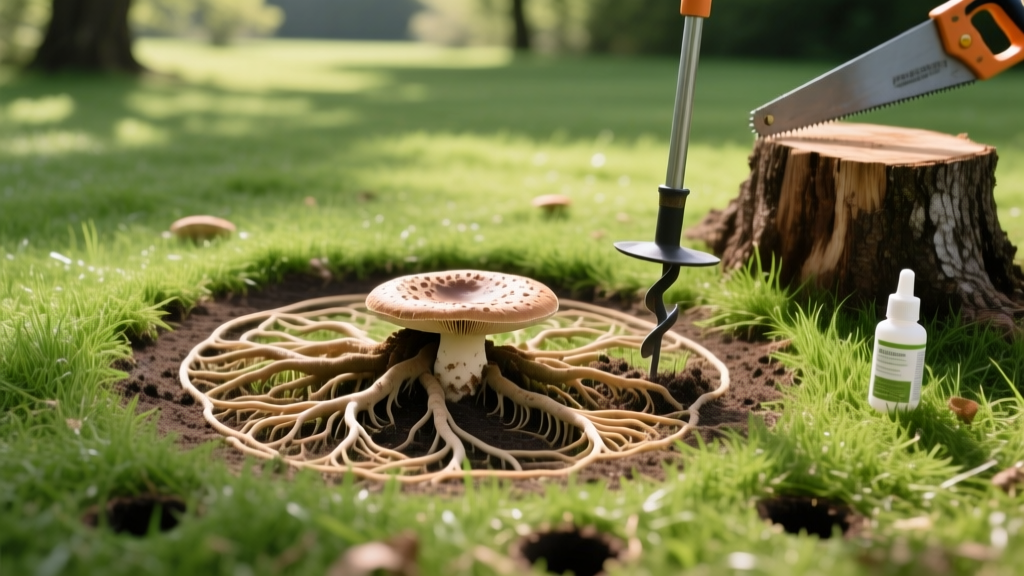
Fairy Ring Lawn Disease: Treating Fungi From Buried Tree Roots
Mike RodriguezPublished
The Hidden Link Between Tree Roots and Lawn Disease
When homeowners spot mysterious dark green circles, dying patches of grass, or sudden outbreaks of mushrooms in their yards, they often assume the issue is a standard turfgrass pathogen. However, as a leading authority in both turf and tree care, we must highlight a critical intersection between arboriculture and lawn health: Fairy Ring disease. Fairy rings are not merely a superficial lawn blemish; they are the visible manifestation of a massive, subterranean fungal network feeding on decaying wood. In the vast majority of residential cases, the underlying food source for this fungus is buried tree roots, old stumps, and wood debris left behind after tree removal or construction.
Understanding fairy ring from a 'TreeCare' perspective is essential for long-term lawn disease identification and treatment. If you only treat the grass, you are merely managing the symptoms while the fungal engine continues to consume the woody debris below. To truly eradicate or manage this lawn disease, homeowners and landscape professionals must address the tree root systems acting as the pathogen's primary food source.
The Biology of Fairy Rings: Basidiomycetes and Decaying Wood
Fairy rings are caused by various soil-inhabiting fungi belonging to the class Basidiomycetes. These fungi are saprophytic, meaning they survive by breaking down dead organic matter, specifically lignin and cellulose. When a tree is cut down or dies naturally, the root system remains in the soil. As these roots decay, they provide an all-you-can-eat buffet for Basidiomycetes. The fungus grows outward from the central wood source in a radial pattern, creating an expanding underground mycelial mat. According to Clemson University Extension, this mycelial mat can grow outward by 6 to 12 inches per year, eventually forming massive rings that can span dozens of feet across a lawn.
As the fungal mat thickens, it creates a hydrophobic (water-repellent) barrier in the soil profile. This prevents water and nutrients from reaching the turfgrass roots, leading to localized drought stress and turf decline, even if the surrounding lawn is heavily irrigated.
Identifying the Three Types of Fairy Rings
Proper lawn disease identification requires recognizing the specific type of fairy ring affecting your turf. The symptoms vary based on the fungal species and the soil's moisture and nutrient dynamics. Below is a diagnostic chart to help you identify the specific manifestation of the disease.
| Ring Type | Visual Symptoms | Underlying Cause | Primary Treatment Focus |
|---|---|---|---|
| Type I | A ring of wilted, brown, or dead grass. Soil is extremely dry and hard to wet. | Dense, hydrophobic mycelial mat repels water, causing localized drought stress. | Soil rehydration, wetting agents, deep core aeration. |
| Type II | A ring of unusually dark green, lush, and fast-growing grass. | Fungi breaking down tree roots release excess nitrogen and organic acids into the soil. | Masking with balanced fertilization, avoiding high-nitrogen spikes. |
| Type III | A ring of mushrooms, puffballs, or toadstools, usually appearing after heavy rain. | The fungal fruiting bodies emerging from the decaying wood source below. | Physical removal of mushrooms, reducing surface moisture, stump removal. |
Research from NC State Extension indicates that a single lawn may exhibit multiple types of fairy rings simultaneously, or a ring may transition from Type II to Type I as the fungal mat matures and the available nitrogen is depleted.
Tree Care Solutions: Managing the Subterranean Food Source
Because the root cause of this lawn disease is decaying tree wood, integrating tree care practices into your treatment plan is mandatory. If a tree was removed within the last 5 to 10 years, improper stump grinding is often the culprit.
Proper Stump Grinding and Root Excavation
Standard stump grinding services typically only remove the trunk and surface roots to a depth of 4 to 6 inches below grade. This leaves massive lateral roots and deep taproots intact. To eliminate the fairy ring's food source, arborists must perform deep stump grinding or complete root excavation.
- Deep Grinding: Instruct your tree service to grind the stump and primary root flares to a minimum depth of 12 to 18 inches. The cost for this upgraded service typically ranges from $4 to $6 per inch of stump diameter, compared to the standard $3 per inch.
- Air Spade Excavation: For high-value lawns where heavy machinery might cause soil compaction, certified arborists use an Air Spade—a pneumatic tool that uses compressed air to safely excavate soil without damaging surrounding utilities or healthy tree roots. This allows for the manual removal of all woody debris greater than 1.5 inches in diameter. Expect to pay $150 to $250 per hour for professional air-spade services.
- Accelerating Decay: If complete removal is impossible, you can accelerate the decomposition of the remaining roots by applying high-nitrogen fertilizer directly to the soil above the root zone. This feeds the bacteria that break down the wood, effectively starving the fairy ring fungus over time.
Lawn Treatment Protocols: Fungicides and Cultural Controls
While removing the tree roots addresses the long-term source, immediate lawn disease treatment is required to save the existing turfgrass. The University of Minnesota Extension emphasizes that curative control of fairy rings is notoriously difficult once symptoms are severe, making a combination of cultural and chemical controls essential.
Cultural Controls and Soil Management
- Deep Core Aeration: Use a heavy-duty core aerator to punch holes directly through the hydrophobic mycelial mat. This physically breaks up the fungal barrier and allows water to penetrate the root zone.
- Wetting Agents (Surfactants): Apply a professional-grade wetting agent, such as Cascade Plus or Aquifer, at a rate of 3 to 6 ounces per 1,000 square feet. These products reduce the surface tension of water, allowing it to bypass the water-repellent fungal mat.
- Soil Needle Watering: For Type I rings, attach a soil needle or root feeder to your garden hose and inject water directly into the soil at a depth of 6 to 10 inches, bypassing the surface mat entirely.
Chemical Fungicide Applications
Fungicides should be used as a preventative or early-curative measure. The most effective active ingredients for fairy ring control include:
- Azoxystrobin (e.g., Heritage SC): Apply at a rate of 0.4 to 0.8 fluid ounces per 1,000 square feet.
- Flutolanil (e.g., Prostar 70 WP): Apply at a rate of 2.2 ounces per 1,000 square feet.
- Pyraclostrobin (e.g., Insignia SC): Highly effective for preventing the fruiting bodies (mushrooms) of Type III rings.
Timing is critical: Apply preventative fungicides in early spring when soil temperatures at a 2-inch depth consistently reach 55°F to 60°F. Curative applications in the heat of summer are rarely effective and can cause phytotoxicity if not watered in immediately with at least 0.25 inches of irrigation.
Prevention During Tree Planting and Landscaping
The most cost-effective way to manage fairy ring lawn disease is to prevent it during the initial tree planting or removal phase. Never bury wood chips, logs, or construction lumber in the soil when grading a new lawn or planting a new tree. Backfill tree planting holes exclusively with native soil or high-quality, fully composted organic matter that has been heat-treated to destroy fungal spores. When removing a dying or hazardous tree, always opt for complete root ball extraction or deep grinding rather than a superficial surface grind. By bridging the gap between proactive tree care and rigorous lawn disease management, you can maintain a pristine, healthy turfgrass canopy free from the shadows of subterranean fungal threats.