Pest Control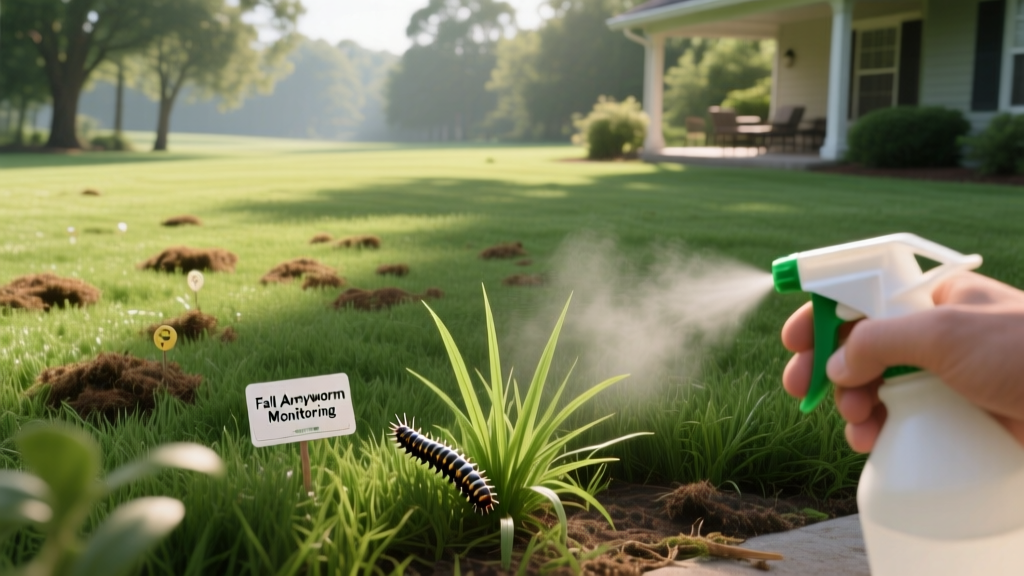
Fall Armyworm Control Guide for Southeastern Turf Lawns
Mike RodriguezPublished
The Southeastern Climate Connection and Migratory Patterns
The fall armyworm (Spodoptera frugiperda) is arguably the most destructive turfgrass pest in the Southeastern United States and the lower Transition Zone. For homeowners cultivating warm-season grasses like Bermudagrass, Zoysiagrass, and Centipedegrass, an armyworm outbreak can transform a lush, green lawn into a brown, scorched wasteland in a matter of days. Unlike pests that overwinter in the soil, fall armyworms cannot survive freezing temperatures. Instead, they exhibit a fascinating and destructive migratory pattern that is deeply intertwined with the regional climate of the South.
Every year, adult moths overwinter in the frost-free regions of South Florida and South Texas. As the spring and summer temperatures rise, these moths ride prevailing winds and tropical weather systems northward, eventually blanketing the Southeastern states from the Gulf Coast up through the Carolinas and into the Transition Zone. The region's signature hot, humid summers, coupled with late-summer tropical depressions and heavy rainfall events, create the ultimate breeding ground. A single female moth can lay up to 1,000 eggs over her lifespan, depositing them in clusters on grass blades, fences, and even the siding of homes. When these eggs hatch, the resulting larvae begin to feed voraciously, marching across lawns in search of their next meal. According to NC State TurfFiles, these migratory waves are highly dependent on summer storm tracks, making regional weather monitoring a critical component of pest management.
Identifying Fall Armyworm Damage in Warm-Season Lawns
Because fall armyworms are surface feeders rather than root feeders, their damage is often mistaken for drought stress, fungal diseases, or fertilizer burn. In Bermudagrass and Zoysiagrass, early signs of an infestation include small, translucent "windowpanes" on the grass blades where the young larvae have chewed away the green tissue but left the clear epidermis intact. As the larvae grow through their six instar stages, their appetites increase exponentially. The final two instars are responsible for over 80 percent of the total foliage destruction.
You will notice the grass tips looking ragged or sheared, and the lawn may take on a grayish, drought-stressed appearance. In severe outbreaks, the larvae will consume the grass down to the soil level, leaving behind bare dirt and green, pellet-like frass (excrement). To confirm the presence of armyworms, look for the pests themselves during the early morning or late evening hours when they are most active. Mature larvae are roughly 1.5 inches long, varying in color from light green to dark brown, and feature distinct longitudinal stripes. The most reliable identifier is an inverted, pale "Y" shape on the front of their dark head capsules.
The Soap Flush Test: A Regional Diagnostic Standard
Because armyworms hide in the thatch layer during the heat of the Southern afternoon, turf professionals and extension agents rely on the soap flush test to confirm an infestation. Mix two tablespoons of liquid dish soap with one gallon of water. Pour this solution evenly over a one-square-yard area of the lawn's damaged margin. The soap irritates the larvae's skin, forcing them to the surface within two to five minutes. If you count more than three to five larvae per square yard, immediate treatment is warranted to prevent catastrophic turf loss.
Regional Timing: Tracking the Migration
Timing your treatments requires an understanding of the Southeastern climate calendar. In the Deep South (Florida, Georgia, Alabama, Mississippi, and Louisiana), the first waves of migratory moths typically arrive in mid-to-late August. In the upper Southeast and Transition Zone (the Carolinas, Tennessee, and Virginia), outbreaks usually peak in September and can persist into late October if frost is delayed. The University of Georgia Extension notes that monitoring local university extension alerts and tracking tropical storm systems can provide early warnings, as heavy rains often precede major hatches by flushing out pupae and providing the moisture necessary for egg survival.
Treatment Strategies for Southern Turfgrasses
Biological and Organic Controls
For environmentally conscious homeowners or those catching an infestation in its earliest stages, biological controls are highly effective. Bacillus thuringiensis var. kurstaki (Bt) is a naturally occurring soil bacterium that produces proteins toxic to caterpillars. Products like Monterey B.t. or Dipel must be ingested by the larvae to work, making it most effective against early-instar (small) armyworms. Because the Southeastern climate features intense UV radiation and frequent afternoon thunderstorms, Bt degrades rapidly. Apply Bt in the late evening to maximize ingestion before sunlight breaks down the active ingredient, and be prepared to reapply every five to seven days or immediately after a heavy rain.
Chemical Controls and Active Ingredients
When an outbreak is severe and the larvae are in their later, more destructive instars, synthetic insecticides are often necessary to save the turf. Pyrethroids, such as bifenthrin, lambda-cyhalothrin, and cyfluthrin, offer rapid knockdown and contact kill. These are widely available in consumer products like Sevin or Scotts Bug B Gone. However, pyrethroids can be harsh on beneficial insects and earthworms. Alternatively, anthranilic diamides like chlorantraniliprole (found in Acelepryn or Scotts GrubEx) provide exceptional, long-lasting control with a highly favorable environmental and mammalian toxicity profile. While GrubEx is marketed for white grubs, its active ingredient is incredibly lethal to caterpillars, including armyworms, and works systemically within the plant tissue. For comprehensive regional guidelines on chemical rotation to prevent resistance, refer to the Texas A&M AgriLife Extension turfgrass pest management protocols.
Active Ingredient Comparison Chart
| Active Ingredient | Product Example | Target Stage | Regional Application Window |
|---|---|---|---|
| Bacillus thuringiensis (Bt) | Monterey B.t. / Dipel | Early Instar Larvae | Mid-August to Early September |
| Bifenthrin (Pyrethroid) | Bifen IT / Talstar | All Larval Stages | Late August to October |
| Chlorantraniliprole (Diamide) | Acelepryn / Scotts GrubEx | Early to Mid Instars | Preventative: July; Curative: Aug-Sept |
| Spinosad (Organic) | Conserve SC | Early Instar Larvae | Mid-August to September |
Post-Treatment Recovery and Climate-Specific Prevention
Once the armyworms are eradicated, the focus must shift to turf recovery. The Southeastern autumn climate is still warm enough for warm-season grasses to regenerate, provided the stolons and rhizomes were not completely destroyed. Do not scalp the lawn; maintain your standard mowing height to allow the grass to photosynthesize and rebuild its energy reserves. Ensure the lawn receives approximately one inch of water per week, either from rainfall or irrigation, to support new shoot growth. Avoid applying high-nitrogen fertilizers during an active infestation, as the flush of tender, green growth will only attract surviving moths looking for a place to lay their eggs. Instead, wait until the pest pressure has subsided and apply a balanced, slow-release fertilizer to aid recovery before the grass enters winter dormancy.
Transition Zone Considerations
For homeowners in the Transition Zone—where both cool-season fescues and warm-season Bermudagrasses are common—fall armyworms pose a unique threat. While they strongly prefer Bermudagrass, they will readily consume tall fescue if their preferred host is unavailable or if the population is overwhelmingly large. In these transitional climates, the window for damage is slightly narrower, bounded by the first hard frost. If your fescue lawn is attacked in early autumn, treat immediately with a pyrethroid to protect the turf before it enters its peak fall growing season, and plan to overseed any bare patches once the pest threat has passed and soil temperatures drop below 70°F.
Conclusion: Vigilance is Key
Managing fall armyworms in the Southeastern and Transition Zone climates requires a proactive approach. Because these pests are migratory and their populations are dictated by regional weather patterns, no single year is exactly like the last. By maintaining a healthy, deeply rooted lawn through proper cultural practices, scouting regularly during the late summer months, and utilizing the soap flush test at the first sign of drought-like stress, you can catch an invasion before it decimates your landscape. Partnering with local extension resources and understanding the unique climate triggers of your specific region will ensure your warm-season turf remains thick, green, and resilient against the marching hordes.