Gardening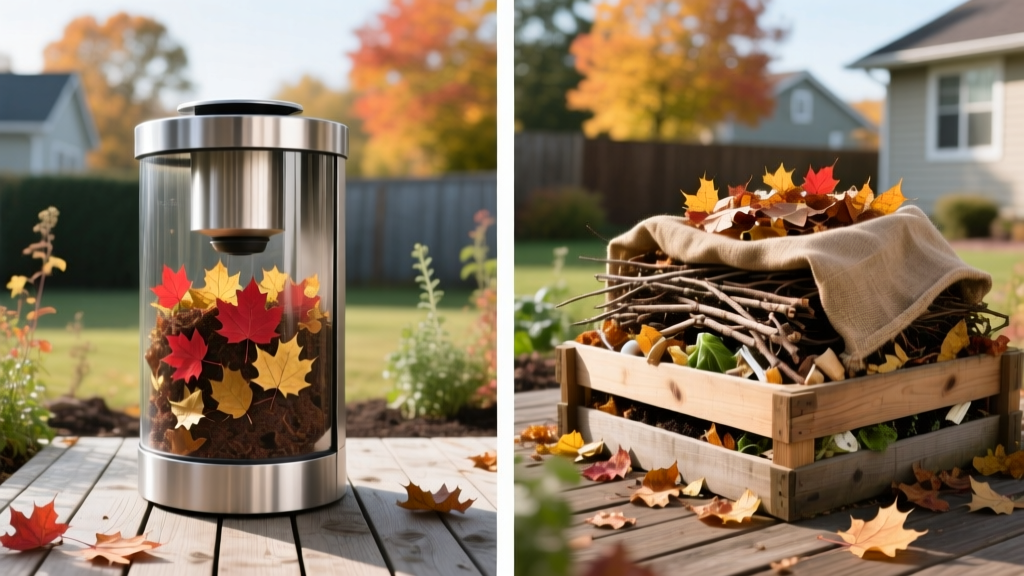
2026 Fall Compost Guide: Tumbler vs Stationary Piles
Lisa ThompsonPublished
The Importance of Fall Composting in 2026
Fall is the undisputed champion of soil-building seasons. As temperatures drop and deciduous trees shed their canopies, homeowners are presented with a massive influx of carbon-rich organic material. In 2026, with municipal leaf collection fees rising and a growing emphasis on sustainable, closed-loop landscaping, mastering your fall compost bin setup is more critical than ever for overall lawn and garden health. Instead of bagging leaves and sending them to a landfill, transforming them into black gold provides a free, nutrient-dense top-dressing for your lawn come spring.
When planning your autumn yard waste management, you generally face a choice between two primary composting systems: the traditional stationary pile and the modern compost tumbler. Both methods have distinct advantages, but they cater to very different yard sizes, physical capabilities, and volume requirements. According to the Environmental Protection Agency, composting organic waste at home significantly reduces methane emissions from landfills while enriching soil, retaining moisture, and reducing the need for chemical fertilizers. Let us break down exactly how to set up and manage both systems for the fall season.
The Stationary Pile Method: High-Volume Autumn Processing
The stationary pile or bin is the workhorse of fall lawn care. When your yard is blanketed in thousands of oak, maple, or sycamore leaves, a stationary setup is usually the only practical way to process the sheer volume of autumn debris. These systems rely on passive or semi-active decomposition, utilizing natural microbial activity, earthworms, and fungal networks to break down matter over several months.
Setup and Construction for Fall
For a stationary bin, aim for a minimum footprint of 3 feet by 3 feet by 3 feet. This cubic volume is essential for generating and retaining the internal heat required to break down tough fall leaves and kill off any lingering lawn pathogens or weed seeds. In 2026, expandable wire bins like the Geobin 160-Gallon system (typically priced around $40 to $50) remain incredibly popular because they can be widened to accommodate massive leaf drops and narrowed as the material shrinks.
Alternatively, you can construct a free, highly effective three-bin pallet system using untreated, heat-treated (HT) shipping pallets. Secure the corners with heavy-duty zip ties or galvanized wire. The open slats provide excellent aeration, which is crucial because fall leaves tend to mat together and create anaerobic, foul-smelling pockets if left unturned.
Pros and Cons of Stationary Piles
- Pros: Handles massive volumes of fall leaves; accommodates large twigs and garden prunings; highly accessible for earthworms and beneficial soil microbes; very low financial cost.
- Pros: Excellent thermal mass for late-fall heat retention.
- Cons: Requires physical labor to turn with a pitchfork; slower decomposition time (6 to 12 months); more susceptible to rodent intrusion if kitchen scraps are added improperly.
The Tumbler Method: Speed, Ergonomics, and Pest Control
Compost tumblers are elevated, sealed drums that rotate on an axis, allowing you to mix and aerate your compost without ever bending over or using a pitchfork. For homeowners with smaller suburban lawns, limited mobility, or strict neighborhood HOA rules regarding visible yard waste, tumblers offer a neat, enclosed, and highly efficient alternative.
Setup and Maintenance for Fall
Because tumblers are fully enclosed, they are entirely pest-proof. Raccoons, mice, and neighborhood dogs will not be digging through your decomposing matter. However, their sealed nature means they have a much smaller capacity, typically ranging from 30 to 50 gallons. To use a tumbler effectively in the fall, you must run your lawn leaves through a mulching mower or a dedicated leaf shredder before adding them. Whole leaves will simply spin in the drum and mat together, halting decomposition.
Top-tier models for 2026, such as the FCMP Outdoor IM4000 Dual Chamber Tumbler (priced around $130 to $160) or the premium Envirocycle (around $300), feature internal baffles that break up clumps as you spin the barrel. The dual-chamber design is particularly brilliant for fall: you can fill one side with October leaves and kitchen scraps, letting it cure, while continuing to add late-November debris to the second chamber.
Pros and Cons of Tumblers
- Pros: Ergonomic and easy to turn; completely pest and rodent proof; faster decomposition (4 to 8 weeks under ideal conditions); aesthetically pleasing for urban and suburban yards.
- Cons: Limited volume capacity; higher upfront cost; can freeze solid in harsh winter climates due to lack of ground insulation; requires pre-shredding of all fall leaves.
Head-to-Head Comparison: Tumbler vs. Stationary Pile
To help you decide which system aligns with your 2026 fall lawn care goals, review the comparison chart below:
| Feature | Stationary Pile / Bin | Compost Tumbler |
|---|---|---|
| Volume Capacity | High (50 to 150+ gallons) | Low to Medium (30 to 50 gallons) |
| Fall Leaf Handling | Excellent (can handle whole leaves) | Poor (requires pre-shredded leaves) |
| Decomposition Speed | Slow (6 to 12 months) | Fast (4 to 8 weeks in warm weather) |
| Pest Resistance | Low (unless heavily fortified) | High (fully enclosed) |
| Winter Performance | Good (ground heat and mass insulate) | Poor (elevated drums freeze easily) |
| Estimated 2026 Cost | $0 (DIY) to $60 (Wire Bin) | $130 to $350+ |
Mastering the Fall Carbon-to-Nitrogen Ratio
Regardless of whether you choose a tumbler or a stationary bin, the science of composting remains the same. The secret to rapid decomposition is balancing your carbon-rich 'browns' with nitrogen-rich 'greens'. The Natural Resources Defense Council emphasizes that maintaining an ideal carbon-to-nitrogen (C:N) ratio of roughly 30:1 is the key to a hot, active, and odorless compost pile.
Fall presents a unique challenge: your yard is overflowing with browns (carbon), but natural greens (nitrogen) are becoming scarce as the garden dies back. If you only add dry autumn leaves, your pile will stall and take years to break down. You must actively supplement your fall carbon with nitrogen sources.
Fall Composting Material Guide
- Autumn Browns (Carbon): Dry fallen leaves, pine needles, shredded newspaper, cardboard, dead garden stalks, and straw.
- Autumn Greens (Nitrogen): Kitchen vegetable scraps, coffee grounds (an excellent and abundant nitrogen source), fresh grass clippings from your final fall mowings, and alfalfa meal.
For every three buckets of shredded fall leaves you add to your bin, you should mix in one bucket of nitrogen-rich greens. If you are using a stationary pile, use a pitchfork to mix the layers thoroughly. If you are using a tumbler, give the drum five or six full rotations after every addition.
Winterizing Your Compost for the 2026-2027 Season
As late November approaches and the ground begins to freeze, microbial activity in your compost will naturally slow down. However, with the right preparation, your pile can continue to break down material slowly throughout the winter, giving you a head start for spring lawn top-dressing.
For stationary piles, the key is insulation. Surround the base and sides of your bin with straw bales or bags of collected leaves. This traps the geothermal heat rising from the soil and the internal heat generated by the microbes. Cover the top of the pile with a dark, heavy-duty tarp to prevent freezing winter rains from leaching nutrients out of your compost and waterlogging the system.
For tumblers, winterizing is more difficult because the drum is suspended in the freezing air. If you live in a climate with harsh winters, move the tumbler into a garage or shed if possible. If it must stay outside, wrap the barrel in reflective bubble insulation or an old fiberglass water heater blanket to retain whatever internal heat remains. Stop adding fresh, wet kitchen scraps in deep winter, as they will simply freeze into solid blocks; instead, save your scraps in a sealed bucket indoors and add them in bulk during late-winter thaws.
Final Verdict for Fall Lawn Care
Choosing between a tumbling and stationary compost bin setup ultimately depends on the scale of your property and your physical preferences. If you have a large lawn with mature trees that drop endless volumes of leaves, the stationary pile is an absolute necessity. It is the most cost-effective and practical way to process high-volume autumn yard waste, and it yields massive amounts of finished compost to feed your lawn and garden beds the following year.
Conversely, if you maintain a smaller suburban lot, prioritize tidiness, and want to quickly process daily kitchen scraps alongside a modest amount of mulched leaves, a dual-chamber tumbler is a fantastic, ergonomic investment. Many seasoned lawn care enthusiasts in 2026 actually utilize a hybrid approach: keeping a large stationary bin in the back corner of the yard for heavy fall leaf drop, and a neat tumbler near the back door for daily kitchen scraps and rapid, small-batch composting. By harnessing your autumn yard waste, you close the loop on your landscape's ecosystem, ensuring a thicker, greener, and more resilient lawn for the seasons to come.
