Pest Control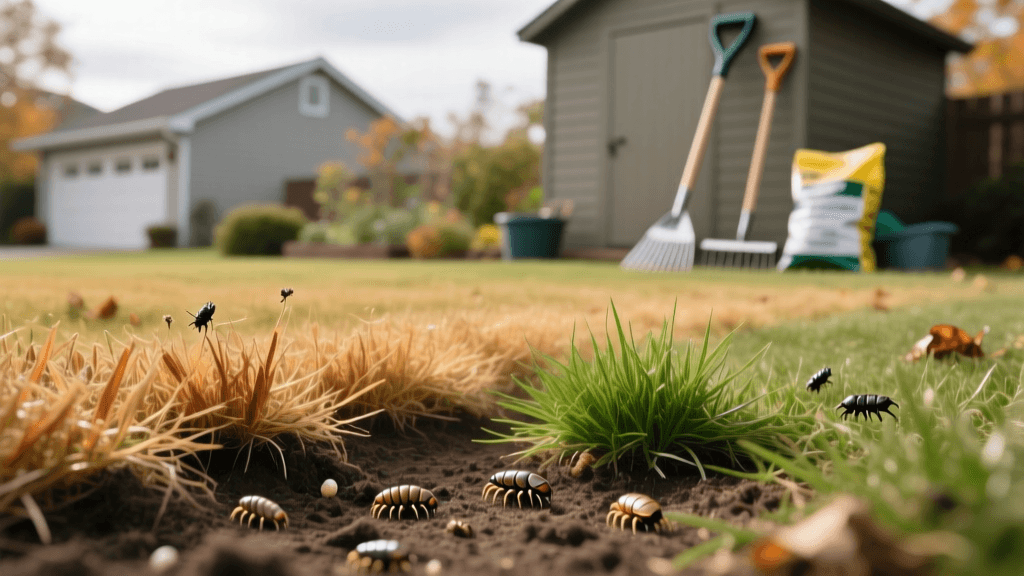
Fall Grub Control: Protecting Your Lawn Before Winter
As the crisp air of autumn settles in, most homeowners begin thinking about raking leaves and storing the mower. However, fall is a critical window for seasonal pest management. Beneath the surface of your cooling soil, destructive pests are actively feeding on grassroots, preparing to overwinter. If left unchecked, these pests will decimate your lawn's root system, leaving you with a dead, spongy landscape by early spring. Effective fall lawn pest control requires a strategic approach to targeting active grubs and managing overwintering insects.
The Hidden Threat: Identifying Fall Lawn Pests
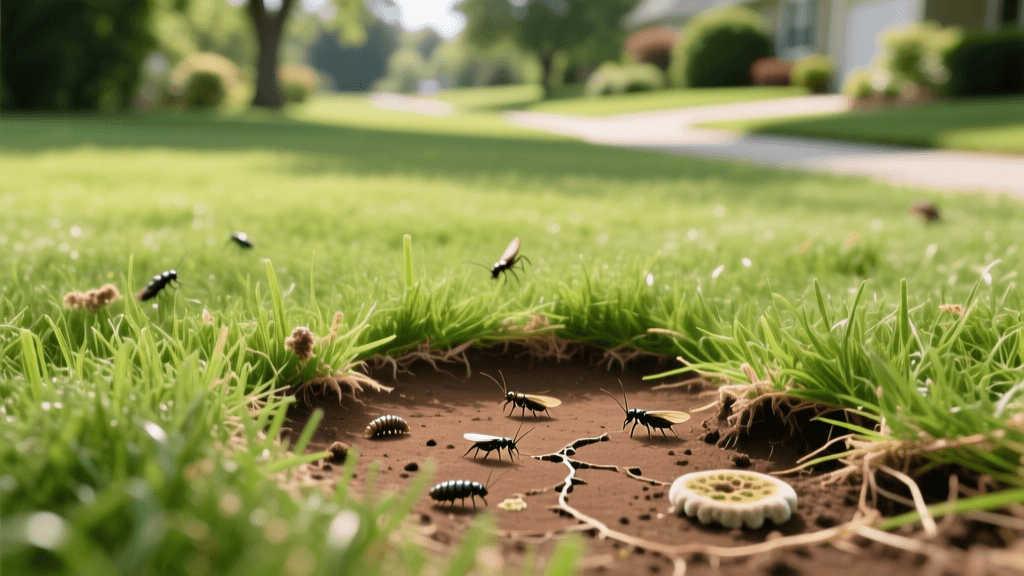
The most notorious fall lawn destroyers are white grubs—the larval stage of beetles such as the Japanese beetle, European chafer, and June bug. According to UMass Extension, these C-shaped, cream-colored larvae with distinct brown heads hatch in mid-summer and feed aggressively on grassroots throughout the early fall before digging deep into the soil to survive the winter.
Signs of a severe grub infestation include:
- Spongy Turf: The lawn feels loose and rolls back like a carpet because the roots have been entirely severed from the soil.
- Brown Patches: Irregular, dying patches of grass that do not respond to irrigation or fertilization.
- Animal Digging: Skunks, raccoons, armadillos, and crows tearing up the turf to feast on the protein-rich grubs beneath the surface. When skunks and raccoons discover a grub-infested lawn, they act as destructive rototillers. A single raccoon can tear up dozens of square feet of pristine sod in a single night, causing secondary damage that requires extensive topdressing and reseeding to repair.
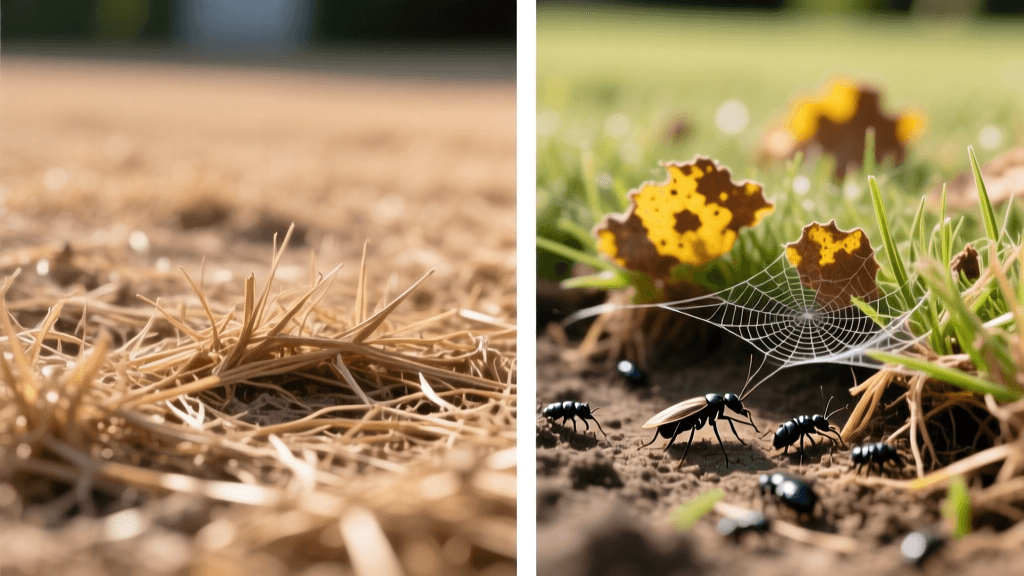
Aside from grubs, fall is also the season when pests like chinch bugs and sod webworms seek out sheltered areas to overwinter. Chinch bugs, which thrive in hot, dry summer conditions, will migrate to the edges of driveways and sidewalks as temperatures drop, hiding in the thatch layer to survive the freeze.
Curative vs. Preventative Grub Treatments
Understanding the difference between preventative and curative treatments is vital for seasonal maintenance. By fall, preventative products applied in the spring or early summer have largely degraded. If you are seeing damage in September or October, you must use a fast-acting curative insecticide. The University of Kentucky Entomology Department emphasizes that curative treatments target the larger, actively feeding third-instar grubs that are causing the most visible damage.
| Treatment Type | Active Ingredient | Brand Example | Application Timing | Est. Cost (per 1k sq ft) | Best For |
|---|---|---|---|---|---|
| Preventative | Chlorantraniliprole | Acelepryn | April - June | $0.15 - $0.25 | Long-term, eco-friendly prevention |
| Preventative | Imidacloprid | Merit | June - July | $0.10 - $0.20 | Early instar grubs (mid-summer) |
| Curative | Trichlorfon | Dylox | Aug - October | $0.25 - $0.35 | Active fall feeding & animal damage |
| Curative | Carbaryl | Sevin | Aug - October | $0.15 - $0.25 | Heavy active infestations |
Step-by-Step Fall Grub Treatment Guide
Step 1: The Tug Test and Soil Sampling
Before spending money on chemicals, confirm the presence of grubs. Using a flat-edged spade, cut three sides of a 1-foot by 1-foot square of turf, about 2 to 3 inches deep. Peel the sod back like a hinge and inspect the soil surface and the roots. Count the number of grubs you find. Research from Penn State Extension indicates that a healthy, well-irrigated lawn can tolerate up to 5 to 7 grubs per square foot without showing severe damage. However, if you count 8 or more grubs per square foot, or if animals are already digging up your yard, immediate curative treatment is required.
Step 2: Selecting and Applying Curative Insecticides
For active fall infestations, Trichlorfon (Dylox) is the industry standard. It is a rapid-acting contact and stomach poison that degrades relatively quickly in the soil, minimizing long-term environmental impact while delivering a lethal blow to feeding grubs within 24 to 48 hours. It is important to note that Trichlorfon should not be used in areas with highly alkaline soils (pH above 7.5) or where lime has just been applied, as high pH accelerates the chemical's breakdown before it can reach the grubs. If your soil pH is high, Carbaryl (Sevin) is a more stable alternative for fall curative control.
- Mow the Lawn: Mow your grass to a height of about 2.5 inches to ensure the granules reach the soil surface rather than getting trapped in the grass blades.
- Apply the Granules: Use a broadcast or drop spreader calibrated to the manufacturer's specifications. Dylox is typically applied at a rate of 1.5 to 2 pounds per 1,000 square feet.
- Water Immediately: This is the most crucial step. Trichlorfon degrades rapidly when exposed to sunlight and high pH levels. You must water the product into the top inch of soil immediately after application. Apply roughly 0.25 to 0.5 inches of water. Pro Tip: Place an empty tuna can on the lawn and run your sprinkler until the can is half full.
- Keep Pets and People Away: Allow the lawn to dry completely before allowing children or pets to re-enter the treated area.
Managing Overwintering Pests
Chinch Bugs and Thatch Management
Chinch bugs overwinter as adults in protected, thatchy areas. If your lawn had a chinch bug problem this summer, fall thatch management is your best defense. If your thatch layer exceeds 0.5 inches, use a power rake or core aerator in early fall. Removing this spongy layer eliminates the primary winter habitat for chinch bugs and sod webworms, exposing them to freezing temperatures and predatory birds.
Ticks and Perimeter Defense
Fall is prime time for deer ticks (blacklegged ticks) seeking hosts before winter. They thrive in leaf litter, tall grasses, and the transitional zones between lawns and wooded areas. To protect your family and pets:
- Clear Leaf Litter: Rake and remove all leaves from the lawn and garden beds. Ticks require high humidity to survive, and dry, clear lawns are inhospitable to them.
- Create a Barrier: Apply a perimeter spray containing Bifenthrin or Lambda-cyhalothrin along the edges of your property, focusing on stone walls, woodpiles, and the borders of wooded areas. A 3-foot wide barrier treatment can reduce tick populations by up to 90%.
- Deploy Tick Tubes: Fill cardboard tubes with permethrin-treated cotton. Mice will take the cotton to their nests, effectively killing the ticks that feed on them before they can mature into the nymph stage next spring.
Cultural Practices for Winter Pest Resistance
Pest control is not just about chemicals; it is also about cultivating a lawn that can withstand and recover from damage. Implement these cultural practices in late fall:
- Adjust Mowing Height: Gradually lower your mower blade for the final two cuts of the season, ending at a height of 2 inches. Shorter grass prevents snow mold and makes it harder for voles to tunnel unseen beneath the snow.
- Fall Fertilization: Apply a winterizer fertilizer high in Potassium (K) to promote deep root growth and cellular hardiness. Avoid heavy Nitrogen applications late in the fall, as lush, tender growth can attract late-season pests and increase the risk of fungal diseases.
- Overseeding: Early fall is the ideal time to overseed bare patches caused by grub damage. Using a turf-type tall fescue blend can provide deeper roots that are more resilient to future grub feeding.
Conclusion
Proactive seasonal maintenance is the cornerstone of a resilient, pest-free lawn. By accurately identifying fall pests, utilizing fast-acting curative treatments like Trichlorfon when thresholds are exceeded, and modifying your lawn's habitat to deter overwintering insects, you set the stage for a vibrant, healthy landscape next spring. Do not wait until the damage is done; take control of your lawn's health this autumn.