Pest Control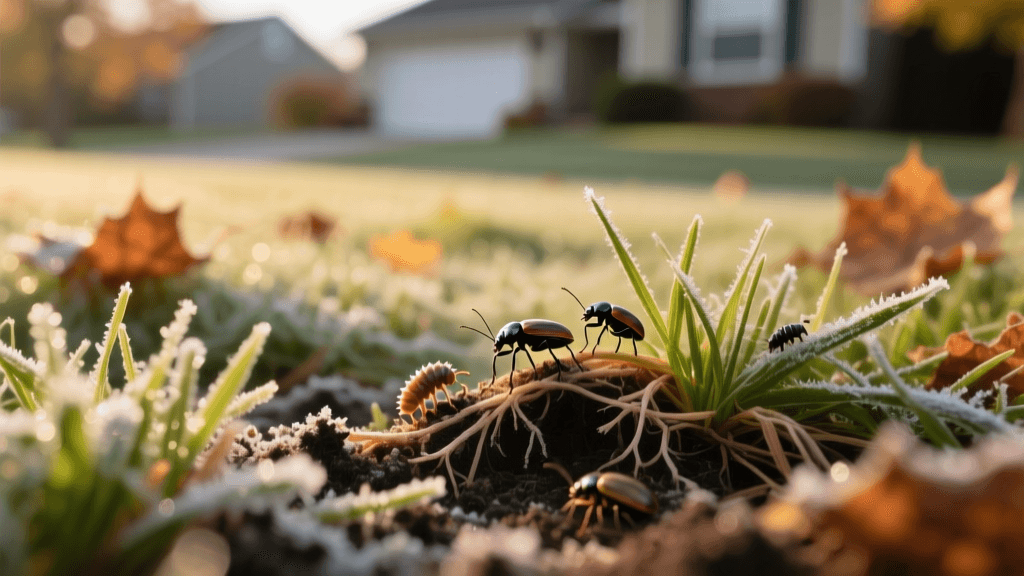
Fall Lawn Pest Control: Managing Overwintering Insects
The Hidden Threat of Overwintering Pests
As autumn leaves begin to fall and temperatures drop, most homeowners shift their focus toward raking, leaf blowing, and storing away the patio furniture. However, from an Integrated Pest Management (IPM) perspective, fall is one of the most critical seasons for lawn and garden care. Beneath the cooling surface of your turf, a silent migration is occurring. Destructive lawn pests are actively seeking shelter, moving deeper into the soil profile, or nesting within the thatch layer to enter diapause—a state of suspended animation that allows them to survive freezing winter temperatures.
If you ignore your lawn during the autumn months, you are essentially rolling out the welcome mat for overwintering insects. By the time spring arrives, these pests will be perfectly positioned to emerge, feed, and reproduce, causing catastrophic damage to your spring flush. Effective fall pest control is not about blanket spraying; it is about habitat modification, targeted inspection, and strategic cultural maintenance to expose and eliminate pests before they settle in for the winter.
Identifying the Usual Suspects
To manage fall pests effectively, you must understand where they go when the frost sets in. Different insects utilize different overwintering strategies, which dictate your seasonal maintenance approach.
White Grubs (Japanese Beetles, June Bugs, European Chafers)
White grubs are the larval stage of various scarab beetles. In the late summer and early fall, these grubs are actively feeding on grassroots just below the soil surface. As soil temperatures drop below 50°F, they migrate downward, often burrowing 4 to 8 inches deep to escape the frost line. According to the University of California Integrated Pest Management program, this deep soil migration makes them incredibly difficult to treat with surface-level chemicals in late fall. Therefore, early fall is your final window for biological intervention before they move out of reach.
Chinch Bugs
Chinch bugs are notorious for sucking the life out of turfgrass during the heat of summer. As autumn approaches, the nymphs mature into adults. Unlike grubs, adult chinch bugs do not burrow deep into the soil. Instead, they seek shelter in the thatch layer, leaf litter, and along the protected edges of foundations and hardscapes. Penn State Extension notes that managing the thatch layer and removing perimeter debris in the fall is the most effective way to decimate their overwintering populations.
Billbugs
Billbugs are weevils that cause severe damage to cool-season grasses. Both the adult weevils and their mature larvae can overwinter. They typically reside in the upper soil profile and the thatch layer, often clustering together in protected, sunny microclimates within the lawn. Because they remain relatively close to the surface, fall cultural practices like dethatching and late-season mowing adjustments can severely disrupt their winter havens.
Fall Inspection Techniques
Before applying any treatments or altering your maintenance routine, you must determine if a pest population is actually present. Fall inspections differ from spring scouting, as the insects are preparing to hide rather than actively feeding on the surface.
The Tug Test and Soil Sampling
Walk your lawn and look for irregular brown patches that fail to green up after rainfall. Grab a handful of the affected turf and pull gently. If the grass lifts away from the soil like a loose carpet with no roots attached, grubs or billbugs have likely severed the root system. Use a shovel to cut a 1-foot by 1-foot square of sod, peel it back, and examine the top 3 inches of soil. Finding more than 5 to 10 grubs per square foot warrants immediate curative action.
The Soap Drench Test
To detect surface-dwelling overwintering pests like chinch bugs and billbugs, use a soap flush. Mix 2 to 3 tablespoons of liquid dishwashing soap into 2 gallons of water. Pour this mixture evenly over a 1-square-yard area of suspected infestation, particularly near the edges of driveways or garden beds. Wait 5 to 10 minutes. The soap irritates the insects' exoskeletons, forcing them to the surface to escape. This is highly effective in early fall before the insects enter deep diapause.
Seasonal Cultural Controls: Starving and Exposing Pests
Cultural controls form the backbone of any seasonal IPM strategy. By altering the physical environment of your lawn, you can make it inhospitable for overwintering pests.
Thatch Management and Dethatching
Thatch is a layer of dead and living organic matter that accumulates between the soil surface and the green grass blades. While a thin layer (less than 0.5 inches) is beneficial, a thick thatch layer acts as a luxury winter hotel for chinch bugs, billbugs, and fungal pathogens. If your thatch exceeds half an inch, schedule a core aeration and power raking session in early fall. This physically removes the habitat and exposes hidden insects to predatory birds and freezing temperatures.
Leaf Litter Removal
Leaving a thick blanket of fallen leaves on your lawn or garden beds is a recipe for pest disasters. Leaf litter retains moisture, blocks sunlight, and provides a thermal blanket that protects overwintering insects (and ticks) from harsh winter freezes. Mow over light leaf cover to mulch it into the canopy, but rake and remove heavy accumulations, especially near the foundation of your home and along fence lines where chinch bugs and rodents seek shelter.
Late-Fall Mowing Adjustments
As the growing season winds down, gradually lower your mower blade. The University of Minnesota Turfgrass Science team recommends a final mowing height of about 2 to 2.5 inches for most cool-season grasses. Tall grass entering the winter bends over under the weight of snow, creating a humid, insulated environment that encourages snow mold and provides a safe haven for rodents and insects. A shorter final cut reduces this winter cover significantly.
Biological and Chemical Fall Treatments
If inspections reveal active pest populations that exceed economic thresholds, targeted treatments may be necessary. However, the timing and type of product used in the fall differ vastly from spring applications.
Beneficial Nematodes for Early Fall Grub Control
For an organic, highly effective biological control against grubs, apply beneficial nematodes (Heterorhabditis bacteriophora or Hb). These microscopic worms actively hunt down grub larvae in the soil. For fall application, purchase fresh nematodes and apply them at a rate of roughly 1 billion per acre (or about 23,000 per square foot). They require moist soil to move, so irrigate the lawn with 1/4 inch of water before application, and another 1/4 inch immediately after to wash them off the grass blades and into the soil profile. Apply in the late afternoon or on a cloudy day, as UV light kills them rapidly. Note that nematodes must be applied in early fall when soil temperatures are still above 55°F and grubs are near the surface.
Curative Chemical Applications
Preventative grub controls (like imidacloprid) are ineffective in the fall because they degrade too quickly and target only young, early-instar larvae. If you find mature, destructive grubs in late fall, you must use a fast-acting curative insecticide containing trichlorfon. This product penetrates the soil quickly and kills large grubs within 24 to 48 hours. Always follow local regulations and label instructions, and water the product in immediately to prevent runoff.
Fall Pest Management Calendar
Use this structured guide to align your fall maintenance tasks with the life cycles of common lawn pests.
| Pest | Overwintering Stage | Primary Fall Habitat | Recommended Fall IPM Action |
|---|---|---|---|
| White Grubs | Mature Larvae | Deep Soil (4-8 inches) | Curative treatment if active; nematodes in early fall. |
| Chinch Bugs | Adults | Thatch, leaf litter, foundation edges | Dethatching, leaf removal, perimeter sealing. |
| Billbugs | Adults & Larvae | Thatch layer, soil surface | Soap flush inspection, late-fall mowing height reduction. |
| Tick Nymphs | Nymphs | Tall grass, leaf litter, woodlines | Mowing borders, clearing leaf debris, mulch barriers. |
Winterizing Irrigation and Late-Fall Fertilization
Pests like certain species of crane flies and fungus gnats thrive in overly saturated, poorly draining soils. As you prepare to winterize your irrigation system, ensure you are not leaving low-lying areas of the lawn waterlogged. Blow out the sprinkler lines before the first hard freeze to prevent broken pipes, which can leak underground and create moist, warm microclimates that attract overwintering insects and rodents seeking refuge from the frost.
Furthermore, applying a winterizer fertilizer (high in potassium, low in quick-release nitrogen) in late October or November helps the grass store carbohydrates. This promotes rapid spring recovery if grubs or billbugs cause root damage during their early spring feeding frenzy. Avoid high-nitrogen synthetic fertilizers in early fall, as this promotes lush, tender growth that attracts aphids and prepares the turf for snow mold, weakening the grass and making it more susceptible to secondary pest invasions.
Conclusion
Fall lawn pest control is an exercise in foresight. By understanding the overwintering behaviors of grubs, chinch bugs, and billbugs, you can leverage seasonal maintenance tasks—like dethatching, leaf removal, and targeted biological applications—to disrupt their life cycles. A proactive autumn IPM strategy ensures that when the snow melts and spring arrives, your lawn will emerge healthy, resilient, and free from the devastation of hidden pests.