
Landscaping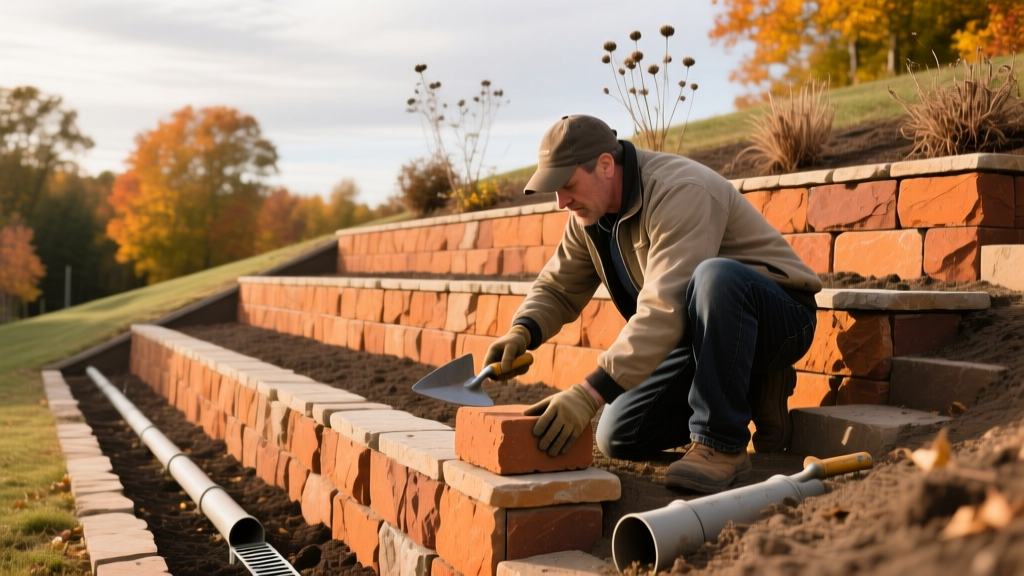
Fall 2026 Guide: Sloped Backyard Terracing With Segmental Walls
Mike RodriguezPublished
Transforming Sloped Yards: The Fall Landscaping Advantage
When homeowners think of fall lawn care, their minds typically jump to aeration, overseeding, and leaf removal. However, autumn is also the premier season for major structural landscaping projects, particularly sloped backyard terracing with segmental retaining walls (SRWs). As heavy autumn rains threaten to wash away topsoil on unprotected inclines, building a terraced retaining wall system not only solves immediate erosion issues but also creates pristine, flat beds ready for fall planting and spring turf establishment.
In 2026, segmental retaining wall technology has advanced, offering highly durable, interlocking concrete blocks that resist the brutal freeze-thaw cycles of winter. By undertaking this hardscaping project in the fall, you take advantage of cooler working temperatures, optimal soil moisture for compaction, and the ability to install crucial drainage systems before the ground freezes. This comprehensive guide will walk you through the process of designing, building, and maintaining a terraced backyard using SRWs, all while integrating essential fall lawn care practices.
Why Fall is the Ideal Season for Terracing
Constructing a retaining wall in the sweltering heat of summer or the muddy thaw of spring presents significant challenges. Fall offers a Goldilocks window for hardscaping. The soil is typically firm enough to support heavy machinery and foot traffic, yet workable enough for trenching. Furthermore, completing your terracing in September or October allows you to backfill and compact the soil before winter precipitation arrives. According to the National Concrete Masonry Association (NCMA), proper base preparation and drainage are the most critical factors in preventing retaining wall failure, and the dry, cool days of early fall provide the perfect environment to achieve the necessary soil compaction rates.
Choosing the Right Segmental Retaining Wall System for 2026
Segmental retaining walls rely on modular concrete blocks that interlock without the need for mortar. This flexibility allows the wall to shift slightly with seasonal ground movement, making it vastly superior to rigid poured concrete or mortared stone for residential landscaping. Below is a comparison of the top SRW systems available in 2026, tailored for sloped backyard terracing.
| Brand / System | Connection Mechanism | Est. 2026 Material Cost (Per Sq. Ft. of Face) | Best Application |
|---|---|---|---|
| Allan Block Classic | Lip and Pin System | $16.00 - $19.00 | Curved terraces and multi-tiered garden beds. |
| Versa-Lok Standard | Solid Block with Fiberglass Pins | $18.00 - $22.00 | Tall, load-bearing walls and steep slope retention. |
| Keystone Premier | Fiberglass Pin Connection | $14.50 - $17.50 | Rustic, natural stone aesthetics for woodland yards. |
| Belgard Weston Stone | Lip-Lock System | $17.00 - $21.00 | High-end patios and modern landscape terracing. |
For most residential sloped backyards, the Allan Block or Versa-Lok systems offer the best balance of structural integrity and ease of installation for DIYers and professional landscapers alike. You can explore more residential options via the Allan Block residential retaining wall catalog to match your specific aesthetic preferences.
Step-by-Step Fall Excavation and Base Preparation
The longevity of your terraced retaining wall depends entirely on the base. A poorly prepared base will lead to settling, bulging, and eventual collapse when the winter frost heaves the ground.
- Trenching: Excavate a trench that is at least twice the width of your retaining wall block and deep enough to bury a minimum of 10% of the total exposed wall height, plus 6 inches for the base material. For a 4-foot exposed wall, you need at least 6 inches of burial depth.
- Base Material: Fill the trench with 3/4-inch crushed angular gravel. Never use round pea gravel, as it rolls and fails to compact. Angular gravel locks together to form a solid, unyielding foundation.
- Compaction: Use a mechanical plate compactor to compress the base material in 2-inch lifts. Proper compaction is vital before the autumn rains soften the subgrade.
- Leveling: Screed the top layer of gravel perfectly level. The first course of blocks must be laid with laser-level precision; any deviation in the first row will compound as the wall rises.
Crucial Fall Drainage Solutions to Prevent Winter Frost Heave
Water is the natural enemy of retaining walls. In the fall, decaying leaves and heavy seasonal rains can quickly saturate the soil behind your wall. If this water freezes in the winter, it expands, creating hydrostatic pressure that can push the wall outward. To prevent this, you must install a robust drainage system.
- Perforated Pipe: Lay a 4-inch perforated PVC or corrugated drainage pipe directly behind the base course of blocks, sloped slightly to daylight at the ends of the wall.
- Clear Stone Backfill: Fill the first 12 inches immediately behind the wall with clear, washed drainage stone. This creates a "French drain" effect, allowing water to flow freely down to the pipe rather than soaking into the clay subsoil.
- Geogrid Reinforcement: For terraced walls over 3 feet tall, synthetic geogrid mesh is required. This material is layered between courses of blocks and extends back into the compacted soil, tying the wall face to the earth mass behind it. As noted by Penn State Extension, geogrid reinforcement is essential for stabilizing slopes and preventing structural failure in residential landscapes.
- Filter Fabric: Place a non-woven geotextile fabric between the drainage stone and the native backfill soil. This prevents fine autumn silt and clay from migrating into the stone and clogging your drainage system over time.
Integrating Fall Lawn Care and Soil Prep on New Terraces
Once your segmental retaining walls are built and backfilled, you are left with beautiful, flat terraced beds. Fall is the absolute best time to prepare these new areas for a lush lawn or vibrant garden. Because the soil on newly constructed terraces is often heavily compacted or consists of poor-quality fill dirt, aggressive fall soil amendment is required.
1. Tilling and Composting
In early September, rototill the top 6 inches of the new terrace beds. Incorporate a 2-inch layer of premium organic compost. This improves soil structure, increases water retention, and introduces vital microbial life that will break down organic matter over the winter.
2. Fall Overseeding and Turf Establishment
If you plan to grow turfgrass on your terraces, early fall is the optimal planting window. Cool-season grasses like Tall Fescue and Kentucky Bluegrass thrive when planted between late August and mid-October. The warm soil encourages rapid germination, while the cool autumn air reduces heat stress on young seedlings. Apply a starter fertilizer high in phosphorus to promote deep root growth before the first hard frost.
3. Erosion Control for Late Fall Builds
If you are finishing your terracing in late October or November, it is too late to seed grass. Instead, protect your newly exposed soil from winter erosion by pinning down biodegradable jute erosion control blankets. You can also plant dormant spring-blooming bulbs (like daffodils and alliums) or sow a winter cover crop like annual ryegrass, which will hold the soil in place and can be tilled under in the spring as "green manure."
Managing Autumn Leaf Debris on Sloped Terraces
A unique challenge of terraced backyards in the fall is leaf management. On a flat yard, leaves simply sit on the grass until you mulch or bag them. On a sloped, terraced yard, wind and rain cause leaves to slide down the incline, piling up heavily against the base of your retaining walls.
This accumulation is more than just an eyesore; it is a structural hazard. Wet, decaying leaves can clog the weep holes and the clear stone drainage zone behind your wall, trapping water right where it can cause the most damage during a freeze. Make it a strict part of your weekly fall lawn care routine to use a backpack blower to clear leaves away from the retaining wall faces. If your terraces are planted with groundcover or shrubs, use a flexible leaf rake or a specialized lawn vacuum to remove debris without damaging the dormant fall foliage.
Winterizing Your Segmental Retaining Wall
As November approaches and the first frost warnings appear, take a final walk around your terraced backyard. Ensure that the daylight exits of your perforated drainage pipes are clear of soil, mulch, and fallen leaves so that winter snowmelt has an unobstructed escape route. If you have installed capstones on top of your retaining walls using landscape block adhesive, verify that the adhesive has fully cured before temperatures drop below freezing. By completing your sloped backyard terracing with segmental retaining walls this fall, you not only protect your property from winter erosion but also set the stage for a spectacular, multi-level landscape ready to flourish the moment spring arrives.

