Lawn Care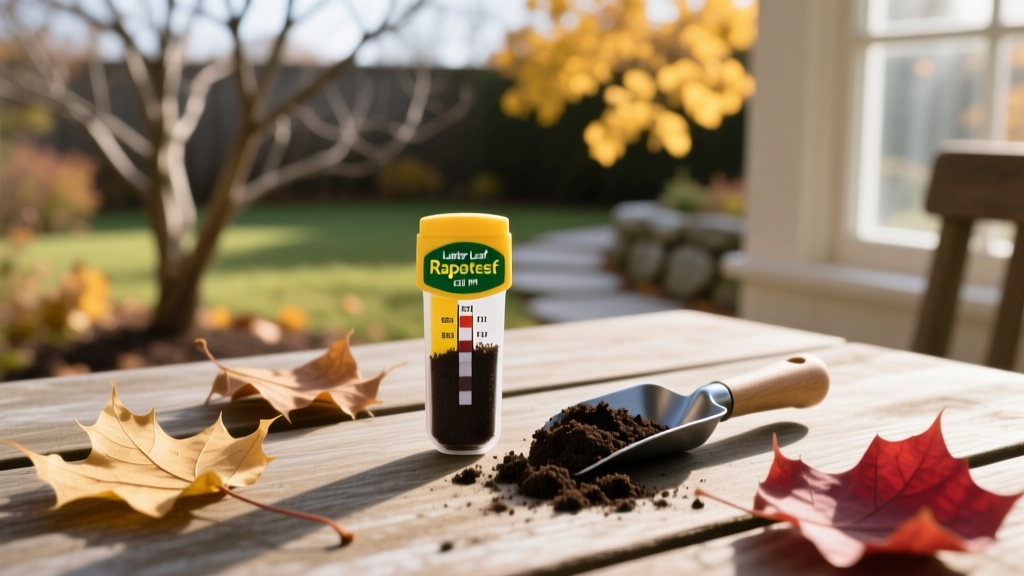
Fall Soil pH Testing: Luster Leaf Rapitest Kit Guide 2026
David ParkPublished
The Critical Role of Soil pH in Fall Lawn Care
As we navigate the 2026 lawn care season, homeowners and turf managers alike are looking for ways to maximize their landscape investments. With the fluctuating costs of synthetic fertilizers and a growing emphasis on environmentally responsible landscaping, blind applications of nutrients are no longer a viable strategy. The true foundation of a thriving, resilient turf lies beneath the surface, and understanding your soil chemistry is paramount. Among the most critical metrics you must monitor is soil pH. This fall, we are focusing on a trusted, cost-effective, and highly reliable method for home gardeners: soil pH testing with the Luster Leaf Rapitest kit.
Soil pH, which measures the acidity or alkalinity of your soil on a scale from 0 to 14, acts as the master gatekeeper for nutrient availability. According to the Michigan State University Extension, if your soil pH is too low (acidic) or too high (alkaline), essential macronutrients like nitrogen, phosphorus, and potassium become chemically bound in the soil and unavailable to grass roots. You could apply the most expensive 2026 winterizer fertilizer on the market, but if your pH is unbalanced, your lawn simply cannot absorb it. This phenomenon, known as nutrient lockout, is the primary cause of thin, yellowing, and weed-prone lawns.
Why Test in the Fall?
Fall is universally recognized by agronomists as the absolute best time to test and amend soil pH. The University of Minnesota Turfgrass Science program emphasizes that autumn provides the ideal window for lime or sulfur applications. These amendments are not fast-acting; they require months of moisture and microbial activity to break down and alter the soil profile. By testing and applying amendments in the fall, you give the soil the entire winter and early spring to react, ensuring the pH is perfectly dialed in just in time for the aggressive spring green-up.
Why the Luster Leaf Rapitest Kit Remains a 2026 Staple
In an era dominated by smart-home devices and Bluetooth-enabled soil probes, you might wonder why a manual colorimetric kit like the Luster Leaf Rapitest (Model 1601/1611) remains a top recommendation in 2026. The answer lies in reliability and cost-effectiveness. Cheap digital soil probes (typically under $50) are notoriously inaccurate, often measuring soil moisture or electrical conductivity rather than true hydrogen ion concentration. They also require constant calibration and are prone to sensor degradation.
The Rapitest kit, conversely, uses a proven chemical reagent method. By mixing a soil sample with water and a specialized powder capsule, a chemical reaction occurs that changes the color of the liquid. This color is then matched to a chart to determine the pH. It is entirely immune to the calibration drift that plagues digital meters, requires no batteries, and delivers lab-comparable accuracy for home use when performed correctly.
Step-by-Step Guide to Testing with the Rapitest Kit
To get accurate results from your Luster Leaf Rapitest kit this autumn, follow these precise steps:
Step 1: Proper Core Sampling
Do not simply scrape the top layer of soil or pull up a chunk of sod. Use a soil probe, a narrow trowel, or a spade to extract core samples from a depth of 3 to 4 inches, which is the primary root zone for most turfgrasses. Take at least 5 to 10 random samples from different areas of your lawn. Place them all into a clean plastic bucket, break up the clods, remove any rocks, roots, or thatch, and mix the soil thoroughly to create a composite sample.
Step 2: Preparing the Slurry
Take the green-capped vial from the Rapitest kit (designated for pH testing). Fill the vial with your composite soil sample up to the indicated soil line. Next, add distilled water up to the water line. This step is critical: never use tap water, as municipal water is treated with minerals and buffers that will instantly skew your pH reading.
Step 3: The Chemical Reaction
Open one of the green pH test capsules and pour the entire contents of the powder into the vial. Secure the cap tightly and shake the vial vigorously for at least 60 seconds to ensure the reagent is fully dissolved and mixed with the soil particles.
Step 4: Reading the Results
Allow the vial to sit undisturbed for 60 seconds so the heavy soil particles can settle to the bottom, leaving the colored liquid at the top. Hold the vial in natural, indirect daylight and compare the color of the liquid to the pH color chart provided in the kit. The colors typically range from bright orange/yellow (highly acidic) to dark green (highly alkaline).
Optimal Soil pH Levels for Popular Turfgrasses
Once you have your reading, you need to know your target. Different grass species have evolved to thrive in slightly different pH ranges. Use the table below to identify the optimal target for your specific lawn:
| Turfgrass Species | Grass Category | Optimal pH Range | Tolerance Notes |
|---|---|---|---|
| Kentucky Bluegrass | Cool-Season | 6.0 - 7.0 | Struggles heavily in acidic soils below 5.5 |
| Tall Fescue | Cool-Season | 5.5 - 6.5 | More tolerant of slight acidity than bluegrass |
| Perennial Ryegrass | Cool-Season | 6.0 - 7.0 | Requires good drainage and neutral pH |
| Bermudagrass | Warm-Season | 6.0 - 7.0 | Adaptable but thrives in neutral conditions |
| Zoysiagrass | Warm-Season | 6.0 - 6.5 | Can tolerate slightly acidic environments |
| Centipedegrass | Warm-Season | 5.0 - 6.0 | Highly sensitive to alkaline soils; prefers acid |
Fall Amendment Strategies Based on Your Results
If your Luster Leaf Rapitest results show that your soil is outside the optimal range for your grass type, fall is the time to correct it.
Raising pH (Correcting Acidic Soil)
If your soil pH is below 5.5 (indicated by a yellow/orange hue in the vial), your soil is too acidic. The standard correction is the application of agricultural lime. For fall applications, pelletized calcitic or dolomitic lime is preferred because it is easy to spread with a standard broadcast spreader and creates less dust. A general rule of thumb is to apply no more than 50 pounds of lime per 1,000 square feet in a single application. If your soil requires a massive pH shift, split the application between late fall and early spring.
Lowering pH (Correcting Alkaline Soil)
If your test yields a dark green color, indicating a pH above 7.5, your soil is alkaline. This is common in arid regions or areas with heavy clay and limestone bedrock. To lower pH, you must apply elemental sulfur. Be aware that lowering soil pH is a much slower and more difficult biological process than raising it. Soil bacteria must oxidize the sulfur into sulfuric acid, a process that halts when soil temperatures drop below 50°F. Therefore, apply elemental sulfur in early fall while the soil is still warm enough for microbial activity.
Common Mistakes to Avoid with Colorimetric Test Kits
To ensure your 2026 fall lawn care efforts are not derailed by bad data, avoid these common testing errors:
- Using Tap or Filtered Water: As mentioned, only pure distilled water has a neutral 7.0 pH and zero buffering capacity. Even expensive refrigerator-filtered water contains minerals that will ruin the test.
- Testing Too Soon After Amending: If you applied lime, sulfur, or heavy synthetic fertilizers within the last 6 to 8 weeks, wait. Testing too soon will only measure the localized chemical reaction on the soil surface, not the true baseline pH of the root zone.
- Poor Lighting Conditions: Reading the color chart indoors under warm LED bulbs or outside in harsh, direct midday sun will distort your perception of the liquid's color. Always read the results in bright, indirect natural shade.
- Dirty Vials: Residue from previous tests can contaminate your sample. Always rinse the Rapitest vials thoroughly with distilled water and let them air dry before use.
Integrating pH Testing into a Broader Soil Health Strategy
While the Luster Leaf Rapitest kit is excellent for pH, remember that pH is just one piece of the puzzle. Maintaining balanced soil biology and chemistry is a core tenet of the USDA Natural Resources Conservation Service soil health initiative. In addition to monitoring pH, consider sending a composite sample to a university extension lab every three to four years for a comprehensive analysis that includes organic matter percentage, cation exchange capacity (CEC), and exact micronutrient levels.
Conclusion
As you finalize your 2026 fall lawn care checklist, do not overlook the invisible chemistry happening beneath your feet. Aeration, overseeding, and winterizer fertilizers are all vital practices, but their success is entirely dependent on a welcoming soil environment. By spending ten minutes and a few dollars with the Luster Leaf Rapitest kit, you can unlock the full potential of your turf, ensuring a thicker, greener, and more drought-resilient lawn for years to come. Test your soil this autumn, amend accordingly, and let the winter months do the heavy lifting for your spring landscape.