
Landscaping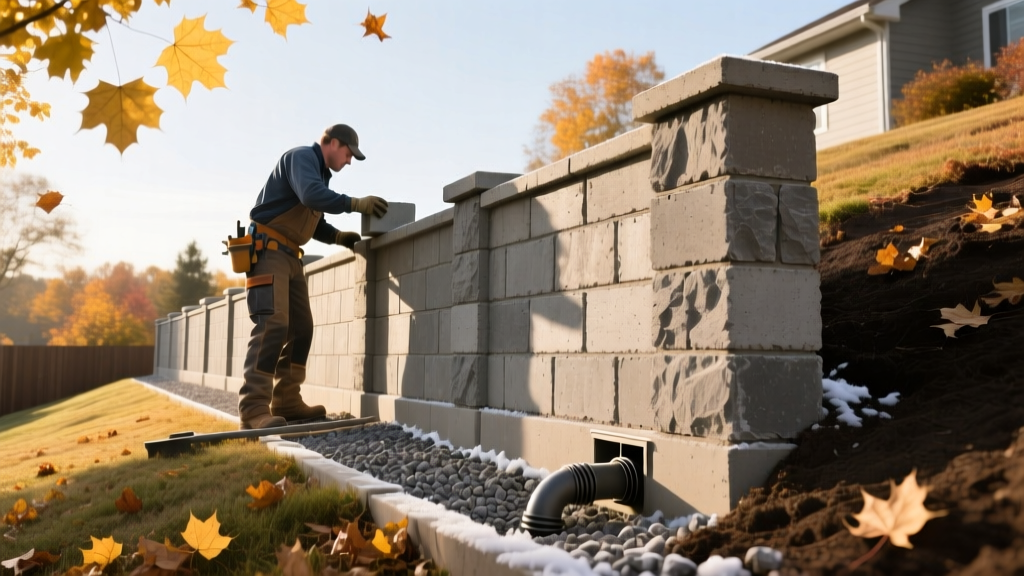
Build Versa-Lok Retaining Walls in Fall 2026: Expert Guide
Robert HayesPublished
Why Fall is the Ideal Season for Hardscaping in 2026
When homeowners think of fall lawn care, their minds usually jump to aeration, overseeding, and leaf removal. However, autumn is arguably the most strategic time of the year to tackle major landscaping hardscaping projects, specifically retaining wall construction. As we move through the 2026 landscaping season, the shifting climate patterns have made summer soil excessively dry and hard to excavate, while spring brings unpredictable, heavy rains that can wash out fresh trenches. Fall offers the perfect middle ground: the soil retains just enough moisture for easy digging, the ambient temperatures prevent contractor and DIY fatigue, and completing the project before winter ensures your landscape is stabilized against spring thaw erosion.
Building a retaining wall in the fall also perfectly aligns with your broader lawn care schedule. By finishing heavy construction before the first hard freeze, you can seamlessly transition into winterizing your turf, applying fall fertilizers, and protecting the surrounding grass without worrying about heavy wheelbarrow traffic ruining your newly overseeded lawn.
Understanding the Versa-Lok Modular Block System
For retaining walls, the Versa-Lok modular block system remains an industry leader in 2026. Unlike older retaining wall blocks that rely on a rear concrete lip for alignment, Versa-Lok blocks utilize a top-down pinning system. This design offers several distinct advantages for fall construction:
- Unmatched Flexibility: Without a restrictive rear lip, you can easily build curves, terraces, and inside or outside corners using the same solid, cored blocks.
- Shear Strength: The system uses high-strength composite pins that lock the blocks together, creating a massive, unified concrete structure capable of withstanding the immense lateral pressure of saturated winter soils.
- Frost Heave Resistance: The solid, cored design allows for a continuous column of crushed stone backfill, which acts as a massive French drain, preventing water from trapping inside the wall and expanding during freezing temperatures.
Material Estimation and 2026 Cost Breakdown
Before breaking ground, accurate material estimation is critical. In 2026, the average cost for Versa-Lok Standard blocks ranges from $7.50 to $9.50 per face square foot, depending on your region and the specific color blend selected. Below is a detailed material and cost estimation table for a standard 20-foot long, 3-foot high retaining wall built on a sloping autumn lawn.
| Material | Quantity Needed | Estimated 2026 Unit Cost | Total Estimated Cost |
|---|---|---|---|
| Versa-Lok Standard Blocks | 120 units (60 sq ft face) | $8.50 / sq ft | $510.00 |
| Crushed Angular Base Stone (3/4") | 2.5 tons | $65.00 / ton | $162.50 |
| Clear Washed Drainage Stone | 4.0 tons | $70.00 / ton | $280.00 |
| Composite Pins (Fiberglass) | 3 boxes (approx. 150 pins) | $45.00 / box | $135.00 |
| Geogrid Reinforcement (Biaxial) | 1 roll (100 sq ft) | $85.00 / roll | $85.00 |
| Perforated Drain Pipe (4-inch) | 25 feet | $1.20 / ft | $30.00 |
| Total Estimated Materials | $1,202.50 |
Note: Prices fluctuate based on local supply chain conditions and delivery fees. Always factor in an additional 10% for block breakage and cutting waste.
Step-by-Step Fall Construction Guide
1. Excavation and the Frost Line
The most critical step in any fall retaining wall project is digging the trench. Because you are building ahead of winter, you must account for the local frost line. According to engineering standards outlined by the National Concrete Masonry Association, a retaining wall base must be buried deep enough to prevent frost heave from pushing the first course upward. In northern climates, this means excavating at least 6 to 8 inches below the frost line, or a minimum of 10% of the wall's exposed height plus 6 inches for the base stone. Use a laser level or a string line to ensure your trench maintains a consistent grade, stepping down incrementally if you are building on a sloping autumn hillside.
2. The Crushed Stone Base
Never use round pea gravel or sand for your base. You must use 3/4-inch minus crushed angular stone. The sharp edges of the angular stone lock together tightly when compacted with a mechanical plate compactor. In the fall, soil moisture can be deceptive; ensure you compact the base stone in 2-inch lifts until you achieve a perfectly level, rock-hard foundation. This base will support the massive weight of the Versa-Lok blocks and prevent settling during the spring thaw.
3. Laying and Leveling the First Course
The first course of Versa-Lok blocks dictates the success of the entire wall. Place the blocks tightly together on the compacted base. Use a 4-foot carpenter's level to check for level both front-to-back and side-to-side. Because Versa-Lok blocks do not have a rear lip, you must manually ensure a slight 1-degree batter (lean) into the retained soil. This backward lean is essential for structural integrity, especially when the soil becomes heavy with winter rain and snowmelt.
4. Stacking, Pinning, and Backfilling
As you stack subsequent courses, align the pin holes. Versa-Lok's unique design allows you to place pins in multiple locations depending on the curve or corner you are building. Drive the composite pins down until they are flush with the top of the block.
Crucially, as you build upward, you must backfill immediately behind the wall with clear, washed drainage stone. Do not use the excavated native soil, especially in the fall when it may be heavy with clay and moisture. The drainage stone column should be at least 12 inches wide to allow water to flow freely downward.
5. Geogrid Installation for Tall Walls
If your wall exceeds 3 feet in height, or if it is supporting a steep slope or a driveway, geogrid reinforcement is mandatory. For specific pinning and geogrid requirements, always consult the official Versa-Lok installation manuals. Geogrid is laid flat over the blocks, extending back into the compacted soil. The friction of the soil on top of the grid anchors the wall, effectively turning the soil itself into a massive concrete deadman.
Crucial Fall Drainage and Frost Heave Prevention
Water is the natural enemy of retaining walls, and autumn brings heavy, prolonged rains. Proper drainage design is non-negotiable. At the base of your clear stone backfill, lay a 4-inch perforated drain pipe. Ensure the pipe is wrapped in landscape fabric to prevent silt clogging, and daylight it (route it to an open exit) at the lowest end of the wall or tie it into your property's existing stormwater management system.
Integrating hardscaping with sustainable drainage is a core principle promoted by the American Society of Landscape Architects. By capturing and redirecting the water that naturally flows down the slope during fall storms, you relieve the hydrostatic pressure building up behind the wall. If water is allowed to saturate the native soil behind the wall and then freeze in January, the resulting frost heave can easily push the wall forward, snapping pins and ruining the structure.
Integrating the Wall with Your Fall Lawn Care Routine
Constructing a retaining wall is a disruptive process that will inevitably impact the surrounding turf. Managing this disruption is a key component of comprehensive fall lawn care. Here is how to protect and restore your lawn during the project:
- Turf Protection: Before excavation begins, lay down heavy-duty plywood or specialized turf protection mats over the grass where wheelbarrows and skid steers will travel. This prevents severe soil compaction and rutting in the damp autumn soil.
- Topsoil Management: When excavating, separate the top 4 inches of rich topsoil from the deeper clay subsoil. Stockpile the topsoil on tarps so it can be reused to grade the landscape after the wall is complete.
- Post-Construction Aeration and Overseeding: Once the wall is backfilled and capped, the surrounding soil will likely be compacted. Utilize a core aerator on the adjacent lawn to relieve compaction, followed immediately by a fall application of tall fescue or Kentucky bluegrass seed.
- Winterizer Fertilizer: Apply a high-potassium winterizer fertilizer to the lawn surrounding the new hardscape in late autumn. This promotes deep root growth, helping the grass anchor the soil near the wall's edge before the winter snows arrive.
Final Thoughts
Building a Versa-Lok modular block retaining wall in the fall of 2026 is a highly rewarding project that solves immediate erosion issues while preparing your landscape for the harsh realities of winter. By respecting the frost line, prioritizing angular base materials, and implementing rigorous drainage protocols, you ensure your wall will stand plumb and strong for decades. Furthermore, by thoughtfully integrating the construction process with your seasonal lawn care regimen, you protect your turf and guarantee a lush, vibrant lawn that beautifully frames your new hardscape when spring finally returns.

