Lawn Care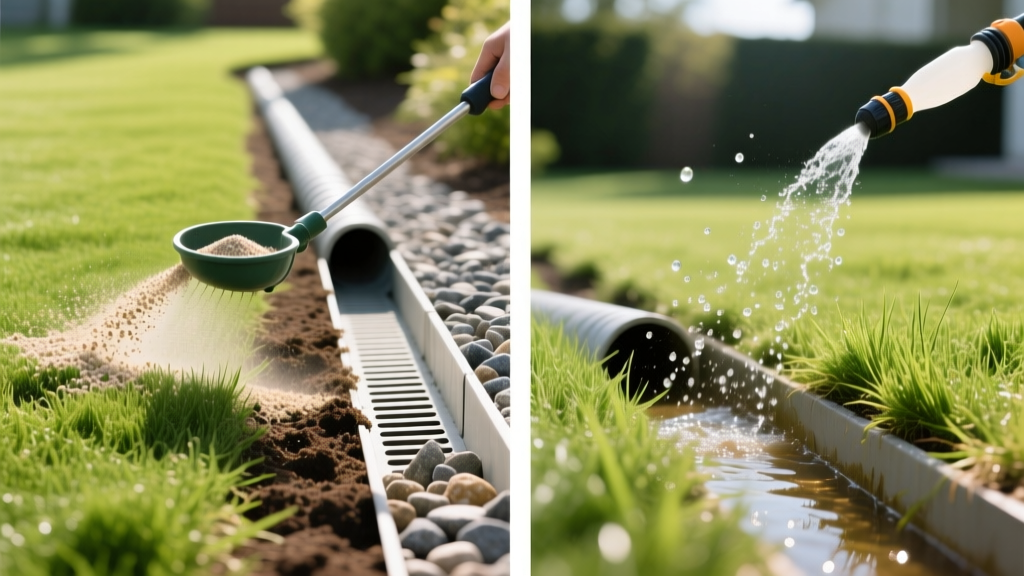
Granular vs Liquid Fertilizer for French Drain Yards 2026
Anna KowalskiPublished
The Subsurface Reality: How French Drains Change Fertilization
As a French drain installation specialist, I see firsthand what happens beneath the soil when homeowners attempt to maintain their lawns. Installing a French drain is a highly effective way to eliminate standing water, protect your foundation, and rescue a soggy yard. However, the very mechanics that make a French drain successful—rapid water percolation, washed gravel envelopes, and perforated piping—create a unique challenge for lawn nutrition. When you alter the subsurface hydrology of your yard, you must also alter your fertilization strategy.
The debate between granular and liquid fertilizers is a staple of turf management, but in a yard equipped with subsurface drainage, the stakes are much higher. Choosing the wrong fertilizer type doesn't just waste your money; it can lead to severe nutrient leaching, environmental pollution, and the premature clogging of your drainage infrastructure. In 2026, with stricter municipal stormwater regulations and advanced turf care formulations available, understanding the interaction between your fertilizer and your French drain is critical for a healthy, sustainable lawn.
Granular Fertilizers: The Slow-Release Anchor
Granular fertilizers are solid, pelletized nutrients that sit on the soil surface and break down over time as they are exposed to moisture and microbial activity. For lawns situated over or adjacent to French drain trenches, granular fertilizers—specifically slow-release or controlled-release formulations—are the undisputed champions.
The 2026 Polymer and Bio-Coating Advantage
In 2026, the turf care industry has largely moved away from older, sulfur-coated ureas that left behind waxy residues in the soil. Today's premium granular fertilizers utilize biodegradable polymer coatings or advanced bio-stimulant matrices. These coatings ensure that nutrients like nitrogen, phosphorus, and potassium are released gradually, matching the uptake rate of cool-season and warm-season grasses.
- Root Zone Retention: Because granular fertilizers dissolve slowly, the nutrients remain in the top 2 to 4 inches of the topsoil where grass roots actively feed. They are far less likely to be flushed downward into the gravel envelope of your French drain during a heavy rainstorm.
- Reduced Leaching: According to the Environmental Protection Agency (EPA), nutrient runoff is a leading cause of water quality impairment. Slow-release granular fertilizers dramatically reduce the amount of nitrogen that leaches past the root zone and enters subsurface drainage pipes, keeping your local watershed clean.
- Application Safety: Spreading granular fertilizer allows for precise calibration. You can easily avoid broadcasting pellets directly into exposed French drain catch basins or surface grates.
Liquid Fertilizers: Fast Results but High Runoff Risk
Liquid fertilizers, often applied via hose-end sprayers or professional tank sprayers, provide an immediate flush of nutrients to the turf. They are absorbed quickly through both the leaf blades and the roots, resulting in a rapid green-up. However, in a yard engineered for rapid drainage, liquid fertilizers pose significant risks.
The Percolation Problem
A properly installed French drain is surrounded by a highly porous matrix of washed gravel and geotextile fabric. When you apply a liquid fertilizer, the water-based solution percolates through the soil profile rapidly. In yards with sandy loam soils or those that have been heavily amended to improve surface drainage, the liquid fertilizer can bypass the shallow grass roots entirely and wash straight into the French drain trench.
Pro Tip: Never apply liquid fertilizers within 3 to 5 feet of a French drain catch basin, dry creek bed, or surface trench line. The rapid percolation will pull the nutrients directly into the storm system before the grass roots can absorb them, resulting in total nutrient loss and potential environmental fines.
Furthermore, liquid fertilizers often require frequent reapplication (every 2 to 3 weeks during the growing season), which increases the cumulative risk of subsurface leaching and accelerates the degradation of your drainage components.
2026 Comparison Matrix: Granular vs. Liquid for French Drain Lawns
To help you make an informed decision for your specific yard, here is a direct comparison of how these two fertilizer types perform in landscapes with active subsurface drainage systems.
| Feature | Granular (Slow-Release) | Liquid (Fast-Acting) |
|---|---|---|
| Runoff & Leaching Risk | Low | High |
| Root Zone Retention | Excellent (stays in topsoil) | Poor (flushes into gravel envelope) |
| Impact on Geotextile Fabric | Minimal | Promotes biofilm and clogging |
| Application Frequency | Every 6-8 weeks | Every 2-3 weeks |
| 2026 Avg Cost (per 5,000 sq ft) | $18 - $25 | $30 - $45 |
| Best Use Case | Primary feeding and seasonal maintenance | Targeted micronutrient or iron spot-treatments |
Protecting Your Drainage Infrastructure from Biofilm
One of the most overlooked aspects of lawn care in homes with French drains is the biological impact of excess fertilizer. When liquid fertilizers (or fast-release granular synthetics) wash into the dark, moist environment of a perforated PVC or corrugated drain pipe, they introduce a massive food source for subsurface bacteria.
These bacteria thrive on the nitrogen and phosphorus, creating a thick, slimy layer known as biofilm. Over time, this biofilm can coat the interior of your drain pipes and, more critically, clog the pores of the geotextile fabric wrapping the gravel trench. Once the fabric clogs, soil particles infiltrate the gravel, and the French drain fails, requiring an expensive excavation and replacement. Experts at the University of Minnesota Turfgrass Science program emphasize that keeping excess nutrients out of subsurface water flow is vital not just for the environment, but for the longevity of landscape infrastructure.
Best Practices for Fertilizing Lawns with French Drains in 2026
If you have invested in a French drain system, follow these actionable steps to maintain a lush lawn while protecting your drainage investment:
1. Establish a Buffer Zone
Identify where your French drain catch basins, surface grates, and discharge outlets are located. Create a 3-foot buffer zone around these entry points. In these zones, avoid broadcast spreading of any fertilizer. Instead, rely on the lateral spread of the grass and natural soil nutrient migration to feed the turf near the grates.
2. Prioritize Soil Testing
Before applying any fertilizer, conduct a comprehensive soil test. Yards with poor drainage often suffer from compacted, anaerobic soils that lock up nutrients. By testing your soil, you can apply only what is necessary, reducing the total volume of fertilizer that could potentially leach into your drain system. In 2026, digital soil testing kits and local university extension labs offer rapid, highly accurate nutrient profiles.
3. Time Your Applications with the Weather
Never apply granular fertilizer if a heavy, torrential downpour is forecasted within 24 hours. While light irrigation (about 1/4 inch) is necessary to activate granular fertilizers and move them into the soil profile, a heavy rainstorm will cause surface runoff, carrying the pellets directly into your French drain catch basins before they have a chance to dissolve.
4. Use Humic Acid and Bio-Stimulants
To improve nutrient retention in the soil above your French drain, incorporate liquid humic acid or seaweed-based bio-stimulants into your lawn care routine. These organic compounds improve the soil's cation exchange capacity (CEC), essentially acting like a sponge that holds onto granular fertilizer nutrients, preventing them from washing down into the gravel trench below.
Conclusion
Managing a lawn with a French drain requires a shift in perspective. You are no longer just feeding the grass; you are managing a complex hydrological system. While liquid fertilizers offer the temptation of a quick green-up, their high leaching potential makes them a liability near subsurface drainage trenches. By choosing high-quality, slow-release granular fertilizers, establishing buffer zones around catch basins, and timing your applications carefully, you can achieve a pristine, vibrant lawn in 2026 without compromising the integrity of your French drain or polluting local waterways.