
Landscaping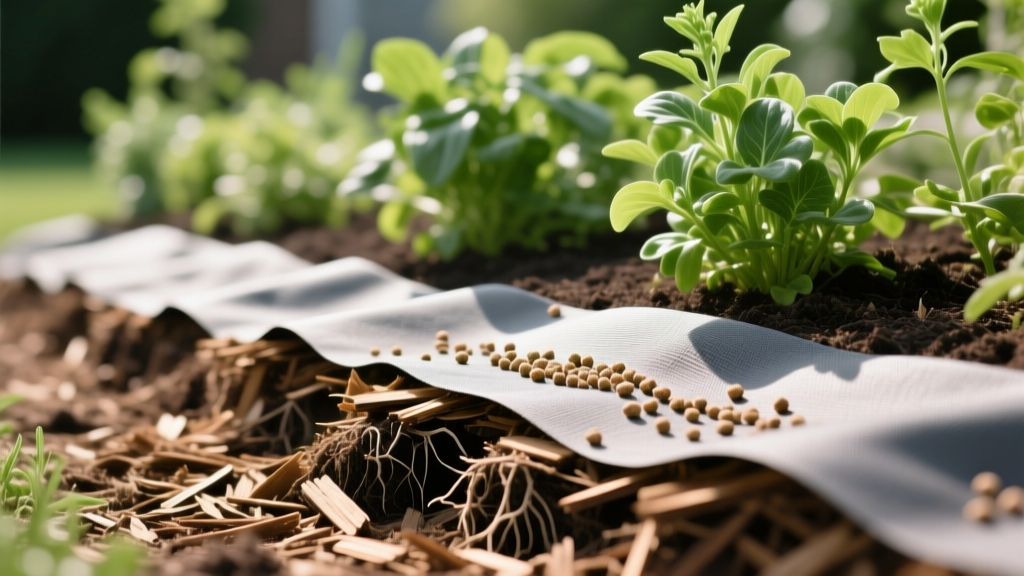
Fertilizing Mulch & Fabric Weed Barrier Beds 2026
David ParkPublished
The Challenge of Fertilizing Through Landscape Fabric
As we navigate the 2026 landscaping season, the combination of organic wood mulch and woven landscape fabric weed barriers remains one of the most popular methods for creating low-maintenance, high-curb-appeal garden beds. However, while this duo excels at suppressing weeds and retaining soil moisture, it creates a unique and often overlooked challenge for your fertilizer types and schedules. The physical barrier that stops weed seeds from germinating also restricts the natural incorporation of granular fertilizers, organic matter, and rainwater into the soil profile. If you are installing or maintaining fabric-mulched beds in 2026, understanding how to properly feed your plants without compromising the weed barrier is essential for long-term soil health and vibrant landscape design.
The Science of the Nutrient Blockade
Landscape fabric is typically made from woven or non-woven polypropylene. While high-grade woven fabrics allow water and liquid nutrients to pass through their microscopic pores, they completely block the downward migration of granular fertilizers and organic compost. According to current soil science guidelines, long-term use of impermeable or semi-permeable barriers can lead to subterranean nutrient depletion and a decline in beneficial soil microbiology. The soil beneath the fabric becomes isolated from the natural decomposition cycle that occurs when leaves and organic mulch break down into the earth. Therefore, your 2026 fertilizer schedule must be deliberately engineered to bypass or penetrate this barrier.
Pre-Installation: Building the Foundation Schedule
The most critical fertilizer application happens before the landscape fabric is ever unrolled. If you are establishing new garden beds this year, you must front-load the soil with slow-release, organic nutrients that will sustain the deep root systems of your shrubs and perennials for years to come.
- Step 1: Comprehensive Soil Testing. Before adding any amendments, conduct a professional soil test. As noted by Penn State Extension, understanding your soil's baseline pH and macronutrient levels is the only way to avoid toxic over-fertilization in enclosed bed environments.
- Step 2: Deep Tilling with Organic Matter. Till the top 6 to 8 inches of soil and incorporate a generous layer of compost.
- Step 3: Heavy-Duty Granular Base. Mix a high-quality, slow-release granular organic fertilizer (such as Espoma Organic Plant-tone or Milorganite) directly into the tilled soil. Because the fabric will prevent future top-dressing from reaching the root zone, this pre-installation base layer is your primary defense against long-term nutrient starvation.
Best Fertilizer Types for Fabric and Mulch Covered Beds
Once the fabric and mulch are in place, traditional top-dressing with granular synthetic fertilizers is entirely ineffective; the granules will simply sit on top of the fabric, burning the mulch and washing away into storm drains. In 2026, landscaping professionals rely on three specific fertilizer types to maintain covered beds.
| Fertilizer Type | Application Method | Fabric Compatibility | Est. Cost per 100 sq ft (2026) |
|---|---|---|---|
| Liquid Soluble NPK | Hose-end sprayer or watering can | Excellent (Passes through woven pores) | $8.00 - $12.00 |
| Deep Root Injection Spikes | Soil probe injector bypassing fabric | Perfect (Bypasses barrier entirely) | $15.00 - $22.00 |
| Foliar Kelp/Seaweed Spray | Pump sprayer applied to leaves | N/A (Does not contact soil/fabric) | $6.00 - $10.00 |
Liquid Soluble Fertilizers
Liquid fertilizers are the backbone of post-installation maintenance. When mixed with water, the dissolved nutrients easily pass through the permeable pores of professional-grade woven landscape fabrics. Products like BioAdvanced 2-in-1 Liquid Root Feeder or Neptune's Harvest Organic Hydrolized Fish Fertilizer are ideal. Apply these directly to the root ball area, ensuring the liquid penetrates the mulch layer and seeps through the fabric.
Deep Root Injection
For large shrubs and trees planted in fabric-mulched beds, liquid surface watering may not reach the deepest roots. Deep root injection involves using a soil probe to punch a small hole through the fabric and mulch, injecting pressurized liquid fertilizer directly into the subsoil. This method not only delivers nutrients precisely where they are needed but also helps aerate the compacted soil beneath the barrier.
Foliar Feeding
During the peak heat of summer, when plants are stressed and soil uptake is slow, foliar feeding is a highly effective strategy. Spraying a diluted kelp or fish emulsion solution directly onto the leaves allows the plant to absorb micronutrients through its stomata, completely bypassing the landscape fabric and mulch layer.
The 2026 Seasonal Fertilizer Application Schedule
To maintain optimal plant health in fabric-covered beds, follow this targeted seasonal schedule. This timeline accounts for the delayed soil warming effect that mulch and fabric can cause in early spring.
Early Spring (April): Mycorrhizal Inoculants and Root Stimulators
As soil temperatures rise above 50°F, apply a liquid mycorrhizal inoculant mixed with a low-nitrogen, high-phosphorus root stimulator. Because the fabric limits natural fungal networks in the soil, manually introducing beneficial fungi via liquid drench helps expand the plant's root absorption capacity. Water it in heavily to ensure it penetrates the fabric pores.
Late Spring (May): Balanced Liquid NPK
Once active growth begins, apply a balanced liquid fertilizer (such as a 10-10-10 or 20-20-20 water-soluble formula). Apply this in the early morning to prevent rapid evaporation. Ensure your mulch layer is no thicker than 3 inches; excessive mulch on top of the fabric can cause the liquid to pool and run off before penetrating the barrier.
Mid-Summer (July): Foliar Micronutrients
Avoid heavy nitrogen applications during high heat, which can scorch plants and promote weak, sappy growth. Instead, rely on foliar sprays of liquid kelp to provide trace minerals and help plants cope with heat and drought stress. The USDA NRCS emphasizes that maintaining plant resilience through trace minerals is vital for sustainable landscape management during extreme summer weather events.
Autumn (October): Potassium-Rich Winterizer
In the fall, switch to a liquid fertilizer high in potassium (the third number in the NPK ratio). Potassium strengthens cell walls and improves cold hardiness. Apply this liquid feed directly to the base of perennials and shrubs before they enter dormancy. Do not apply granular winterizers, as they will remain trapped on top of the fabric and wash away during winter rains.
The Mulch-Fabric Interface and Nitrogen Tie-Up
A critical concept for 2026 landscaping is understanding the 'nitrogen tie-up' phenomenon at the mulch-fabric interface. Even though the fabric separates the wood mulch from the soil, the top surface of the fabric accumulates dust, wind-blown soil, and moisture. Microbes begin to break down the bottom layer of the wood mulch right on top of the fabric. This decomposition process consumes massive amounts of nitrogen. If you rely solely on surface-applied liquid nitrogen, the microbes on top of the fabric will steal the nutrients before they pass through the pores to your plants. To combat this, always use a slightly higher concentration of liquid nitrogen in your spring feedings, or utilize the deep-root injection method to place the nitrogen entirely below the microbial activity zone.
Sustainable Practices and Future-Proofing Your Beds
While synthetic polypropylene fabric is effective for hardscaping and rock beds, the 2026 sustainable landscaping movement is shifting toward biodegradable weed barriers for softscaped garden beds. Products made from overlapping layers of heavy-duty corrugated cardboard or specialized paper-based geotextiles offer excellent weed suppression for the first 12 to 18 months while allowing granular organic fertilizers and compost to naturally break down and incorporate into the soil profile. As noted by the Environmental Protection Agency (EPA), reducing synthetic plastics in landscaping improves long-term soil ecology and reduces microplastic runoff.
If you are renovating an existing bed that has been choked by synthetic fabric for over a decade, the best fertilizer schedule begins with removal. Pull back the mulch, cut away the degraded fabric, top-dress the exposed soil with a rich layer of compost and slow-release organic granular fertilizer, and then re-mulch. By aligning your fertilizer types and schedules with the physical realities of your weed barrier, you can achieve lush, thriving, and truly low-maintenance landscape beds in 2026 and beyond.

