Lawn Care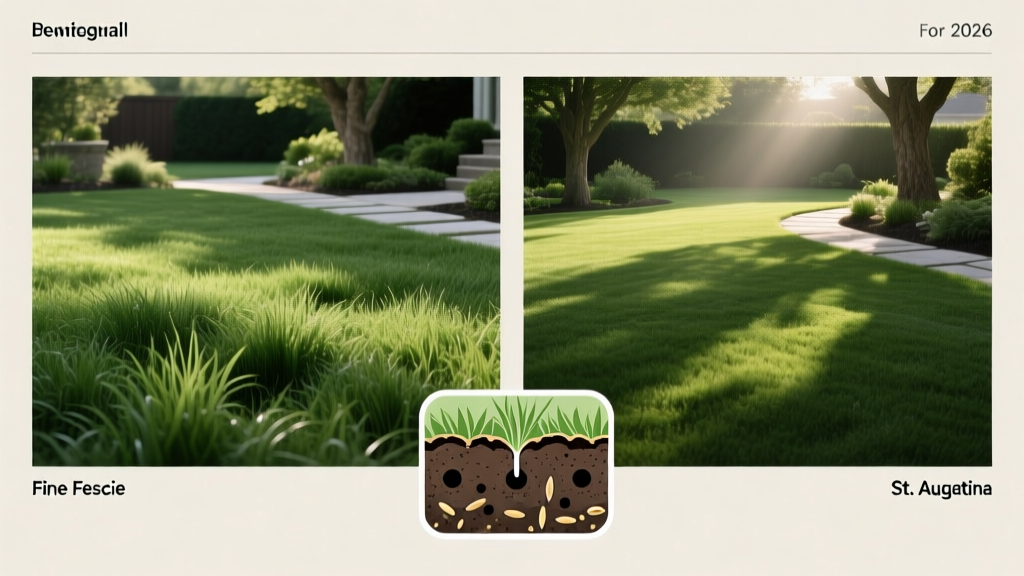
Fine Fescue vs St Augustine Shade Lawns: 2026 Seeding Guide
Robert HayesPublished
The Unique Challenge of Shade Lawns in 2026
Growing a lush, vibrant lawn under the dense canopy of mature trees is one of the most common frustrations for homeowners. Shade lawns face a dual threat: reduced sunlight limits photosynthesis, while aggressive tree roots compete fiercely for water and soil nutrients. Furthermore, the soil beneath trees often becomes severely compacted from foot traffic and the natural settling of organic matter, choking out what little root development the grass manages to achieve. As we navigate the 2026 growing season, the intersection of proper aeration and precise seeding (or vegetative planting) has become the gold standard for rescuing thin, shaded turf.
When selecting a shade-tolerant grass, homeowners typically narrow their choices down to two primary contenders based on their climate zone: Fine Fescue for cool-season and transition zones, and St. Augustine for warm-season and southern climates. However, simply scattering seed or laying sod in the shade is a recipe for failure. Success relies heavily on alleviating soil compaction through targeted aeration and utilizing the correct establishment methods. According to the University of Minnesota Extension, grass grown in the shade requires specialized care routines, particularly regarding soil aeration and mowing heights, to survive the stress of limited light.
Fine Fescue vs. St. Augustine: Quick Comparison
Before diving into the aeration and seeding protocols, it is essential to understand how these two grasses differ in their biology and shade tolerance. Below is a comprehensive comparison for the 2026 turfgrass market:
| Feature | Fine Fescue | St. Augustine |
|---|---|---|
| Climate Zone | Cool-Season & Transition | Warm-Season & Subtropical |
| Shade Tolerance | Excellent (Best cool-season option) | Very Good (Best warm-season option) |
| Establishment Method | Traditional Seed | Vegetative (Plugs, Sprigs, Sod) |
| Aeration Preference | Deep Core Aeration | Liquid Aeration / Shallow Coring |
| Ideal Shade Mowing Height | 3.5 to 4.0 inches | 3.5 to 4.5 inches |
Fine Fescue: Core Aeration and Overseeding Strategies
Fine Fescue is actually a blanket term for several species of fescue, including creeping red fescue, chewings fescue, hard fescue, and sheep fescue. As noted by UMass Extension, these grasses possess fine, needle-like blades and require significantly less nitrogen and water than Kentucky Bluegrass, making them uniquely adapted to the resource-poor environment beneath trees.
The Aeration Protocol for Fine Fescue
Because Fine Fescue has a shallow, fibrous root system, soil compaction is its greatest enemy in shaded areas. In early fall (late August to mid-September), perform a deep core aeration. Use a walk-behind gas or electric core aerator to pull plugs that are at least 2 to 3 inches deep and 0.5 to 0.75 inches in diameter. Space the passes over your lawn in two perpendicular directions to ensure maximum soil fracture. Leave the soil cores on the lawn; they will break down with the next rainfall or irrigation, returning beneficial microbes to the thatch layer.
Seeding Techniques for Shade
Once the soil is aerated, it is time to seed. For the 2026 season, look for premium shade blends that include endophyte-enhanced Fine Fescue seeds, which offer natural resistance to surface-feeding insects like chinch bugs. The optimal seeding rate for overseeding an existing thin lawn is 5 to 6 pounds per 1,000 square feet. If you are establishing a brand-new lawn from bare soil, increase the rate to 8 to 10 pounds per 1,000 square feet.
- Seed-to-Soil Contact: After broadcasting the seed, use a stiff push broom or a drag mat to work the seeds into the aeration holes. This protects the seed from birds and ensures it stays moist during germination.
- Topdressing: Apply a thin layer (about 1/4 inch) of screened compost over the seeded area. This retains moisture and provides a gentle, organic nutrient boost without burning the delicate new seedlings.
- Germination Watering: Water lightly 2 to 3 times a day for the first 14 to 21 days until the seeds sprout. Fine Fescue germinates slower than ryegrass, so patience is critical.
St. Augustine: Aeration and Vegetative 'Seeding'
St. Augustine grass is the undisputed king of warm-season shade tolerance, with cultivars like 'Palmetto', 'Seville', and the newer 'CitraBlue' thriving in filtered sunlight. However, there is a major caveat that confuses many homeowners: you cannot buy traditional St. Augustine seed at your local garden center. The seed is not commercially viable for turf establishment. Therefore, 'seeding' a St. Augustine lawn actually refers to vegetative propagation via plugs or sprigs.
Aeration Without Damaging Stolons
Unlike Fine Fescue, which grows in bunches or via shallow rhizomes, St. Augustine spreads aggressively via above-ground runners called stolons. Deep core aeration can sever these vital stolons, severely damaging the lawn and inviting disease. According to NC State Extension, maintaining the health of the stolon network is paramount for St. Augustine vitality.
For shaded St. Augustine lawns, the 2026 best practice is to utilize liquid aeration or extremely shallow coring. Liquid aerators use surfactants and humic acids to break the surface tension of the soil, allowing water and oxygen to penetrate deeply without physically tearing the above-ground runners. If you must core aerate to relieve severe compaction, use a machine with shorter tines (1.5 inches) and only do so in late spring when the grass is actively growing and can quickly recover.
Vegetative Seeding (Plugging) in the Shade
To establish or thicken a shaded St. Augustine lawn, you will plant vegetative plugs. In 2026, high-density plug trays are widely available from specialized turf farms. Here is how to execute the planting:
- Timing: Plant plugs in late spring or early summer when soil temperatures consistently exceed 70°F. St. Augustine requires heat to push out new stolons.
- Spacing: For a moderate establishment rate, space plugs 12 inches apart in a staggered, diamond pattern. For faster coverage in heavily shaded areas where growth is slower, space them 9 inches apart.
- Planting Depth: Use a plug auger or a dibber to create holes. Ensure the soil level of the plug is exactly flush with the surrounding lawn. Burying the stolons will cause them to rot, while planting them too high will dry out the roots.
- Starter Fertilizer: Apply a liquid starter fertilizer high in phosphorus (such as a 10-18-10 blend) immediately after planting to stimulate rapid root development in the compacted shade soil.
Step-by-Step Shade Lawn Establishment Guide
Whether you are seeding Fine Fescue or plugging St. Augustine, the foundational steps for preparing a shaded site remain remarkably similar. Follow this checklist to ensure your 2026 lawn renovation is a success:
- Step 1: Canopy Management. Before touching the soil, hire an arborist to perform a selective pruning on your trees. Raising the lower branches and thinning the inner canopy allows dappled morning sunlight to reach the grass, which is vastly superior to harsh, direct afternoon sun.
- Step 2: Comprehensive Soil Testing. Shade soils often become highly acidic due to decaying tree leaves and needles. Use a 2026 mail-in soil test kit from your local university extension. If the pH drops below 6.0, apply pelletized lime to raise it to the optimal 6.2 to 6.8 range, ensuring your grass can actually absorb the fertilizers you apply.
- Step 3: Debris Removal. Rake the area thoroughly. In shaded environments, fallen leaves and twigs create a mat that traps excess moisture against the grass blades, leading to devastating fungal outbreaks like Brown Patch or Powdery Mildew.
- Step 4: Aeration and Amendment. Execute the appropriate aeration method (Core for Fescue, Liquid/Shallow for St. Augustine) and amend the soil with organic compost.
- Step 5: Seed or Plug. Introduce the new turfgrass material using the rates and spacing detailed above.
Post-Aeration Maintenance and Shade Care
Establishing the grass is only half the battle; maintaining it in the shade requires a departure from standard lawn care routines. First, adjust your mower deck. Shade grass must be mowed higher than grass in full sun to maximize the leaf surface area available for photosynthesis. Set your mower to 3.5 or 4 inches for both Fine Fescue and St. Augustine. Never remove more than the top one-third of the grass blade in a single mowing session.
Second, rethink your irrigation strategy. Tree canopies act like umbrellas, often diverting light rain away from the soil directly beneath them. Conversely, the shade keeps the soil cooler, meaning it takes longer for moisture to evaporate. Use a soil moisture probe to check the top 3 inches of soil before watering. Water deeply and infrequently to encourage the grass roots to grow deeper, competing more effectively with the tree roots.
Finally, reduce your nitrogen fertilizer applications. Grass in the shade grows slower and cannot utilize the same amount of nitrogen as grass in full sun. Over-fertilizing a shade lawn leads to weak, succulent growth that is highly susceptible to disease and winter kill. Opt for slow-release, organic nitrogen sources applied at half the rate recommended for full-sun lawns. By combining the right grass selection with meticulous aeration and targeted seeding or plugging techniques, you can transform even the darkest corners of your 2026 landscape into a resilient, beautiful lawn.