Lawn Care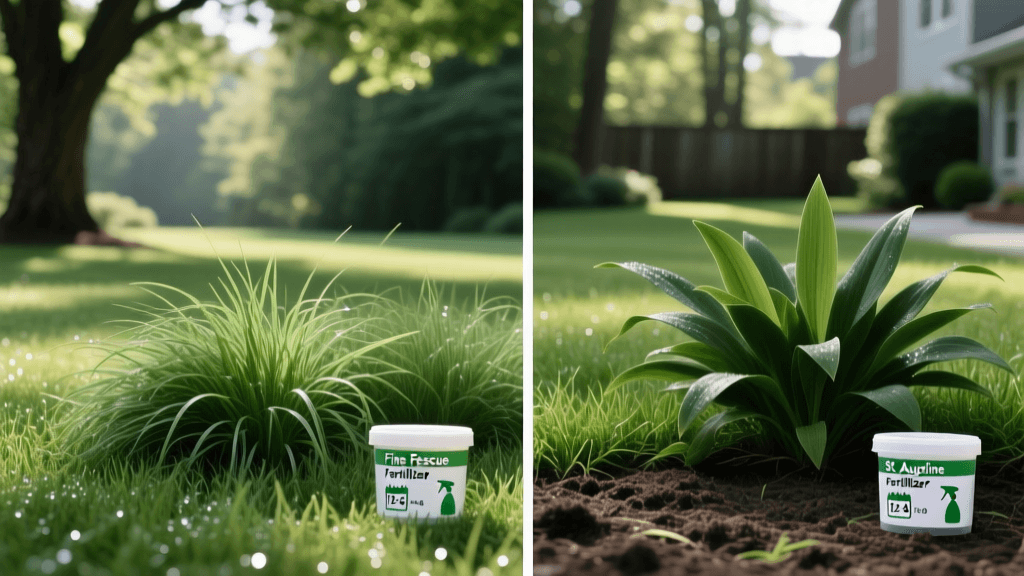
Fine Fescue vs St Augustine: Shade Fertilizer Guide 2026
The Challenge of Fertilizing Shade Lawns in 2026
Selecting the right grass for a shaded lawn is only half the battle; understanding how to feed it is where most homeowners struggle. In 2026, turfgrass science continues to emphasize that shade lawns operate under entirely different metabolic rules than full-sun lawns. Reduced sunlight limits photosynthesis, meaning the grass produces less energy and grows more slowly. Consequently, applying standard full-sun fertilizer schedules to shaded areas leads to lush, weak growth that is highly susceptible to fungal diseases, root rot, and environmental stress.
When deciding between the two most popular shade-tolerant grasses—Fine Fescue (a cool-season champion) and St. Augustine (a warm-season staple)—your fertilization strategy must be tailored to their distinct biological needs. According to the University of Minnesota Extension, shade lawns generally require 50% less nitrogen than their sun-drenched counterparts. This comprehensive guide breaks down the exact fertilizer types, NPK ratios, and 2026 application schedules you need to maintain a thriving, dense shade lawn, whether you are growing Fine Fescue in the northern zones or St. Augustine in the southern regions.
Fine Fescue: The Cool-Season Shade Champion
Fine Fescue is actually a collective term for several species, including creeping red fescue, chewings fescue, hard fescue, and sheep fescue. These grasses are renowned for their exceptional shade tolerance, low water requirements, and fine-bladed texture. However, their slow growth rate in shaded environments means they are incredibly sensitive to over-fertilization. Excess nitrogen forces the plant to expend energy on rapid top-growth at the expense of root development, leaving the lawn vulnerable to summer heat stress and winter desiccation.
Ideal Fertilizer Types for Fine Fescue in Shade
For Fine Fescue growing in moderate to heavy shade, the focus should be on slow-release nitrogen and potassium-rich formulations. In 2026, polymer-coated urea (PCU) and organic bio-stimulant blends are the industry standards for shade lawns. These technologies provide a steady, low-dose drip of nutrients that matches the grass's slow metabolic rate, preventing the dangerous growth spikes associated with quick-release synthetic fertilizers.
- Nitrogen (N): Keep annual applications between 1.0 and 2.0 lbs per 1,000 square feet. Always use slow-release sources like methylene urea or feather meal.
- Phosphorus (P): Only apply if a 2026 soil test indicates a deficiency. Fine Fescue has modest phosphorus needs, and excess runoff is an environmental hazard.
- Potassium (K): Crucial for shade lawns. Potassium thickens cell walls, improving the grass's resistance to fungal pathogens like powdery mildew and red thread, which thrive in damp, shaded microclimates.
2026 Fertilization Schedule for Fine Fescue
Cool-season grasses in shade should never be heavily fertilized in the spring. Spring nitrogen spikes lead to disease-prone tissue right before the stress of summer. Instead, front-load your nutrients in the fall when the grass is actively building root mass and the tree canopy above is thinning out, allowing more sunlight to reach the turf.
- Late Spring (Mid-May): Apply a light dose of 0.5 lbs of slow-release nitrogen per 1,000 sq ft. This sustains the grass through early summer without forcing excessive blade growth.
- Early Fall (Early September): The most critical feeding. Apply 1.0 lbs of nitrogen per 1,000 sq ft using a high-potassium blend (e.g., a 16-4-16 NPK ratio) to promote deep root growth and disease resistance.
- Late Fall (Early November): Apply a final 0.5 lbs of nitrogen per 1,000 sq ft. This "winterizer" application helps the grass store carbohydrates for early spring green-up.
St. Augustine: The Warm-Season Shade Tolerator
St. Augustine grass is the go-to warm-season turf for southern lawns with partial shade. Cultivars like Palmetto, Seville, and Sapphire have been specifically bred for improved shade performance. Unlike Fine Fescue, St. Augustine is a stoloniferous grass that spreads via above-ground runners. While it tolerates shade better than Bermuda or Zoysia, it still requires a careful balance of nutrients to maintain its dense, carpet-like habit without succumbing to large patch disease or chinch bug damage.
Ideal Fertilizer Types for St. Augustine in Shade
St. Augustine in shaded areas requires slightly more nitrogen than Fine Fescue, but still significantly less than a full-sun St. Augustine lawn. A major issue for St. Augustine in shaded, often compacted soils is iron chlorosis, where the grass turns yellow due to an inability to uptake iron in high-pH soils. Therefore, fertilizers containing chelated iron or sulfur (to lower soil pH) are highly recommended for 2026 shade lawn maintenance.
- Nitrogen (N): Limit shade-grown St. Augustine to 2.0 to 3.0 lbs per 1,000 square feet annually. Use methylene urea or sulfur-coated urea to prevent burning.
- Phosphorus (P): Generally low requirement, but essential for stolon establishment if overseeding or repairing bare shade patches.
- Micronutrients: Chelated iron and manganese are vital. According to North Carolina State Extension, St. Augustine is highly prone to micronutrient deficiencies in alkaline soils, which are common in many southern coastal plains.
2026 Fertilization Schedule for St. Augustine
Warm-season grasses must be fertilized during their active growing season, which corresponds with the warmest months of the year. Never fertilize St. Augustine when it is dormant or approaching dormancy, as this encourages winter weeds and cold-tender growth.
- Mid-Spring (Late April/May): Apply 1.0 lbs of nitrogen per 1,000 sq ft once the grass has fully greened up and the danger of the last frost has passed. A 20-0-10 formulation with added iron is ideal.
- Early Summer (Late June): Apply 0.5 lbs of nitrogen per 1,000 sq ft. Use a slow-release organic or coated synthetic to avoid burning the grass during peak heat.
- Late Summer (Mid-August): Apply 0.5 lbs of nitrogen per 1,000 sq ft. Focus on potassium to help the grass harden off against upcoming cool snaps and shade-induced stress.
- Early Fall (Late September): Apply 1.0 lbs of a low-nitrogen, high-potassium "winterizer" (e.g., 5-10-15) to promote stolon strength and root carbohydrate storage.
Head-to-Head Comparison: Fine Fescue vs. St. Augustine
Understanding the fundamental differences between these two grasses is critical for purchasing the right fertilizer at your local garden center. Use the table below as your quick-reference guide for the 2026 growing season.
| Feature | Fine Fescue (Cool-Season) | St. Augustine (Warm-Season) |
|---|---|---|
| Grass Type | Cool-season bunchgrass / creeping | Warm-season stoloniferous |
| Shade Tolerance | Excellent (Deep to partial shade) | Good (Partial to moderate shade) |
| Annual Nitrogen (Shade) | 1.0 - 2.0 lbs per 1,000 sq ft | 2.0 - 3.0 lbs per 1,000 sq ft |
| Primary Fertilizer Season | Late Summer & Fall | Late Spring & Summer |
| Potassium Importance | High (Winter stress & disease resistance) | High (Drought, cold & shade stress) |
| Ideal Soil pH | 5.5 - 7.0 | 6.0 - 7.5 |
| Iron Chlorosis Risk | Low | High (Especially in alkaline shade soils) |
Top Fertilizer Formulations for Shade Lawns in 2026
When shopping for fertilizer this year, look beyond the marketing jargon and focus on the NPK ratio and the nitrogen source. Here are the three best formulation profiles for shaded environments:
- The Fall Root-Builder (16-4-16 or 10-0-10): Perfect for Fine Fescue's critical September feeding and St. Augustine's late-season hardening. The 1:1 ratio of Nitrogen to Potassium ensures that whatever top-growth is stimulated is immediately fortified with strong cell walls.
- The Slow-Release Spring Starter (20-0-5 with 50%+ Slow-Release N): Ideal for St. Augustine's spring green-up. The low potassium and zero phosphorus reflect typical southern soil profiles, while the coated nitrogen prevents the rapid flushing that invites fungal pathogens.
- The Organic Microbe-Booster (4-3-4 with Bio-char and Mycorrhizae): Shaded soils are often compacted and lack microbial activity due to lower soil temperatures and reduced organic matter decomposition. In 2026, organic fertilizers enriched with bio-char and beneficial fungi are highly recommended by turf scientists at Penn State Extension to improve nutrient uptake in struggling shade lawns.
Pro Tips for Fertilizing Shaded Lawns
Fertilizer alone will not save a poorly managed shade lawn. To maximize the efficacy of your 2026 nutrient program, pair your fertilization schedule with these essential cultural practices:
- Raise Your Mower Deck: Shade grasses need every square inch of blade surface to capture limited sunlight. Mow Fine Fescue at 3.0 to 4.0 inches, and St. Augustine at 3.5 to 4.5 inches. Never scalp a shade lawn.
- Reduce Irrigation Frequency: Shaded lawns lose significantly less water to evaporation. Overwatering, combined with fertilizer, is a recipe for root rot. Water deeply but infrequently, and always irrigate in the early morning so the grass blades dry before nightfall.
- Manage Tree Root Competition: The trees casting the shade are also stealing the fertilizer. Consider using a deep-root feeder for your trees so your surface-applied lawn fertilizer remains available to the turfgrass roots.
- Conduct a Spring Soil Test: Before buying a single bag of fertilizer in 2026, send a soil core sample to your local university extension. Shade soils can become highly acidic over time due to decaying leaf litter, which locks up vital nutrients and renders your fertilizer applications useless until the pH is corrected with lime.
Conclusion
Winning the battle against shade requires a shift in mindset. You are no longer trying to force maximum growth; you are trying to sustain survival, density, and root health. Fine Fescue demands a minimalist, fall-heavy approach with slow-release nitrogen and high potassium. St. Augustine requires a steady, moderate summer feeding schedule with close attention to iron and micronutrient availability. By aligning your 2026 fertilizer choices with the specific biological rhythms of your chosen grass, you can transform a patchy, moss-covered yard into a lush, resilient carpet of green, even under the densest tree canopy.