Pest Control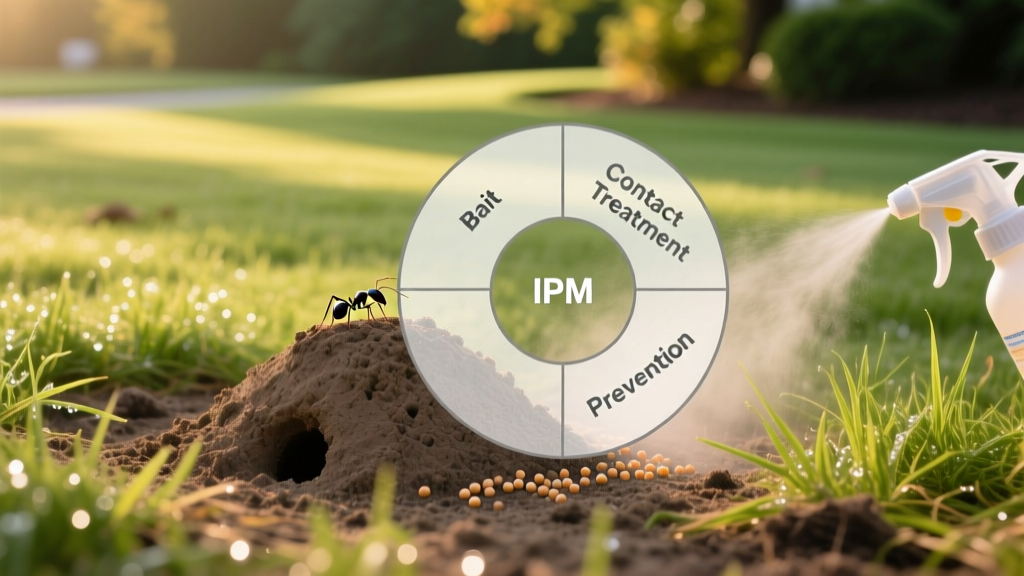
Managing Fire Ants in Southeastern Lawns and Gardens
James MillerPublished
The Fire Ant Threat in Southeastern Lawns
For homeowners across the Southeastern United States, the Red Imported Fire Ant (RIFA) is more than just a nuisance; it is a persistent threat to outdoor living spaces, pets, and the health of warm-season turfgrasses. The hot, humid climate of the Southeast, combined with mild winters and abundant rainfall, creates an ideal breeding ground for these aggressive pests. Whether you are maintaining a sprawling Bermudagrass estate in Georgia, a Zoysiagrass lawn in the Carolinas, or a Centipedegrass yard in Florida, fire ants can quickly colonize and dominate your landscape.
Effective fire ant management requires moving beyond reactive, piecemeal treatments. By adopting an Integrated Pest Management (IPM) approach tailored to the specific climatic rhythms of the Southeast, homeowners can achieve long-term suppression. This comprehensive guide explores identification, biology, climate-specific timing, and the most effective organic and chemical control methods available for regional lawn care.
Identifying the Red Imported Fire Ant (RIFA)
Before initiating any treatment protocol, accurate identification is crucial. The Southeastern US is home to several ant species, but the Red Imported Fire Ant (Solenopsis invicta) is the most problematic. According to NC State Extension, RIFA colonies are characterized by a few distinct visual and behavioral markers:
- Mound Structure: Unlike native ants, fire ant mounds typically lack a central opening. The mounds are often dome-shaped, composed of loose, fluffy soil, and can reach up to 18 inches in height and 24 inches in diameter, especially in heavy clay soils common in the Piedmont region.
- Colony Response: If a mound is disturbed, fire ants exhibit a rapid, aggressive swarming behavior. They will immediately climb vertical surfaces (like shoes or shovel handles) to defend the colony.
- The Sting: Fire ants bite to anchor themselves and then sting repeatedly from the abdomen, injecting a toxic alkaloid venom called piperidine. This venom causes a burning sensation and results in a raised, white pustule that forms within 24 to 48 hours.
The Biology of the Colony
Understanding colony biology is essential for timing your interventions. A mature fire ant colony can contain hundreds of thousands of workers and multiple reproductive queens (polygyne colonies). The workers are divided into castes based on size, ranging from tiny minors that tend to the brood to large majors (soldiers) that defend the mound and forage for food.
Foraging workers create underground tunnels that radiate outward from the mound, sometimes extending several feet into the lawn. They emerge at the surface to search for proteins, sugars, and lipids. This foraging behavior is the primary mechanism we exploit when using insecticide baits, as the workers carry the toxic food source back to the mound and feed it directly to the queens and developing larvae.
The Two-Step Method: The Gold Standard for IPM
The most scientifically validated approach to managing fire ants in large landscapes is the Two-Step Method, heavily promoted by Texas A&M AgriLife Extension. This method balances broad-scale population suppression with targeted elimination of nuisance mounds.
Step 1: Broadcast Bait Application
The first step involves broadcasting a slow-acting fire ant bait across the entire lawn or landscape. Because the bait is carried back to the colony and shared via trophallaxis (mouth-to-mouth feeding), it eventually reaches and sterilizes or kills the queen. This step should be performed once or twice a year to suppress the overall regional population and prevent new mounds from establishing.
Step 2: Individual Mound Treatment
Seven to ten days after the broadcast bait application, treat any remaining active mounds near high-traffic areas, gardens, or foundations with a fast-acting contact insecticide. This can be a liquid drench, a dust, or an aerosol injection. The delay is critical; it allows the foraging workers enough time to distribute the broadcast bait throughout the colony before the contact treatment disrupts the mound's social structure.
Product Comparison Chart for Fire Ant Control
Selecting the right product depends on your budget, the size of your property, and your preference for organic versus synthetic chemicals. Below is a comparison of common active ingredients used in the Southeast:
| Product Type | Active Ingredient | Application Rate | Speed of Control | Best Use Case |
|---|---|---|---|---|
| Synthetic Broadcast Bait | Indoxacarb (e.g., Advion) | 1.0 - 1.5 lbs / acre | 2 - 4 weeks | Large lawns, high efficacy, low toxicity to mammals |
| IGR Broadcast Bait | Pyriproxyfen / S-Methoprene | 1.0 - 1.5 lbs / acre | 4 - 6 weeks | Long-term prevention, sterilizes queens |
| Organic Broadcast Bait | Spinosad (e.g., Monterey) | 1.0 - 2.0 lbs / acre | 1 - 2 weeks | Organic gardens, safe for edible landscapes |
| Contact Mound Drench | Bifenthrin / Lambda-cyhalothrin | 1 - 2 gallons per mound | Minutes to hours | Nuisance mounds near patios or play areas |
Climate-Specific Timing and Application Rules
In the Southeast, timing your treatments around the climate and soil conditions is just as important as the product you choose. Fire ants are highly sensitive to temperature and moisture.
- Soil Temperature: Baits are only effective when ants are actively foraging. Foraging peaks when soil temperatures at a 2-inch depth are between 70°F and 85°F. In the Southeast, this typically aligns with mid-April through May, and again from September through October.
- Time of Day: During the peak heat of a Southern summer (July and August), fire ants retreat deep underground to escape the heat. If you must treat in the summer, apply baits in the late evening when surface temperatures drop and foraging resumes.
- Rainfall and Irrigation: Never apply granular baits if rain or heavy dew is expected within 4 to 6 hours. Moisture causes the bait matrix to degrade and become unpalatable to the ants. Furthermore, do not irrigate your lawn for 24 hours after a liquid mound drench to allow the chemical to bind to the soil profile.
- Freshness Matters: Fire ants will ignore stale bait. Always purchase bait in small quantities that you can use in one season, and store it in an airtight container in a cool, dry place.
Organic and Biological Control Options
For homeowners who prefer to avoid synthetic pyrethroids, organic IPM strategies are highly viable, though they may require more frequent applications. Spinosad-based baits are derived from soil-dwelling bacteria and are highly effective against fire ants while remaining safe for use around vegetable gardens and fruit trees. Spinosad works by disrupting the insect's nervous system, leading to paralysis and death within a few days.
Biological control is another fascinating avenue. The USDA APHIS has been actively researching and releasing Phorid flies (Pseudacteon species) in the Southeast. These tiny, parasitic flies lay their eggs inside the heads of foraging fire ants. While Phorid flies do not eradicate colonies entirely, they act as a natural stressor, severely limiting the ants' ability to forage during the day and reducing their competitive advantage against native ant species. Additionally, applying beneficial nematodes (Steinernema feltiae) as a soil drench can help infect and kill fire ant brood, though efficacy in heavy, compacted Southern clay soils can be variable.
Lawn Care Practices to Discourage Foraging
A dense, healthy turfgrass canopy is your first line of defense. Fire ants prefer to build mounds in open, sunny, and disturbed areas. By maintaining a thick stand of Bermudagrass, Zoysia, or St. Augustinegrass, you shade the soil surface, making it less hospitable for mound construction.
- Mowing: Mow your lawn at the recommended height for your specific turf species. Scalping the lawn stresses the grass and exposes bare soil, inviting fire ant colonization.
- Irrigation: While fire ants need moisture, overwatering your lawn creates shallow root systems and fungal issues. Practice deep, infrequent watering to promote deep turf roots and allow the top layer of soil to dry out between waterings, which discourages surface tunneling.
- Thatch Management: Excessive thatch can harbor pests and create a microclimate that shields fire ants from surface-applied contact treatments. Dethatch or core aerate your warm-season lawn in early summer to improve soil penetration and water infiltration.
Safety Precautions and Environmental Protection
When utilizing chemical controls, always prioritize environmental safety. Pyrethroid-based contact insecticides (like bifenthrin) are highly toxic to aquatic life and pollinators. Never apply these products near storm drains, ditches, or water features. Sweep any granular product that lands on driveways or sidewalks back onto the lawn to prevent it from washing into the municipal water system. Always read and follow the manufacturer's label instructions regarding personal protective equipment (PPE) and re-entry intervals for pets and children.
Conclusion
Managing fire ants in the Southeastern United States requires a strategic, climate-aware approach. By leveraging the Two-Step Method, respecting the biological and environmental triggers for foraging, and integrating sound lawn care practices, homeowners can reclaim their outdoor spaces. Whether you opt for advanced synthetic baits or organic Spinosad treatments, consistency and proper timing remain the cornerstones of successful, long-term Integrated Pest Management.