Gardening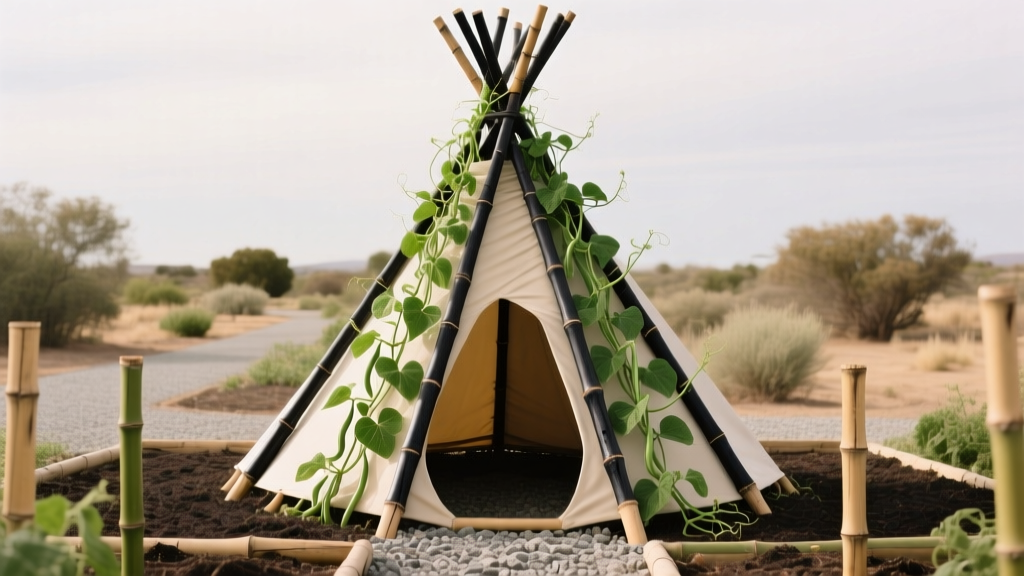
Fire-Safe Bamboo Bean Teepee Construction 2026 Guide
Sarah ChenPublished
The Intersection of Edible Gardening and Wildfire Defense in 2026
As we navigate the 2026 gardening season, homeowners in the Wildland-Urban Interface (WUI) face a dual challenge: growing a productive, vibrant vegetable garden while maintaining rigorous fire-resistant landscaping standards. Vertical gardening is a cornerstone of maximizing yield in small spaces, and the classic bamboo bean teepee remains a favorite for cultivating pole beans. However, bamboo is a grass, and when dried and cured, it becomes highly combustible. In fire-prone regions, placing dry, woody stakes near structures or using flammable mulches at their base can violate defensible space protocols and create severe vulnerability during ember storms.
This comprehensive guide will walk you through constructing a bamboo bean teepee that aligns with 2026 fire-safe landscaping principles. By integrating non-combustible materials, strategic irrigation, and fire-retardant treatments, you can enjoy a bountiful harvest of pole beans without compromising your home's defensible space.
Mapping Your Garden: Defensible Space Zones
Before driving a single bamboo pole into the ground, you must understand where your teepee belongs in the context of your property's defensible space. According to CAL FIRE's defensible space guidelines, the area immediately surrounding your home is divided into specific zones designed to slow the spread of wildfires.
- Zone 0 (0-5 feet from structures): The ember-resistant zone. No combustible materials, including wooden stakes, dry bamboo, or traditional mulches, should be placed here. Do not build your bean teepee in Zone 0.
- Zone 1 (5-30 feet from structures): The lean, clean, and green zone. This is the ideal location for your vegetable garden and bean teepee, provided the area is heavily irrigated, free of dead plant matter, and utilizes non-combustible pathways and mulches.
- Zone 2 (30-100 feet): The reduced fuel zone. Teepees can be placed here, but they must be spaced widely apart to prevent continuous vertical and horizontal fuel ladders.
'In 2026, fire agencies are emphasizing that vertical garden structures must be treated as potential fuel sources. Moisture management and non-combustible base materials are no longer optional for WUI gardeners; they are critical survival strategies for your home.' — Wildfire Preparedness Coalition, 2026 Spring Report.
Selecting and Treating Bamboo for Fire Safety
Not all bamboo is created equal when it comes to fire resistance. For a sturdy, fire-safe bean teepee, select thick-walled timber bamboo varieties such as Phyllostachys aurea (Golden Bamboo) or Bambusa oldhamii. Avoid thin, highly fibrous craft bamboos that ignite rapidly.
Applying Edible-Safe Fire Retardants
Because pole beans are an edible crop, you cannot use industrial chemical fire retardants on your stakes. Instead, utilize a borate-based wood preservative. Borates (such as disodium octaborate tetrahydrate) are naturally occurring minerals that act as excellent fire retardants and fungicides while remaining low-toxicity for humans and pets when fully cured and sealed.
- Prepare the Poles: Use 8-foot bamboo poles with a minimum diameter of 1.5 inches. Sand the nodes lightly to allow for better penetration.
- Soak or Spray: Apply a concentrated, water-soluble borate solution designed for garden timbers. Allow the bamboo to soak in a trough for 48 hours, or apply three heavy coats with a pump sprayer, allowing 24 hours of drying time between coats.
- Seal the Treatment: Once the borate has crystallized inside the bamboo fibers, seal the exterior with a non-toxic, water-based polyurethane or raw linseed oil. This locks the fire retardant inside and prevents the bamboo from drying out and cracking in the 2026 summer heat.
Step-by-Step Fire-Safe Bean Teepee Construction
Step 1: Establish a Non-Combustible Base
Traditional vegetable gardens often rely on straw, wood chips, or shredded bark to retain moisture. In a fire-resistant landscape, these materials are dangerous ember-catchers. For the base of your bean teepee, create a 3-foot diameter circle of inorganic, non-combustible mulch.
Excavate the top 2 inches of soil and replace it with decomposed granite (DG), crushed lava rock, or pea gravel. This creates a hardscape barrier that prevents ground-level embers from igniting the soil's organic matter or the base of your bamboo poles. Beneath the gravel, lay down a permeable geotextile fabric to suppress weeds without introducing flammable landscape fabrics.
Step 2: Integrate Sub-Surface Drip Irrigation
Moisture is your primary defense against ignition. A well-watered plant acts as a firebreak. Install a sub-surface drip irrigation ring directly beneath the gravel layer, positioning the emitters precisely where the pole bean seeds or transplants will be placed. This keeps the root zone consistently moist while preventing the gravel surface from becoming a muddy mess. According to UC Agriculture and Natural Resources fire-safe landscaping guidelines, maintaining high moisture content in Zone 1 vegetation is a key tactic for reducing radiant heat transfer during a fire event.
Step 3: Assemble the Structure with Fireproof Bindings
Gardeners traditionally use jute twine, hemp, or cotton string to lash bamboo poles together at the apex. These natural fibers are highly flammable and degrade quickly in the sun. For a 2026 fire-safe build, abandon natural twines entirely.
Instead, use galvanized steel wire, aluminum garden wire, or fiberglass-reinforced zip ties to secure the apex of the teepee. These materials will not ignite, even under direct exposure to blowing embers. Arrange six to eight treated bamboo poles in a circle, leaning them inward to meet at a central point about 7 feet off the ground. Wrap the steel wire tightly around the intersection and twist it secure with pliers.
Top Pole Bean Varieties for High-Heat, Fire-Prone Zones
When selecting pole beans for a fire-resistant garden, prioritize varieties with dense, broad foliage that retains moisture well and exhibits high drought and heat tolerance. Sparse, wispy foliage dries out quickly and becomes fine fuel.
| Variety | Foliage Density | Heat Tolerance | Fire-Safe Characteristics |
|---|---|---|---|
| Scarlet Runner | Very High | Moderate | Broad, thick leaves hold moisture exceptionally well; creates a dense, green 'umbrella' that shades the base. |
| Rattlesnake | High | Very High | Thrives in extreme heat without dropping leaves; maintains turgid, hydrated foliage even during late-summer dry spells. |
| Kentucky Wonder | Moderate | High | Reliable and vigorous; requires consistent drip irrigation to prevent lower leaves from crisping and becoming fuel. |
| Yardlong (Asparagus Bean) | High | Extreme | Subtropical origin means it laughs at 100°F+ days; thick vines stay supple and resist drying out. |
Companion Planting for Ember Resistance
To further harden your bean teepee against wildfire threats, utilize companion planting to create a living, high-moisture groundcover around the gravel perimeter. Avoid planting dry ornamental grasses or resinous herbs like rosemary or lavender near the teepee, as these contain volatile oils that ignite explosively.
Instead, plant low-growing, water-dense succulents or broadleaf groundcovers. Alyssum, creeping thyme, and ice plant (Delosperma) are excellent choices. These plants have high water content, lack woody stems, and form a mat that catches and extinguishes airborne embers before they can reach the gravel base or the bamboo poles.
Seasonal Maintenance and Wildfire Protocols
Building a fire-safe teepee is only half the battle; maintaining it throughout the 2026 fire season requires vigilance. The NFPA Firewise USA program stresses that ongoing maintenance of vegetation and garden structures is critical to preventing ember intrusion.
- Weekly Pruning: As the pole beans grow, the lower leaves will naturally begin to yellow and die back. You must prune these dead leaves immediately. Dead, dry bean leaves are essentially tinder. Keep the bottom 12 inches of the bamboo poles completely clear of any vegetation to prevent ground fires from climbing the vines.
- Irrigation Audits: Check your sub-surface drip lines weekly. A clogged emitter will cause the surrounding vegetation to dry out, creating a localized pocket of highly flammable fuel.
- End-of-Season Teardown: In traditional gardens, bean teepees are often left standing through the winter. In WUI zones, this is a hazard. Once the pole beans have finished producing and the vines begin to die back in late summer or early autumn—right at the peak of historical wildfire season—cut the vines down, compost them in a sealed, moisture-rich bin, and store the treated bamboo poles flat against the ground or inside a garage until the next spring.
Conclusion
Gardening in the Wildland-Urban Interface requires a paradigm shift. By rethinking how we build vertical supports, we can continue to enjoy the timeless beauty and productivity of a bamboo bean teepee without inviting disaster. Through the use of borate treatments, non-combustible gravel bases, steel bindings, and high-moisture companion planting, your 2026 pole bean garden will stand as a testament to resilient, fire-wise horticulture. Stay vigilant, keep your irrigation running, and harvest with peace of mind.
