
Landscaping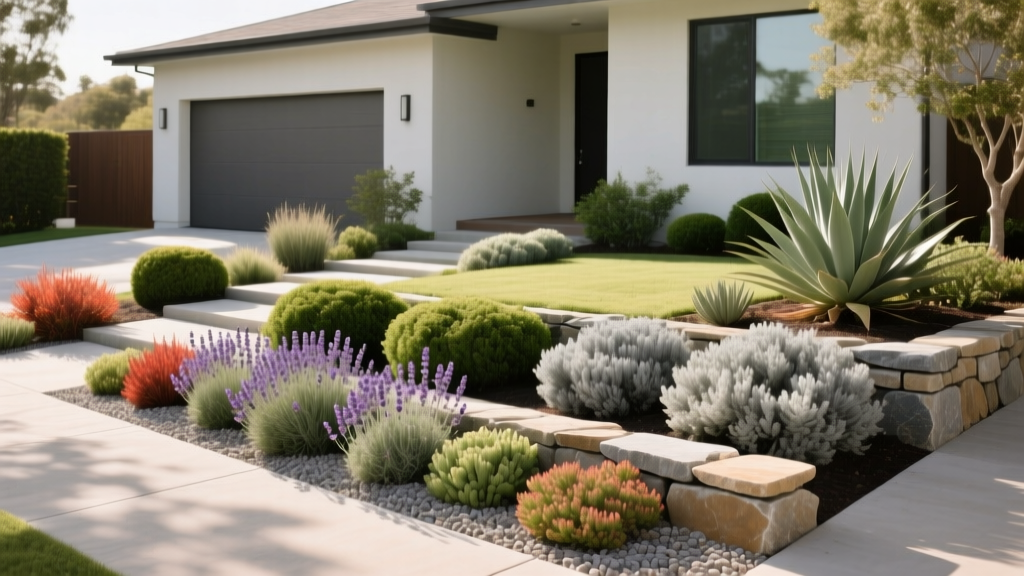
2026 Fire-Resistant Front Yard Shrub Border Makeover Guide
James MillerPublished
The 2026 Reality of Front Yard Landscaping in Fire Zones
As we navigate the 2026 wildfire season, homeowners in the Wildland-Urban Interface (WUI) and even suburban neighborhoods are facing stricter insurance requirements and updated municipal codes regarding yard maintenance. The traditional front yard makeover of the past—heavy on dense, resinous evergreen shrubs and thick wood mulch—is now a liability. Today, a successful front yard shrub border redesign must prioritize fire resistance without sacrificing curb appeal or demanding hours of weekend maintenance. By integrating modern hardscaping techniques, smart irrigation, and carefully selected low-maintenance flora, you can create a stunning, defensible landscape that protects your property and complies with the latest 2026 safety mandates.
Understanding Defensible Space: Zone 0 and Zone 1
Before ripping out your existing overgrown border, it is crucial to understand the spatial zones of fire-resistant landscaping. According to the CAL FIRE Ready for Wildfire program, defensible space is divided into specific zones that dictate what materials and plants are permissible near your home.
Zone 0 (0 to 5 feet from the home): This is the most critical area. In 2026, many local jurisdictions and insurance providers strictly enforce a 'non-combustible zone' here. This means no woody shrubs, no ornamental grasses that dry out, and absolutely no wood or bark mulch. Your shrub border should either begin outside this 5-foot perimeter, or you must use non-combustible hardscaping and succulents within it.
Zone 1 (5 to 30 feet from the home): This is where your primary low-maintenance shrub border will live. The goal here is to create a 'lean, clean, and green' area. Plants should be spaced out to prevent fire from spreading continuously across the yard, and all dead vegetation must be routinely removed. The National Fire Protection Association (NFPA) Firewise USA program emphasizes that interrupting the continuous path of vegetation is just as important as the plant species you choose.
Demolition and Soil Preparation
The first step in your makeover is removing highly flammable legacy shrubs. Juniper, cypress, eucalyptus, and rosemary are notorious for their volatile oils and resinous sap, which can ignite explosively under ember attack. Remove these plants entirely, including their root balls, to eliminate hidden dry debris.
Once cleared, prepare the soil for a low-water, fire-resistant border. Amend the native soil with organic compost to improve water retention, which keeps your new shrubs hydrated and less prone to ignition. However, avoid using synthetic weed fabrics beneath your mulch. In extreme heat or if an ember lands on exposed fabric, synthetic materials can melt and create toxic, hard-to-clean messes. Instead, rely on a thick layer of inorganic mulch or proper planting density to suppress weeds.
Hardscaping the Border: Creating Firebreaks
A true low-maintenance, fire-resistant redesign relies heavily on hardscaping to break up fuel loads. Instead of a continuous wall of greenery, design your shrub border with integrated pathways and decorative dry creek beds. Decomposed granite (DG), river rock, and crushed basalt are excellent choices for 2026 landscape designs. They provide a modern, clean aesthetic while serving as impenetrable firebreaks.
For the immediate foundation of your home (Zone 0), replace any existing bark mulch with a 2-to-3-inch layer of decorative gravel or crushed stone. This not only stops embers from igniting your mulch bed but also improves drainage away from your foundation, solving two landscaping problems at once.
Top Low-Maintenance, Fire-Resistant Shrubs for 2026
When selecting plants for your new border, look for species with high moisture content, broad or succulent leaves, and a lack of volatile oils. The FEMA United States Fire Administration (USFA) recommends choosing plants that are native or well-adapted to your local climate to minimize water usage and maintenance. Below is a comparison of top-performing, fire-resistant shrubs ideal for a modern front yard border.
| Shrub Species | Mature Size | Water Needs | Fire-Resistant Traits & Maintenance |
|---|---|---|---|
| Indian Hawthorn (Rhaphiolepis indica) | 3-5 ft tall, 4-6 ft wide | Low to Moderate | Thick, leathery leaves retain moisture well. Requires minimal pruning once established. |
| Torch Aloe (Aloe arborescens) | 4-6 ft tall, 4-5 ft wide | Very Low | Succulent foliage is highly fire-retardant. Provides striking winter blooms with zero deadheading required. |
| Point Reyes Ceanothus (Ceanothus maritimus) | 1-2 ft tall, 6-8 ft wide | Very Low | Excellent low-growing groundcover shrub. Lacks the volatile oils of other evergreens. Needs only annual shaping. |
| Fox Tail Agave (Agave attenuata) | 2-3 ft tall, 3-4 ft wide | Very Low | Fleshy, water-storing leaves resist ignition. Adds modern architectural structure to the border with no pruning needed. |
| Coastal Rosemary (Westringia fruticosa) | 3-5 ft tall, 4-6 ft wide | Low | Unlike true rosemary, Westringia lacks highly flammable resins. Tolerates heavy shearing to maintain clean border lines. |
Strategic Spacing and Hydrozoning
Do not plant these shrubs shoulder-to-shoulder. To maintain a low-maintenance and fire-safe border, space your shrubs so their mature canopies do not touch. This 'island planting' technique ensures that if one shrub catches an ember, the fire cannot easily jump to the next. Furthermore, practice hydrozoning by grouping plants with similar water needs together. Place your succulents (Agave, Aloe) on the outer, hotter edges of the border, and keep the slightly thirstier Indian Hawthorn closer to the house where drip irrigation is easily managed.
Upgrading to 2026 Smart Irrigation Standards
A fire-resistant shrub is only fire-resistant if it is properly hydrated. A dry, stressed plant will burn regardless of its species. Overhead sprinklers are inefficient, waste water through evaporation, and can promote fungal diseases on shrub foliage. For your 2026 redesign, install a subsurface drip irrigation system. Drip lines deliver water directly to the root zone, keeping the soil moist and the foliage dry.
Pair your drip system with a 2026 smart irrigation controller, such as the latest Rachio or Hunter Hydrawise models, which utilize hyper-local weather data and soil moisture sensors. These controllers automatically adjust watering schedules based on real-time evapotranspiration rates, ensuring your shrub border remains lush and fire-retardant without manual intervention or water waste.
Ongoing Maintenance: The Key to Long-Term Safety
While the plants and hardscaping recommended above are classified as 'low-maintenance,' fire-resistant landscaping is not 'no-maintenance.' To keep your front yard border safe and compliant with 2026 insurance standards, implement a simple seasonal maintenance routine:
- Quarterly Pruning: Remove any dead, diseased, or crossing branches from the interior of your shrubs. Dead wood is the primary fuel source for embers.
- Vertical Spacing: Ensure that the lowest branches of your shrubs are pruned up at least 6 inches from the ground or any underlying mulch to prevent surface fires from climbing into the shrub canopy.
- Debris Clearing: Use a leaf blower to clear fallen leaves, pine needles, and wind-blown debris from your gravel zones and hardscape firebreaks at least twice a year, especially before peak fire season.
- Irrigation Audits: Check your drip emitters every spring to ensure they are not clogged and are delivering water evenly across the root zones.
Conclusion
Redesigning your front yard shrub border with fire-resistant principles is one of the most impactful investments you can make in your property's safety and aesthetic value. By clearing out volatile legacy plants, integrating non-combustible hardscaping, selecting high-moisture succulents and broadleaf shrubs, and automating your hydration with smart drip irrigation, you create a landscape that stands strong against the threat of wildfire. Embrace the 2026 standards for defensible space, and enjoy a beautiful, low-maintenance front yard that offers peace of mind year-round.

