Gardening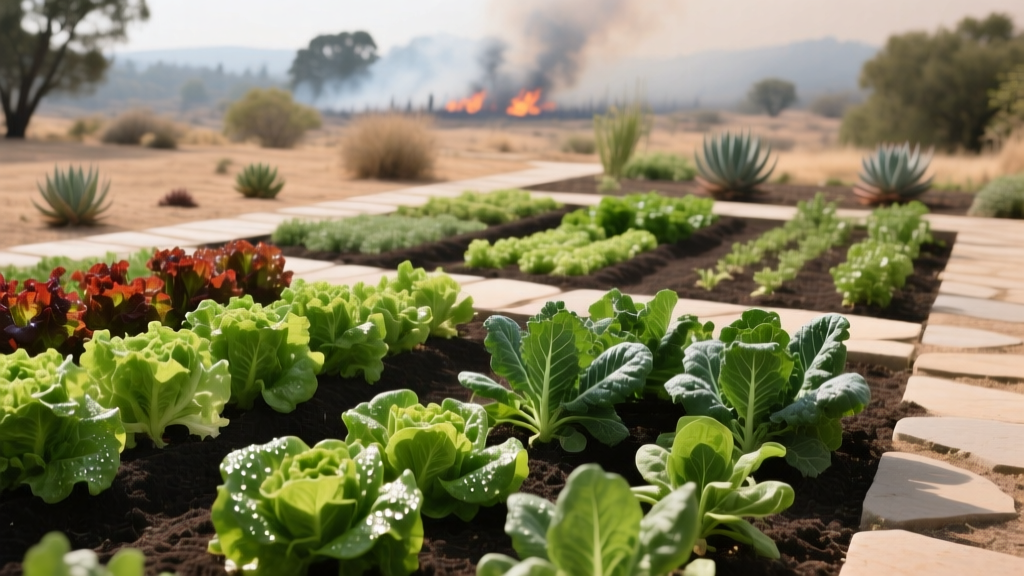
Fire-Safe Succession Planting: Lettuce, Spinach & Kale 2026
James MillerPublished
The Intersection of Edible Gardening and Fire-Resistant Landscaping
As we navigate the 2026 growing season, the reality of extended heatwaves and prolonged wildfire seasons has fundamentally shifted how we approach home landscaping. For gardeners living in fire-prone regions, the concept of 'defensible space' is no longer just about clearing brush; it is about making strategic, intelligent planting choices right up to the foundation of the home. Fortunately, growing your own food and maintaining a fire-resistant landscape are not mutually exclusive. In fact, when managed correctly, a vegetable garden can serve as a highly effective, high-moisture firebreak.
The key to merging edible gardening with fire safety lies in plant selection, bed construction, and rigorous maintenance. Leafy greens—specifically lettuce, spinach, and kale—are among the best crops for the 'Zone 1' defensible space (the area 5 to 30 feet from your home). Unlike woody herbs or resinous perennials, these greens possess incredibly high water content and lack the volatile oils that act as accelerants during a wildfire. By utilizing succession planting, you not only guarantee a continuous harvest throughout the 2026 season but also actively manage and reduce dry organic fuel loads in your yard.
Why Lettuce, Spinach, and Kale are Fire-Smart Choices
When designing a fire-resistant landscape, horticulturists and fire marshals recommend plants that are high in moisture, low in resin, and have a high leaf surface-area-to-volume ratio that holds water. Lettuce, spinach, and kale fit this profile perfectly. Their cellular structure is essentially composed of water, meaning they require immense amounts of thermal energy to ignite. Furthermore, because they are grown in irrigated, nutrient-rich soil, the immediate microclimate around your raised beds remains humid and fire-retardant.
However, the fire-safety of these crops is entirely dependent on your maintenance schedule. A well-watered, actively growing head of buttercrunch lettuce is virtually fireproof. A forgotten, bolted stalk of spinach that has gone to seed in the July heat, on the other hand, becomes a brittle, dry fuel source. This is where the practice of succession planting becomes a critical fire-management tool.
Succession Planting as a Fuel-Reduction Strategy
Succession planting is the agricultural practice of staggering your sowing dates to ensure a continuous harvest rather than a single, overwhelming yield. From a fire-resistance perspective, succession planting enforces a strict cycle of sowing, growing, harvesting, and clearing. By committing to a staggered schedule, you are systematically preventing your plants from reaching the 'bolting' or 'senescence' stages where they dry out and become combustible.
In 2026, with spring temperatures fluctuating wildly, relying on a single spring planting means your greens will likely bolt by late May, leaving dry stalks in your garden during the peak fire months of August and September. Succession planting ensures that you are constantly pulling out older plants and replacing them with young, high-moisture seedlings, effectively eliminating dry fuel buildup.
2026 Succession Planting Schedule for Leafy Greens
Below is a strategic succession planting table tailored for the 2026 climate patterns, focusing on heat-tolerant and bolt-resistant varieties that maintain their high moisture content longer into the summer months.
| Crop | 2026 Recommended Variety | Sowing Interval | Days to Harvest | Fire-Safety Trait |
|---|---|---|---|---|
| Lettuce | Salanova & Buttercrunch | Every 14 days (Spring/Fall) | 30-45 days | Dense, low-growing rosette traps soil moisture. |
| Spinach | Bloomsdale & Spacea | Every 21 days (Cool months) | 40-50 days | Thick, fleshy leaves with high water retention. |
| Kale | Lacinato & Winterbor | Every 30 days (Spring/Late Summer) | 50-65 days | Deep taproots maintain hydration in dry spells. |
Lettuce Succession Strategy
For lettuce, sow a new 4-foot row or a dedicated modular metal bed section every two weeks from early spring until late May, then pause during the peak heat of July, and resume in late August for a fall harvest. Use the 'cut-and-come-again' method for varieties like Salanova. By harvesting the outer leaves continuously, you keep the plant in a state of active, hydrated growth, delaying the bolting process that creates dry, woody stems.
Spinach Succession Strategy
Spinach is highly sensitive to increasing day lengths and heat, which triggers rapid bolting. In 2026, utilize shade cloth (30% to 50% density) over your spinach succession beds starting in late May. This not only extends your harvest but keeps the plant tissue cool and hydrated. The moment a spinach plant begins to stretch vertically to form a seed stalk, pull it immediately and compost it in a sealed, moist bin to remove the fire hazard.
Kale Succession Strategy
Kale is the workhorse of the fire-smart garden. Varieties like Lacinato (Dinosaur kale) have thick, heavily textured leaves that retain moisture exceptionally well. Sow kale every 30 days. Unlike lettuce, kale can grow quite tall. To maintain fire safety, harvest the lower, older leaves regularly to ensure there is no dry, dead foliage resting against the soil surface where it could catch an ember.
Designing Fire-Resistant Raised Beds and Irrigation
The physical structure of your garden plays a massive role in its fire resilience. Traditional wooden raised beds, particularly those made from dry cedar or pine, can act as fuel ladders if situated too close to the home. In 2026, the gold standard for fire-safe edible gardens is the use of modular corrugated metal raised beds (such as those from Vego Garden or Birdies). Metal is entirely non-combustible, and the reflective nature of the galvanized steel helps keep soil temperatures moderate, preserving the vital moisture content of your leafy greens.
Furthermore, the placement of these beds is critical. According to guidelines from the Ready for Wildfire defensible space program, the immediate 0 to 5-foot zone around your home should be strictly non-combustible (hardscaping, gravel, or pavers). Place your metal raised beds in the 5 to 30-foot Zone 1, ensuring they are spaced at least 3 feet apart to prevent fire from jumping between beds.
Smart Mulching and Soil Preparation
Never use dry wood chips, straw, or bark mulch in your leafy greens beds if you are in a wildfire zone. These materials are highly flammable and can easily catch wind-blown embers. Instead, use a 1-inch layer of pea gravel, crushed volcanic rock, or fully composted green waste that is kept consistently moist via drip irrigation. For soil preparation, avoid using large amounts of dry peat moss, which becomes hydrophobic and flammable when dry; opt for coconut coir and rich organic compost that holds water like a sponge.
Drip Irrigation as a Firebreak
Overhead sprinklers waste water and leave the soil surface unevenly moist. Install a sub-surface or high-quality drip irrigation system, such as Netafim Techline, directly across your succession beds. Keeping the soil consistently moist creates a natural, subterranean firebreak. A well-irrigated bed of kale and lettuce will actively resist radiant heat and trap flying embers before they can ignite surrounding landscaping.
Maintenance: The Ultimate Fire Prevention Tool
The most important aspect of fire-resistant landscaping is vigilance. As you succession plant throughout 2026, you must act as a fuel-management officer for your garden. Keep a dedicated, lidded metal compost bin nearby. Whenever you thin seedlings, pull bolting spinach, or harvest the final head of a lettuce row, immediately deposit the organic matter into the sealed bin. Leaving pulled, dry weeds or spent vegetable stalks in the pathways or on the soil surface defeats the purpose of planting high-moisture crops.
By integrating the NFPA's Firewise USA principles into your edible garden design, you transform a potential vulnerability into a robust line of defense. Leafy greens, when grown in non-combustible metal beds, irrigated efficiently, and harvested on a strict succession schedule, provide your family with nutritious food while actively contributing to the safety and resilience of your home against the threat of wildfire.
