Lawn Care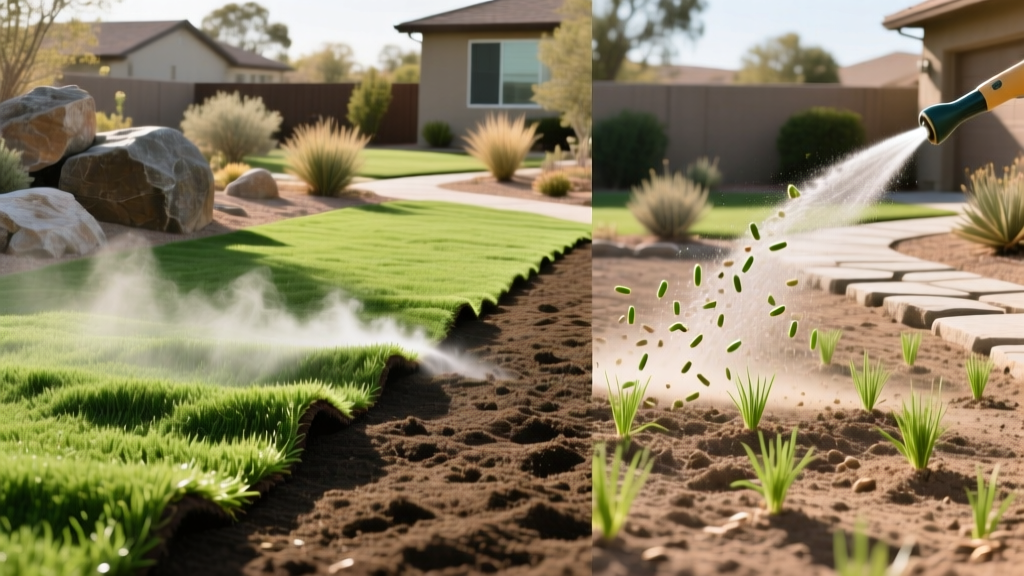
Sod vs Hydroseeding 2026: Fire-Resistant Lawn Costs
Robert HayesPublished
The 2026 Wildfire Reality and Your Defensible Space
As we navigate the 2026 wildfire season, homeowners in fire-prone regions are rethinking their landscaping strategies. The concept of 'defensible space' is no longer just a recommendation; in many western and southern states, it is a strict legal requirement. The immediate 30 feet surrounding your home—often referred to as the Lean, Clean, and Green Zone—must be carefully managed to prevent ember ignition and slow the spread of flames. According to CalFire's Defensible Space guidelines, a well-irrigated, low-growing, fire-resistant lawn acts as a critical fuel break that can save your property.
When establishing this vital green buffer, homeowners generally face a major decision: should you invest in sod installation or opt for hydroseeding? Both methods have distinct cost structures, timelines, and implications for fire safety. In this comprehensive 2026 guide, we break down sod vs. hydroseeding specifically through the lens of fire-resistant landscaping, helping you choose the best method to protect your home and family.
Choosing Fire-Resistant Grass Species
Before comparing installation methods, it is crucial to understand what makes a lawn 'fire-resistant.' No grass is entirely fireproof, but certain species retain high moisture content, grow low to the ground, and resist producing thatch—a highly flammable layer of dead organic matter. The UC Agriculture and Natural Resources division recommends selecting grasses that stay green during peak fire season and can survive with minimal water, as drought-stressed grass becomes brittle and combustible.
Top Fire-Resistant Grasses for 2026
- Tall Fescue (Cool-Season): Deep-rooted and drought-tolerant, tall fescue retains moisture well and stays relatively low if mowed correctly.
- Creeping Red Fescue (Cool-Season): Often used in shade and low-water areas, it forms a dense mat that chokes out flammable weeds.
- Zoysia (Warm-Season): Extremely dense and slow-growing, Zoysia requires less mowing and forms a thick, moisture-rich carpet that resists ember penetration.
- Buffalograss (Warm-Season): A native, low-water option that stays low to the ground, though it must be kept irrigated during peak summer to maintain its fire-retardant properties.
Sod Installation: The Instant Firebreak
Sod provides an immediate, mature lawn. From a fire-safety perspective, this is its greatest advantage. When you lay sod, you instantly eliminate bare soil, which is highly susceptible to invasive, highly flammable weeds like cheatgrass, mustard weed, and thistle. By installing sod, you are immediately establishing your 'Green Zone' without the vulnerable waiting period associated with seeds.
2026 Sod Installation Costs
In 2026, the cost of sod has stabilized after the supply chain fluctuations of previous years, but labor and water surcharges in drought-prone areas have pushed prices slightly higher. Expect to pay between $0.55 and $1.10 per square foot for fire-resistant varieties like elite Tall Fescue or Zoysia, fully installed. For a standard 5,000-square-foot defensible space zone, total costs will range from $2,750 to $5,500.
Timeline and Establishment
Sod offers an instant visual and functional transformation. While it takes about 2 to 3 weeks for the roots to firmly knit into the soil below, the surface is immediately fire-resistant on day one. There is zero risk of wind blowing away your seed or heavy rains washing out your lawn before it germinates.
Pros and Cons for Fire Resistance
Pros: Instant weed suppression (weeds are major fire hazards); immediate erosion control on sloped properties; guaranteed grass species purity.
Cons: Higher upfront cost; limited to monoculture or simple two-way blends (you cannot easily mix in fire-retardant groundcovers like micro-clover); heavy initial water requirement to establish roots, which may conflict with 2026 municipal water restrictions.
Hydroseeding: The Custom Firewise Blend
Hydroseeding involves spraying a slurry of seed, mulch, fertilizers, and tackifiers onto prepared soil. For fire-resistant landscaping, hydroseeding offers a unique, highly customizable advantage: you can engineer a 'Firewise' seed blend. Instead of a standard grass monoculture, you can mix Tall Fescue with low-growing, high-moisture groundcovers like creeping thyme, yarrow, or micro-clover. This biodiversity creates a landscape that retains moisture longer and resists ignition better than a single grass species.
2026 Hydroseeding Costs
Hydroseeding remains the budget-friendly champion for large properties needing extensive defensible space. In 2026, the national average for a premium, custom fire-resistant hydroseed mix ranges from $0.20 to $0.40 per square foot. For a 5,000-square-foot area, you are looking at an investment of $1,000 to $2,000—a massive savings compared to sod.
Timeline and Establishment
The timeline is where hydroseeding requires patience. Germination typically occurs within 5 to 7 days, but the lawn will not be fully established and capable of withstanding foot traffic (or acting as a reliable, dense firebreak) for 4 to 8 weeks. During this vulnerable window, the property is at risk.
Pros and Cons for Fire Resistance
Pros: Highly customizable Firewise seed blends; excellent for large, sloped, or hard-to-reach areas; significantly lower cost; the mulch slurry helps retain soil moisture during germination.
Cons: The 4-to-8-week establishment window leaves soil exposed to wind-blown weed seeds; if a heatwave hits before the grass establishes, the seedlings can die, leaving you with dry, flammable mulch and bare dirt; requires strict, frequent irrigation.
Head-to-Head Comparison: Sod vs. Hydroseeding (2026 Data)
| Feature | Sod Installation | Hydroseeding |
|---|---|---|
| 2026 Cost (per sq. ft.) | $0.55 - $1.10 | $0.20 - $0.40 |
| Time to Fire-Readiness | Immediate (Day 1) | 4 to 8 Weeks |
| Weed Competition | Very Low (Instant coverage) | Moderate to High (During germination) |
| Custom Blends | Limited (Usually 1-2 species) | High (Can add clover, thyme, natives) |
| Best Terrain | Flat to moderate slopes | Steep slopes, large acreage |
| Initial Water Needs | High (Daily for 2 weeks) | Very High (Multiple times daily for 3 weeks) |
Soil Preparation and Irrigation for Fire-Resistant Lawns
Regardless of whether you choose sod or hydroseeding, the foundation of a fire-resistant lawn is its soil and irrigation system. A lawn that is drought-stressed will flash-dry and ignite just as easily as dead brush.
Soil Amendments for Moisture Retention
In 2026, soil scientists heavily recommend incorporating biochar and composted organic matter into the top 4 inches of soil before installation. Biochar acts like a microscopic sponge, retaining water and nutrients, which keeps your fire-resistant grasses hydrated even during late-summer heat domes. If you are hydroseeding, many premium slurry mixes now include hydrogels that serve a similar moisture-retaining purpose.
Smart Irrigation and 2026 Water Mandates
Many fire-prone regions have implemented strict water budgets. To keep your lawn in the 'Green Zone' without violating municipal codes, you must install a smart, weather-based irrigation controller. Drip irrigation is generally not viable for traditional turfgrass, so high-efficiency rotary nozzles are the standard. These nozzles apply water slowly and evenly, reducing runoff and ensuring the deep root growth necessary for drought and fire survival.
Long-Term Maintenance to Maintain Fire Resistance
Establishing the lawn is only the first step. The National Fire Protection Association (NFPA) emphasizes that a Firewise landscape requires ongoing maintenance to remain effective. A poorly maintained fire-resistant lawn can quickly become a fire hazard.
- Mowing Height: Never scalp your lawn. Keep cool-season grasses at 3 to 4 inches and warm-season grasses at 2 to 3 inches. Taller grass shades the soil, retains moisture, and prevents the germination of flammable weeds.
- Thatch Management: Thatch is essentially kindling. Core aerate your lawn annually (preferably in the fall or spring) and dethatch if the layer exceeds half an inch.
- Edge Management: Keep the borders of your lawn cleanly edged. Dry, overgrown grass creeping into mulch beds or toward wooden fences creates a dangerous 'wick' that can carry ground fire directly to your home's siding.
- Strategic Dormancy: If you choose a warm-season grass like Zoysia or Buffalograss, understand that it will turn brown in the winter. While dormant, it is more flammable. In fire-prone areas where winter wildfires (like the Santa Ana wind events) are common, you may need to supplement with light irrigation to keep the grass partially green during high-risk winter months.
Final Verdict: Which Should You Choose?
If your primary goal is immediate fire protection and you have the budget, sod installation is the undisputed winner. It instantly secures your defensible space, eliminates weed competition, and provides peace of mind before the peak fire season begins. It is especially recommended for the critical 0-to-5-foot zone immediately adjacent to your home's foundation.
However, if you are managing a larger property (extending out to the 30-foot or 100-foot zones), have a tighter budget, and want to utilize a highly customized, biodiverse Firewise seed blend, hydroseeding is an excellent choice. Just be sure to time your hydroseeding application for early spring or late fall to avoid the stress of summer heatwaves during the vulnerable germination phase, and aggressively monitor for flammable weeds while the grass establishes.
'The goal of a fire-resistant landscape is not to create a sterile, concrete bunker, but to design a living, breathing fuel break that slows the fire's intensity and gives firefighters a safe place to defend your home.' — Wildland-Urban Interface (WUI) Landscaping Principles, 2026.
By carefully weighing the costs, timelines, and maintenance requirements of sod versus hydroseeding, you can build a beautiful, resilient lawn that stands as your first line of defense against the unpredictable nature of modern wildfires.