
Landscaping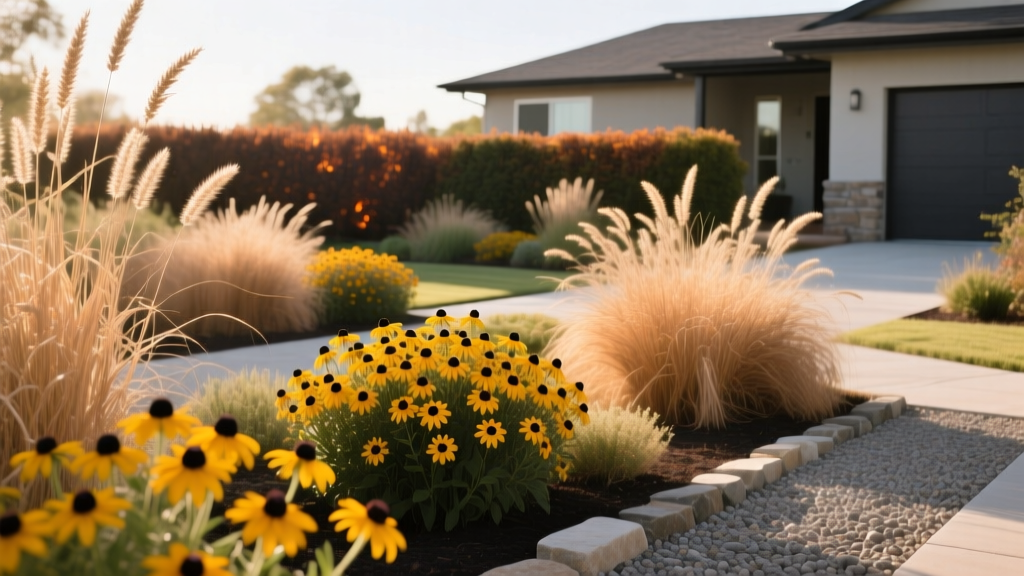
Fire-Resistant Native Landscaping 2026: Susans & Switchgrass
Anna KowalskiPublished
Introduction to Fire-Resistant Native Landscaping in 2026
As we navigate the 2026 wildfire season, homeowners in the Wildland-Urban Interface (WUI) are increasingly turning to fire-resistant native landscaping to protect their properties while supporting local ecosystems. The devastating fire seasons of the past decade have fundamentally shifted how we approach garden design. Today, creating a beautiful yard is no longer just about curb appeal; it is about survival, resilience, and ecological stewardship. Native plants, when strategically selected and meticulously maintained, offer a powerful line of defense against encroaching flames while requiring fewer resources than traditional ornamental landscapes.
Two of the most popular and ecologically valuable native plants in North America are the Black-Eyed Susan (Rudbeckia hirta) and Switchgrass (Panicum virgatum). While both are staples of prairie-style and pollinator-friendly gardens, their roles in a fire-resistant landscape require careful consideration. Herbaceous perennials and ornamental grasses behave very differently under extreme heat and drought conditions. This comprehensive guide will walk you through the specific placement, maintenance, and integration of Black-Eyed Susans and Switchgrass to create a stunning, fire-safe defensible space in 2026.
Understanding Defensible Space and Native Plants
Defensible space is the buffer you create between a building on your property and the grass, trees, shrubs, or any wildland area that surround it. According to the NFPA Firewise USA program, this space is divided into distinct zones, each with specific rules regarding vegetation density, moisture content, and placement. The updated 2026 WUI building and landscaping codes heavily emphasize the elimination of continuous fuel paths leading to the home.
Native plants are highly recommended for Zones 2 and 3 because their deep root systems allow them to survive drought conditions without excessive supplemental watering, keeping their foliage relatively hydrated even in late summer. However, 'native' does not automatically mean 'fireproof.' The moisture content of the plant, the accumulation of dead biomass, and the physical structure of the plant all dictate its flammability. Understanding how Black-Eyed Susans and Switchgrass fit into these zones is critical for a safe landscape design.
Black-Eyed Susan (Rudbeckia hirta): Vibrant and Low-Risk
Black-Eyed Susans are beloved for their bright yellow petals and dark brown centers, blooming prolifically from early summer well into the fall. From a fire-resistance standpoint, these herbaceous perennials are generally considered low-risk during their active growing season due to their high foliar moisture content and low-growing, non-woody structure.
Placement and Spacing
In a 2026 fire-resistant landscape, Black-Eyed Susans are best utilized in Zone 2 (5 to 30 feet from the home). While they are not highly flammable when green and actively growing, they do die back in the late fall, leaving behind dry, brittle stalks. Therefore, they should never be planted in Zone 1 (0 to 5 feet), which must remain completely free of combustible vegetation and dead plant material. When planting in Zone 2, group them in 'islands' surrounded by non-combustible hardscaping or low-growing, high-moisture groundcovers, rather than planting them in continuous, dense borders that could act as a fuel ladder.
Maintenance for Fire Safety
The key to keeping Black-Eyed Susans fire-safe is deadheading and seasonal cleanup. Throughout the 2026 blooming season, remove spent flowers and any browning leaves. Once the first hard frost hits and the plants die back, cut the stalks down to the ground immediately. Do not leave the dry, fibrous stems standing through the winter and into the spring fire season, as they can easily catch wind-blown embers.
Switchgrass (Panicum virgatum): Managing Biomass Safely
Switchgrass is a towering, deep-rooted prairie grass that provides incredible winter interest, erosion control, and habitat for wildlife. According to the USDA NRCS Plant Database, it is highly adaptable and drought-tolerant. However, ornamental grasses present a unique challenge in fire-resistant landscaping: their dry, dormant winter foliage is highly combustible.
Placement and Spacing
Because of its height and the volume of dry biomass it produces, Switchgrass must be strictly confined to Zone 2 (outer edges) or Zone 3 (30 to 100 feet from the home). Never plant Switchgrass near windows, under eaves, or near wooden decks. In Zone 2, plant Switchgrass in isolated clumps rather than massive, continuous drifts. Ensure there is at least 10 to 15 feet of clearance between mature Switchgrass clumps and any tree canopies to prevent a ground fire from climbing into the trees.
The Crucial Cut-Back Schedule
The most critical fire-safety practice for Switchgrass is the timing of your seasonal cut-back. Many gardeners leave ornamental grasses standing until early spring for winter aesthetics. In fire-prone areas, this is a dangerous gamble. You must cut Switchgrass down to a height of 4 to 6 inches in late winter (February or early March), well before the peak 2026 fire season begins. Removing the dead, dry thatch eliminates the primary fuel source. If you live in an area with severe winter winds that could snap the dry grasses and blow them against your home, consider cutting them back in late fall instead.
Strategic Placement: The 2026 Defensible Space Zones
To visualize how these plants fit into a comprehensive fire-resistant landscape, refer to the zone mapping table below, which aligns with the latest Cal Fire Defensible Space guidelines.
| Zone | Distance from Home | Plant Suitability | 2026 Maintenance Rule |
|---|---|---|---|
| Zone 1 | 0 - 5 Feet | None. Use gravel, pavers, or high-moisture succulents only. | Keep completely clear of all grasses and deadheaded perennials. |
| Zone 2 | 5 - 30 Feet | Black-Eyed Susan. Plant in isolated islands with gravel mulch. | Cut back dead Susan stalks immediately after the first fall frost. |
| Zone 2/3 | 20 - 100 Feet | Switchgrass. Plant in spaced clumps, away from tree canopies. | Cut down to 4 inches by late February to remove dry thatch. |
Hardscaping, Mulch, and Irrigation Integration
The plants themselves are only half the equation; the materials surrounding them dictate how fire moves through your yard. In 2026, the use of organic wood mulches (like bark chips or pine straw) within 30 feet of the home is heavily discouraged or outright banned in many WUI jurisdictions.
Non-Combustible Mulching
For your Black-Eyed Susan islands in Zone 2, use inorganic, non-combustible mulches such as decomposed granite, pea gravel, or river rock. A 2-inch layer of gravel suppresses weeds, retains soil moisture, and will not ignite if an ember lands on it. Keep the gravel pulled back about 2 inches from the base of the Susan crowns to prevent rot.
Smart Irrigation for Fire Defense
While native plants are drought-tolerant, keeping them slightly hydrated during extreme heat waves increases their fire resistance. Install a sub-surface drip irrigation system beneath the gravel mulch. This delivers water directly to the deep taproots of the Switchgrass and the fibrous roots of the Susans without wetting the foliage, which can promote fungal diseases. Pair your drip system with a 2026 Wi-Fi-enabled smart controller that adjusts watering based on real-time local evapotranspiration (ET) data, ensuring your plants remain hydrated without wasting water during drought restrictions.
2026 Seasonal Maintenance Calendar
Consistent maintenance is the cornerstone of fire-resistant landscaping. Use this seasonal checklist to keep your native garden safe and thriving:
- Early Spring (March - April): Ensure all Switchgrass has been cut back to 4-6 inches. Clear away any wind-blown debris or dead Susan leaves from the gravel mulch. Turn on and test your drip irrigation system.
- Summer (June - August): Deadhead Black-Eyed Susans weekly to encourage blooms and remove dry, combustible seed heads. Monitor soil moisture and adjust the smart controller during peak heat waves.
- Fall (September - November): Continue deadheading Susans. Inspect the perimeter of your property for any encroaching wildland grasses and clear them. Prepare for the winter cut-back.
- Winter (December - February): Cut back all dead Black-Eyed Susan stalks to the ground after the first hard frost. Schedule the Switchgrass cut-back for late February before the spring winds begin.
Estimated Costs for 2026 Native Garden Installation
Investing in a fire-resistant native landscape yields long-term savings in water usage, maintenance, and potentially, home insurance premiums. For a standard 500-square-foot Zone 2 renovation in 2026, expect the following approximate costs:
- Site Prep & Weed Barrier: $250 - $400 (including heavy-duty woven geotextile fabric).
- Plants (Plugs and 1-Gallon): $300 - $500 (Black-Eyed Susans are inexpensive and spread quickly; Switchgrass in 1-gallon pots costs roughly $15-$25 each).
- Non-Combustible Gravel Mulch: $400 - $600 (delivered and spread).
- Smart Drip Irrigation: $350 - $600 (including Wi-Fi controller and sub-surface lines).
- Total Estimated Cost: $1,300 - $2,100.
Conclusion
Designing a fire-resistant landscape in 2026 does not mean sacrificing the beauty, movement, and ecological benefits of native plants. By understanding the specific flammability traits of Black-Eyed Susans and Switchgrass, and by adhering to strict defensible space zones and maintenance schedules, you can create a vibrant prairie-inspired garden that stands as a resilient buffer against wildfire. Embrace the gravel mulch, commit to the seasonal cut-backs, and let these incredible native species thrive safely in your yard for years to come.

