Gardening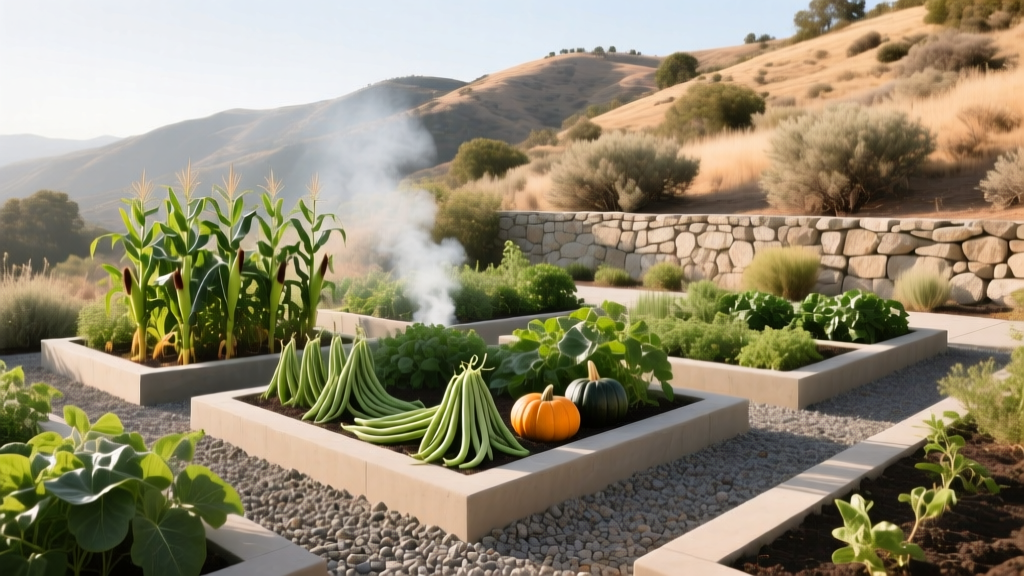
Fire-Safe Three Sisters Garden: 2026 Defensible Space Guide
Anna KowalskiPublished
Introduction to Fire-Resistant Edible Landscaping in 2026
As we navigate the 2026 growing season, the intersection of edible landscaping and wildfire mitigation has never been more critical. With climate shifts extending dry seasons across many regions, homeowners in the Wildland-Urban Interface (WUI) are increasingly seeking ways to grow their own food without compromising their property's defensible space. The traditional 'Three Sisters' companion planting method—an ancient Indigenous agricultural technique utilizing corn, beans, and squash—offers a brilliant framework for sustainable gardening. However, in its traditional form, it can inadvertently create dense, dry biomass that poses a severe fire hazard by late summer.
Fortunately, by adapting this time-honored technique through the lens of modern fire-resistant landscaping, you can cultivate a thriving, high-yield garden that actively contributes to your property's fire defense strategy. This comprehensive 2026 guide will walk you through the precise modifications needed to grow a fire-safe Three Sisters garden, from strategic zone placement and non-combustible mulching to end-of-season biomass management.
Understanding Defensible Space Zones for Vegetable Gardens
Before planting a single seed, it is vital to understand where a Three Sisters garden belongs on your property. According to the National Fire Protection Association (NFPA), defensible space is divided into distinct zones designed to slow the spread of wildfires and protect structures.
- Zone 0 (0-5 feet from home): The immediate perimeter. This area must be completely free of combustible materials, including all garden beds, organic mulches, and dense plantings. Do not plant your Three Sisters garden here.
- Zone 1 (5-30 feet from home): This zone requires lean, clean, and green landscaping. While raised beds with high-moisture vegetables are permissible, the tall, dense stalks of mature corn and the vertical 'ladder fuels' created by pole beans make the traditional Three Sisters method too risky for Zone 1 during peak fire season.
- Zone 2 (30-100 feet from home): This is the ideal location for a fire-adapted Three Sisters garden. In Zone 2, the focus shifts to reducing fuel continuity and managing plant density. By placing your garden here, you maintain food production while keeping tall, potentially dry biomass far enough from your home to prevent direct flame impingement or severe radiant heat exposure.
For authoritative guidance on mapping your specific property, the University of California Agriculture and Natural Resources (UC ANR) provides excellent resources on assessing local topography and wind patterns, which heavily influence how you should orient your garden beds in Zone 2 or Zone 3.
Adapting the Three Sisters Method for Fire Safety
The traditional Three Sisters method relies on corn for structural support, climbing beans for nitrogen fixation, and sprawling squash for ground cover and weed suppression. To make this system fire-resistant in 2026, we must select specific varieties and alter our spatial arrangements.
1. Selecting High-Moisture, Fire-Adapted Varieties
Not all vegetable varieties hold water equally. In fire-prone regions, selecting drought-tolerant yet high-moisture-retaining cultivars is essential.
- Corn: Avoid towering, late-season dent corns that dry out on the stalk by August. Instead, opt for shorter, early-maturing varieties like 'Hopi Blue' or 'Oaxacan Green'. These heritage varieties typically mature faster, allowing you to harvest and clear the stalks before the peak autumn fire winds arrive.
- Beans: Traditional pole beans can create a continuous vertical fuel load from the soil to the top of the corn stalk. To mitigate this 'ladder fuel' effect, plant bush varieties of tepary beans or black beans that stay closer to the ground. If you must use pole beans, commit to aggressively pruning the lower 18 inches of foliage to prevent ground fires from climbing the vines.
- Squash: This is your greatest fire-defense asset. Large-leafed cucurbits act as a 'living mulch,' shading the soil, retaining vital ground moisture, and suppressing dry, flammable weeds. Choose vigorous, broad-leafed varieties like 'Tahitian Melon' or 'Marina di Chioggia' to create a dense, high-moisture green carpet that actively resists ember ignition.
2. Non-Combustible Mulching and Soil Preparation
The most significant mistake gardeners make in the WUI is using organic mulches like straw, wood chips, or shredded bark between their garden mounds. In a wildfire, these materials act as a wick, carrying embers directly to your home. According to Cal Fire's Ready for Wildfire guidelines, replacing organic mulches with non-combustible alternatives is a cornerstone of defensible space.
For your 2026 Three Sisters garden, abandon straw mulch entirely. Instead, build your planting mounds using a soil mix rich in biochar and compost to maximize internal water retention. Then, surround the base of the mounds and the pathways between them with a 2-to-3-inch layer of crushed pumice, expanded shale, or pea gravel. In 2026, bulk crushed pumice averages $65 to $85 per cubic yard, a worthwhile investment that creates a fire-break between your plants while still allowing water to permeate the soil and reduce evaporation.
Garden Layout, Spacing, and Irrigation Strategies
Traditional Indigenous planting often clusters the Three Sisters in tight, continuous mounds to maximize yield in small spaces. In a fire-resistant landscape, we must prioritize 'fuel breaks' over maximum density.
Strategic Mound Spacing
Space your planting mounds at least 4 to 5 feet apart, rather than the traditional 3 feet. This wider spacing prevents the foliage from forming a continuous, unbroken canopy. If an ember lands in the garden, the gravel pathways and spacing will prevent the fire from easily spreading from one mound to the next. Furthermore, this increased airflow reduces the humidity trapped within the canopy, lowering the risk of powdery mildew and fungal diseases that can prematurely kill the plants and leave behind dry, flammable debris.
Fire-Resistant Irrigation Infrastructure
Keeping your Three Sisters garden deeply hydrated is your primary defense against ignition. However, standard plastic drip lines and PVC pipes can melt during a fire, cutting off water pressure to your home's defensible sprinkler systems. In 2026, best practices dictate using buried drip irrigation with metal-braided tubing or heavy-duty polyethylene lines buried at least 4 inches beneath the gravel mulch. This protects the irrigation infrastructure from radiant heat and flying embers, ensuring your living mulch of squash remains turgid and fire-resistant even during a nearby blaze.
Comparing Traditional vs. Fire-Resistant Setups
The table below summarizes the critical shifts required to adapt the Three Sisters method for wildfire-prone regions.
| Garden Feature | Traditional Three Sisters Method | 2026 Fire-Resistant Adaptation |
|---|---|---|
| Property Zone | Anywhere (Often near the home) | Strictly Zone 2 or Zone 3 (30+ feet from home) |
| Mulch Material | Straw, Grass Clippings, or Wood Chips | Crushed Pumice, Pea Gravel, or Expanded Shale |
| Mound Spacing | Tight clustering (2 to 3 feet apart) | Wide spacing (4 to 5 feet apart) for fuel breaks |
| Bean Varieties | Tall Pole Beans (Creates ladder fuels) | Bush Beans or Pruned Pole Beans |
| Irrigation Lines | Surface Plastic Drip or Overhead Sprinklers | Buried Drip Lines with Metal Fittings |
| End-of-Season Biomass | Stalks left to dry and decompose over winter | Immediate removal and hot composting by Sept 1 |
Biomass Management and the 'September Sweep'
The greatest vulnerability of the Three Sisters garden occurs in late summer and early autumn. As the corn matures and the beans finish producing, the plant matter naturally begins to senesce, dry out, and become highly combustible. A patch of dry corn stalks intertwined with dead bean vines is essentially a field of kindling.
To maintain a fire-resistant landscape, you must implement a strict biomass management protocol. We call this the 'September Sweep'. Regardless of whether you are growing dent corn for flour or sweet corn for eating, all stalks, dead vines, and dried squash leaves must be cut down and removed from the property or placed into a sealed, hot-composting system before the peak autumn wind events begin. Do not leave dry stalks standing 'for winter interest' or as trellises for the following year. In the WUI, a tidy garden is a safe garden. Chop the green, healthy squash vines and leave them to decompose in the compost bin, but ensure no dry, standing fuel remains in your Zone 2 garden beds as you enter the high-risk fire months.
Conclusion
Growing a Three Sisters garden in 2026 does not require sacrificing your harvest to the demands of wildfire safety. By thoughtfully placing your garden in the correct defensible space zone, utilizing non-combustible gravel mulches, selecting high-moisture plant varieties, and rigorously managing end-of-season biomass, you can honor this ancient agricultural tradition while fiercely protecting your home. Embrace these fire-resistant landscaping principles, and your garden will serve as both a bountiful food source and a resilient, green firebreak for years to come.
